 how-to
How to Fly Fish from a Kayak in Raleigh
Last Updated: November 8, 2026
Quick Summary
To learn how to fly fish from a kayak in Raleigh, start with a wide, stable fishing kayak or sit-on-top, rig it minimally with a shorter rod in the 8-foot range and a floating line, and keep stripped line in a basket. Plan your drift before you cast, anchor with a stake-out pole to fish productive water, and wear your PFD.
- A wider hull resists tipping when you shift weight to cast or land a fish.
- A shorter rod in the 8-foot range keeps the tip clear of the water and your paddle.
- Point the bow upstream or upwind and cast ahead of the boat, not behind it.
- A stake-out pole holds you over productive water; use a small anchor with a quick-release cleat in deeper spots.
- Dress for the water temperature, not the air temperature, and keep a dry layer in the boat.
Table of Contents
- Why Kayak Fly Fishing Works on Raleigh Water
- Choosing a Stable Kayak for Fly Fishing
- Fly Fishing Kayak Setup: Rods, Lines, and Accessories
- Kayak Fly Fishing Casting Tips for Seated Anglers
- Fly Fishing from a Sit-In Kayak: What Changes
- Managing Line, Drift, and Boat Control
- Kayak Fishing Safety Gear for Local Waters
- Booking Your First Guided Kayak Fly Fishing Trip
- Frequently Asked Questions
Why Kayak Fly Fishing Works on Raleigh Water
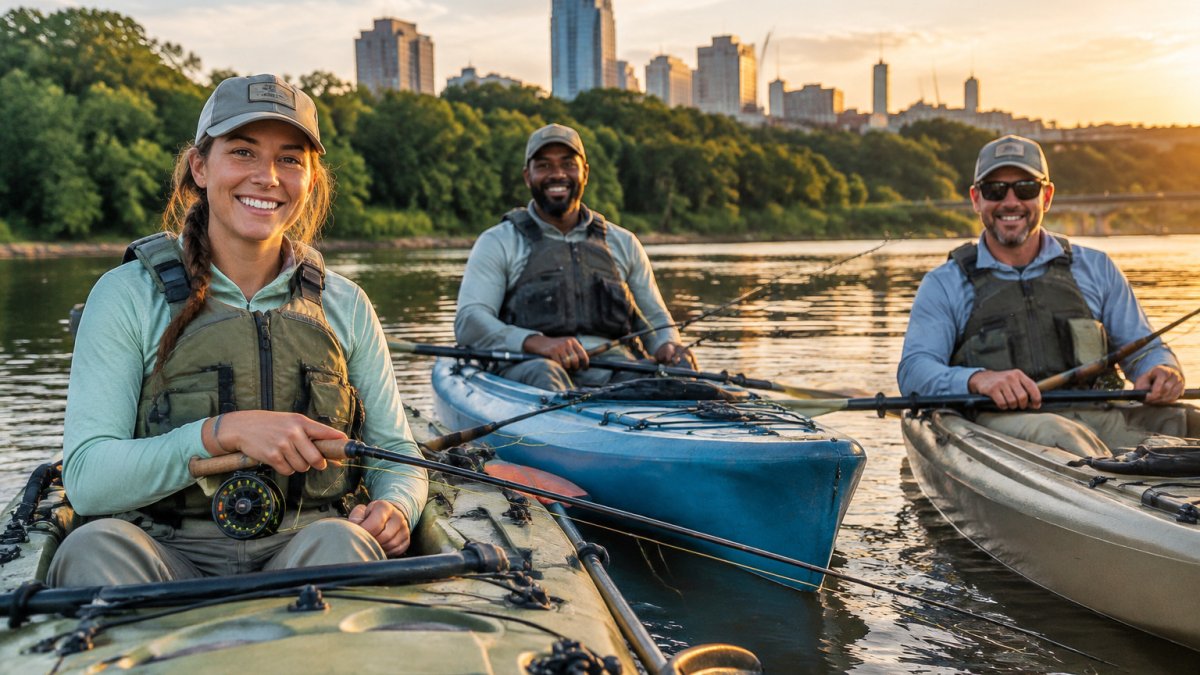
Learning how to fly fish from a kayak in Raleigh combines two quiet advantages: a small boat that slips into water bigger boats cannot reach, and a fly that lands softly enough not to spook fish in shallow water. The result is access to stretches of river and reservoir that bank anglers walk past every weekend.
Local water suits it well. The area's rivers and reservoirs offer calm mornings, shaded banks, and room to make a short cast. You do not need a long back cast. You need a stable boat, a clean line, and a plan.
Below, we break down the full workflow, from picking a kayak to booking a guided day. First, here is where to put in.
If you want launch options before you read further, our list of public fishing access points near North Raleigh covers ramps and put-ins close to town. For a wider view of productive water, our guide to the best fly fishing spots near Raleigh maps out the rivers and reservoirs worth the drive.
Choosing a Stable Kayak for Fly Fishing
Stability beats speed every time. A fly angler sits, turns, casts, and strips line, all from the same seat. A kayak that feels tippy on flat water will feel worse when a fish takes.
Look for these traits:
- Wide beam. A wider hull resists tipping when you shift weight to cast or land a fish.
- Flat, open deck. Loose fly line catches on everything. A clean cockpit keeps tangles down.
- Weight capacity. You carry a rod, paddle, cooler, and safety gear. Leave headroom.
- Seat height. A slightly raised seat gives your casting arm room to move.
- Stand-up capability. Some anglers stand to spot fish. Only do this in a kayak built for it.
Skip the narrow touring models. They track well but punish every weight shift. A dedicated fishing kayak, or a stable sit-on-top, is the better tool.
Fly Fishing Kayak Setup: Rods, Lines, and Accessories
A simple fly fishing kayak setup beats a crowded one. Every item on deck is something that can tangle, snag, or fall overboard.
Start with the rod. A shorter rod, in the 8-foot range, keeps the tip clear of the water and your paddle. Pair it with a floating line for most local water. Floating line is easier to lift off the surface and easier to see.
Mount a rod holder within reach of your seat. You need both hands for the paddle, and the rod cannot ride loose across your lap.
Keep the rest minimal:
- Line basket or stripping apron to catch loose line
- Pliers and nippers on a lanyard
- Small fly box with a few patterns, not fifty
- Paddle leash so it stays with the boat
- Anchor or stake-out pole for holding position
A common mistake is rigging the kayak like a bass boat. More gear means more snags. Start with less and add only what you actually reach for.
Keep the deck simple, because every item aboard is something that can tangle, snag, or go overboard.
| Item | Spec or role | Note |
|---|---|---|
| Rod | Shorter rod, in the 8-foot range | Keeps tip clear of water and paddle |
| Line | Floating line | Easier to lift off surface and easier to see |
| Rod holder | Mounted within reach of seat | Both hands needed for paddle |
| Line basket or stripping apron | Catches loose line | Keeps stripped line off the deck |
| Pliers and nippers | On a lanyard | Small tools kept close |
| Fly box | A few patterns, not fifty | Less gear means fewer snags |
| Paddle leash | Keeps paddle with the boat | Prevents loss overboard |
| Anchor or stake-out pole | Holds position | Stake-out pole for productive water |
Kayak Fly Fishing Casting Tips for Seated Anglers
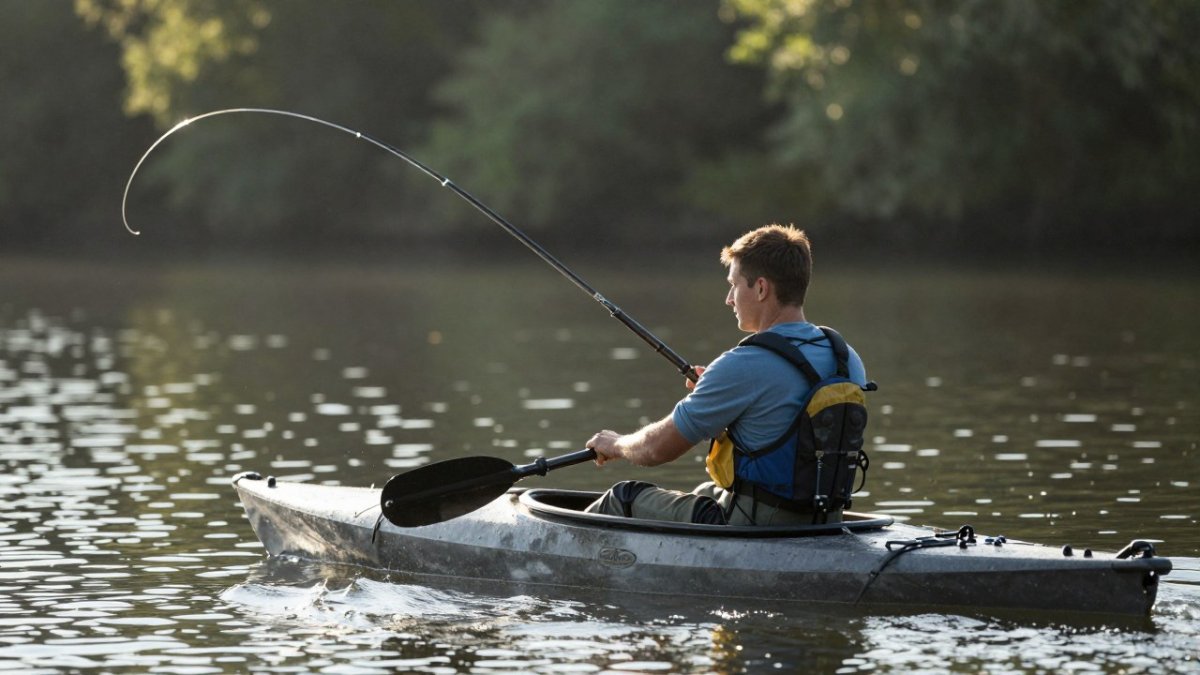
Seated casting changes the math. Your back cast starts lower, your casting space is smaller, and your body cannot rotate the way it does while standing. Adjust, do not fight it.
Here are the casting tips we return to most often:
- Shorten the stroke. A compact forward cast and back cast keeps the loop tight and low.
- Aim higher on the back cast. Tilt the rod so the line clears the water behind you.
- Open the loop. A wider loop is less accurate but far less likely to hook your own hat or the boat.
- Cast across your body, not straight ahead. Angling the cast keeps line away from the hull.
- Water haul when space is tight. Let the line drag on the water to load the rod instead of a full back cast.
If your casting fundamentals are shaky on land, fix them there first. Our guide on how to cast a fly rod correctly covers the basics that seated casting builds on.
Fly Fishing from a Sit-In Kayak: What Changes
Fly fishing from a sit-in kayak trades some freedom for protection. You sit lower, you stay drier, and the hull blocks wind. Those same walls limit your casting arc.
The cockpit rim is the main obstacle. Line slaps against it on a low back cast. Raise your casting angle and keep the rod tip higher through the stroke.
Sit-in boats also hold water if you swamp them. Wear a spray skirt in cold weather or chop, and practice a wet exit before you fish from one.
A common oversight is the retrieve. In a sit-in, you strip line into the cockpit, where it pools around your feet. A small stripping basket solves this. Without one, you will spend half your day untangling.
Sit-on-top kayaks are more forgiving for beginners. Sit-in models suit paddlers who want range and weather protection. Pick based on the water you plan to fish, not the boat that looks best on the rack.
Managing Line, Drift, and Boat Control
Line management and boat control are the same skill. A kayak that drifts sideways drags your fly line with it. A boat held steady lets you fish a fly properly.
Plan your drift before you cast. Point the bow upstream or upwind, then let the current carry you down a bank. Cast ahead of the boat, not behind it.
Use these habits:
- Quarter the kayak. Angle the boat so your casting side faces the bank and your line stays off the hull.
- Anchor to fish a spot. A stake-out pole holds you over productive water; in deeper or softer-bottomed spots, a small anchor with a quick-release cleat is the safer choice.
- Mend early. Flip the line upstream as soon as it lands to keep a drag-free drift.
- Strip and coil. Keep stripped line in a basket, not on the deck.
- Read the water level. A gauge reading that is dropping after rain usually means clearer water and more active fish; a rising gauge means debris, pushy current, and a harder day to hold position.
Wind is the harder problem on open reservoirs. It pushes the boat and blows your line off course.
On rivers, the practical rule is to fish moving downstream and save the upstream paddle for the end of the day. Position the kayak so you can cast to seams, eddies, and the soft water behind structure without crossing your own line.
For the mending side of this, our step-by-step guide on how to mend a fly line walks through the motion.
Kayak Fishing Safety Gear for Local Waters
Safety on Piedmont rivers and reservoirs is less about gear lists and more about matching your plan to the water you are actually launching into.
Start with the required and near-required items:
- PFD worn, not stowed. A life jacket in the hull does nothing. Wear a Type III or better that fits over your fishing layers.
- Whistle and light. Required signaling gear on many waters; a whistle on the PFD lanyard and a small headlamp cover most situations.
- Dry bag with phone and keys. A waterproof phone case plus a float plan text to someone at home is the cheapest rescue tool you own.
- Sun protection. Hat, polarized glasses, and long sleeves. Glare off flat water is the real enemy on a long drift.
- Water and a plan. Tell someone where you launch, when you expect to take out, and what vehicle you are driving.
Watch out: cold water is the real risk in shoulder seasons. Dress for the water temperature, not the air temperature, and keep a dry layer in the boat.
Before you leave the house, check the two things that most often cancel a kayak fly-fishing day: flow and weather. The U.S. Geological Survey maintains real-time streamflow gauges on many rivers, and the National Weather Service issues thunderstorm and wind forecasts.
Check local rules before you launch. We point clients to the North Carolina Wildlife Resources Commission for current licensing, access, and regulation details, and to posted signage at each ramp for site-specific rules.
A float plan is not paperwork. Write down your put-in, take-out, vehicle description, and expected return time, and leave it with someone who will notice if you are late.
Booking Your First Guided Kayak Fly Fishing Trip
A guided day can shorten the learning curve on how to fly fish from a kayak in Raleigh. You get local water knowledge and someone correcting your cast in real time.
Beginners worry about looking foolish. That worry fades in the first ten minutes. Guides teach beginners every week, and no one expects a perfect cast on day one.
If you want to know exactly what a day involves, read our guide on what to expect on guided fly fishing before you book.
Kayak fly fishing rewards the angler who slows down and sets up right. The boat, the line, and the drift all have to work together. That is a lot to manage alone on your first trip. Smith River Outfitter Raleigh Fly FIshing provides expert-led fly fishing experiences for enthusiasts of all skill levels, combining professional guidance with local knowledge. Get started with Smith River Outfitter Raleigh Fly FIshing and spend your first day on the water learning instead of guessing.
Frequently Asked Questions
Can you fly fish out of a kayak?
Yes. Kayak fly fishing works well once you adapt to a seated casting stroke and keep loose line organized. The main adjustments are a shorter, more open cast, a stripping basket or line mat across your lap, and anchoring or positioning the boat before you present the fly. A stable fishing kayak with a clear front deck makes the biggest difference for beginners.
Is a sit-on-top or sit-in kayak better for fly fishing?
Sit-on-top kayaks are easier to self-rescue and drain, which suits open water and warm-weather trips. Sit-in kayaks keep you drier and warmer in cold months but need a spray skirt and more careful line management. For fly fishing from a sit-in kayak, choose a wide, stable hull with a large cockpit so you can cast without catching the rim.
How do you keep fly line from tangling when kayak fishing?
Strip line into a basket or onto a line mat instead of the deck or water. Keep strips short, around 12 to 18 inches, and clear the line before every cast. Point the rod tip away from the hull and cast at an angle rather than straight down the boat. On windy days, quarter the kayak so the line blows away from you, not across your lap.
What gear do you need for kayak fly fishing?
You need a stable kayak, a 5 to 7 weight fly rod, a floating line, a stripping basket or line mat, a paddle or anchor system, and kayak fishing safety gear such as a life jacket, whistle, and sun protection. A rod holder keeps the rod clear while you paddle.