 how-to
7 Fly Size Mistakes That Keep Trout From Biting
Last Updated: November 5, 2026
Quick Summary
Choose the right fly size by matching the natural insects actually on the water, then going up or down one hook number at a time. Remember that larger hook numbers mean smaller flies, and measure mayflies and caddis including wings and tails, not just the body.
- Hook sizing runs backward: a size 20 hook is tiny and a size 6 hook is large.
- A size 16 dry fly is roughly the length of a grain of rice.
- Compare the natural's longest dimension to your fly, then change only one hook number.
- A size 14 mayfly dun measures about 10-12 mm including tails.
- For bass, start large with sizes 2 to 6 for streamers and poppers.
Table of Contents
- Why Fly Size Decides Whether a Trout Eats
- How Hook Size Numbers Work: Larger Number, Smaller Fly
- Reading a Trout Fly Sizes Chart
- How to Estimate Insect Size in the Field
- Using an Actual Size Fly Size Chart to Match the Hatch
- How to Choose the Right Fly Size for Bass
- How Do I Know What Size Flies I Have?
- Adjusting Size When Fish Refuse or Miss the Take
- Frequently Asked Questions
Why Fly Size Decides Whether a Trout Eats
Most trout refuse a fly for one reason: it looks wrong. Not the color, not the cast, but the size.
An angler ties on a big, bushy dry fly in the middle of a size 20 midge hatch, and the trout won't move.
Trout are hardwired to measure.
Here's the part most guides skip: matching the hatch is only half the job.
How Hook Size Numbers Work: Larger Number, Smaller Fly
Hook sizing runs backward from what most beginners expect. A size 20 hook is tiny. A size 6 hook is large.
This trips up nearly every new angler. You'll hear "size 16" and picture something big.
The scale most trout anglers use runs from about size 2 down to size 24:
- Size 2-6: large streamers and big terrestrials
- Size 8-12: nymphs, larger dries, small streamers
- Size 14-16: the everyday range for most mayflies and caddis
The American Fly Fishing Trade Association tracks the tackle standards behind these numbers, but the practical rule is simple: if you want a smaller fly, go up in number.
Hook Size vs. Finished Fly Dimensions
A hook's number tells you the gap and shank length, not the whole fly. Materials add bulk. A size 14 hook tied with heavy hackle and a thick body fishes much larger than the same hook tied sparse.
So when a trout refuses your fly, you're adjusting the finished profile, not just the hook. Trim materials, choose a sparser tie, or drop a hook size.
Reading a Trout Fly Sizes Chart
A trout fly sizes chart maps common patterns to their typical hook sizes and real-world lengths. It's the fastest reference for matching a hatch.
Here's a working chart we use to get anglers started:
| Pattern | Typical Hook Size | Rough Length | Matches |
|---|---|---|---|
| Pheasant Tail Nymph | 12-18 | 8-14 mm | Mayfly nymphs |
| Elk Hair Caddis | 12-16 | 10-16 mm | Caddis adults |
| Adams Dry Fly | 12-20 | 6-14 mm | Mixed mayflies |
| Woolly Bugger | 4-10 | 25-50 mm | Minnows, leeches |
| Zebra Midge | 18-24 | 4-8 mm | Midge larvae |
| Clouser Minnow | 2-6 | 40-70 mm | Baitfish |
Treat these as starting points. A size 16 Pheasant Tail covers a lot of water, but if the naturals on the surface are running small, a size 18 or 20 will out-fish it.
How to Estimate Insect Size in the Field
Estimating insect size in the field comes down to two skills: measuring the natural against a known reference, and knowing which parts of the insect to measure. Most anglers measure the body only and then wonder why their size 16 does not match a size 14 natural. The wings and tails count.
What to measure on a natural
A mayfly dun is longer than its body because the wings and tails extend past the abdomen. A caddis adult is measured from the front of the head to the tip of the folded wings. A midge larva is measured body only.
- Mayfly duns and spinners: Measure from the front of the head to the tip of the tails. A size 14 mayfly dun is roughly 10-12 mm including tails; the body alone is closer to 8 mm.
- Caddis adults: Measure from the head to the wing tips. A size 14 caddis is about 10-12 mm; a size 16 is about 8-10 mm.
- Stoneflies: Measure body length only; wings are folded flat. A size 10 stonefly is roughly 15-20 mm.
The fly-box comparison method
Your fly box is the most reliable field reference you own. Hook sizes are standardized, so a size 16 hook in your box matches a size 16 hook in anyone else's.
- Catch a natural if you can. Scoop a drifting insect off the surface with a fine-mesh net or a wet hand and hold it next to a fly you own.
- Compare the longest dimension. For mayflies and caddis, compare the natural's full length including wings and tails to the fly's full length including hackle and tail. For nymphs and larvae, compare body length only.
- Go up or down one hook number. If the natural is smaller than your fly, go up one hook number (14 to 16). If it is bigger, go down one (16 to 14). Do not jump two sizes at once.
When you cannot catch a natural
Most of the time you will not have a natural in hand. Use these field proxies instead:
- Compare to a common object. A size 16 fly is about the length of a grain of rice. A size 20 is closer to a sesame seed. A size 12 is roughly the length of a dime's diameter. A size 8 is about the length of a nickel's diameter.
- Watch the rise form. A trout sipping tiny midges makes a small dimple with no audible take. A fish chasing a large caddis makes a splashy, audible take. Match your fly to the size of the disturbance, not the size of the fish.
- Check the rise ring. Small rings mean small insects. Big rings mean big ones. A ring the size of a quarter usually means a size 14-16 insect; a ring the size of a dinner plate usually means a size 8-10 caddis or stonefly.
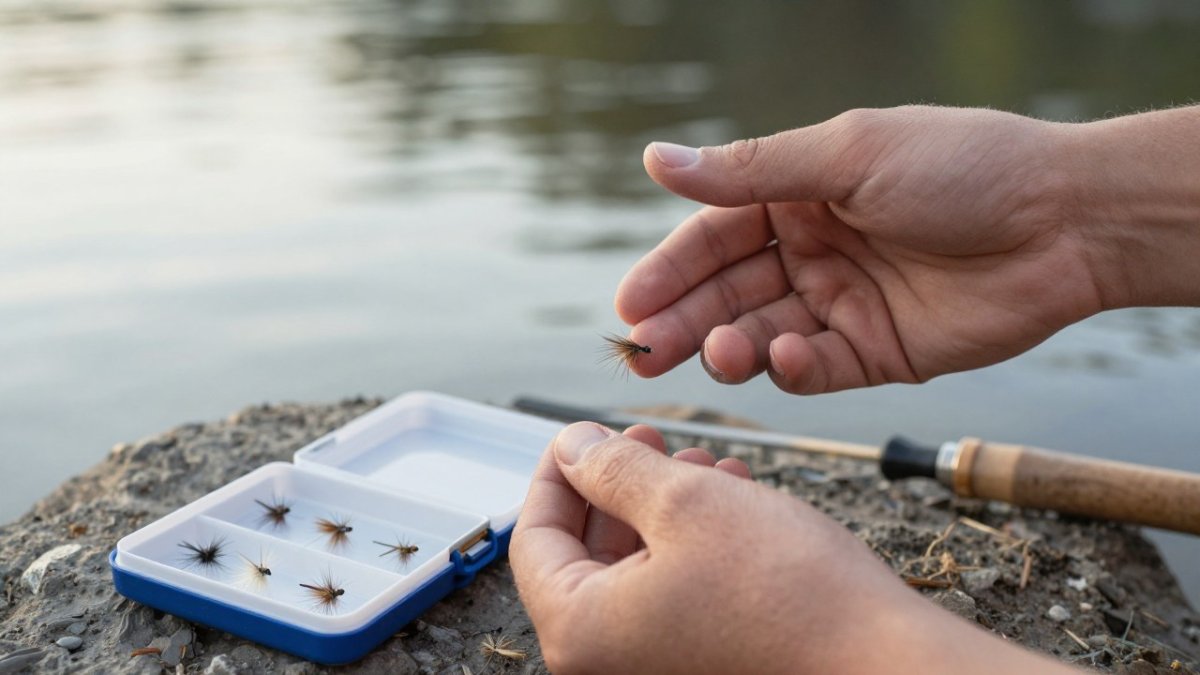
Three field checks that save time
Where trout hold in the current also tells you what they are eating. Reading water and reading size go together, and our guide on how to find trout in rivers walks through the holding spots that matter most.
Using an Actual Size Fly Size Chart to Match the Hatch
An actual size fly size chart shows flies at true scale, so you can lay a natural on top and compare directly. It removes the guesswork that a printed number leaves behind.
Print one and keep it in your vest. When a hatch starts, hold the natural against the silhouettes on the page.
Local hatches vary by water and season. Matching them well means knowing what actually emerges where you fish, and our fly fishing guide for North Carolina trout covers the seasonal hatches anglers run into on area rivers.
How to Choose the Right Fly Size for Bass
Bass want bigger meals than trout. For bass, start large and work down.
The logic flips. Trout are often fussy about tiny insects. Bass are predators that chase baitfish, frogs, and big nymphs. A size 18 midge won't interest a largemouth.
Choosing a fly size for bass means matching the forage:
- Baitfish present: Clouser Minnows and streamers in sizes 2-6
- Frogs and mice: large poppers and deer-hair bugs, size 2 and up
- Crayfish: weighted patterns in sizes 4-8
Bass also respond to water clarity. In muddy water, bigger and darker flies move fish. In clear water, a smaller, more realistic profile draws strikes.
How Do I Know What Size Flies I Have?
You know a fly's size by checking the hook, not the dressing. The number is usually stamped on the hook shank or printed on the box it came in.
If the marking is gone, use a reference. Lay the fly next to a known size or an actual size chart.
A quick sorting method:
- Group flies by hook gap size on a flat surface
- Label compartments by number, not by pattern name
- Keep a small ruler or printed chart in your box
Getting organized pays off fast. When a hatch starts, you want to grab the right size without digging.
Adjusting Size When Fish Refuse or Miss the Take
A refusal is information, but only if you read it correctly. The mistake most anglers make is treating every refusal as a size problem and downsizing until they are fishing a size 22 to a fish that wanted a size 12 skated across the surface. Before you change flies, run a short diagnostic that separates size from drift, presentation, and pattern.
Step 1: Classify the refusal
Watch the fish, not your fly. The way a trout responds tells you which variable to change first.
- Inspection then turn-away: The fish rose, looked, and refused. This is the classic oversized-fly signal. Drop one hook size and keep the same pattern.
- Bulge or boil under the fly: The fish moved but did not break the surface. Your fly is likely sitting too deep or dragging. Check drift before you change size.
- Splashy miss or short strike: The fish committed but did not connect. This is usually a profile or hook-gap issue, not a size-too-small issue.
Step 2: Rule out drift and drag before downsizing
A size 14 dry fly dragging across a seam will be refused every bit as reliably as a size 8 dry fly on a size 20 hatch. Before you go up a hook number, do three things:
- Lengthen your tippet by 12-18 inches. A shorter, stiffer connection drags micro-currents that a longer, softer tippet absorbs.
- Reposition for a drag-free drift. Move upstream or across so the fly floats at the same speed as the current seam the fish is holding in.
- Check your fly line. A line that lands on a faster current than the fly will pull it off the seam within a foot or two.
If the refusal stops after these changes, the fly was never the problem. If it continues, move to Step 3.
Step 3: Change one variable at a time
The temptation is to swap size, pattern, and color at once. That tells you nothing. Work in this order:
- Size only. Go up one hook number (14 to 16, 16 to 18). Keep the same pattern and drift.
- Profile only. If size alone does not work, switch to a sparser tie of the same pattern on the same hook. A sparse size 16 often out-fishes a bushy size 18 because the silhouette matches the natural.
- Pattern only. If size and profile changes fail, the fish is eating a different insect. Match the natural you are seeing, not the one you expected.
- Depth only. For nymphs, add or remove a split shot or adjust your indicator before changing fly size. A size 16 nymph fished six inches too high will be ignored as reliably as a size 10.
Step 4: Diagnose missed takes separately
A missed take is not a refusal. When fish strike and miss, the problem is usually one of these:
- Hook gap too small for the materials. A size 18 hook buried in thick dubbing has an effective gap smaller than a sparse size 16. Trim materials or drop a hook size only if the gap is actually the issue.
- Hook set timing. Trout that sip small flies require a softer, slower hook set than fish crushing streamers. A hard strip-set on a size 20 midge pulls the fly out of the mouth.
- Tippet too heavy. Heavy tippet stiffens the fly's drift and makes small flies sit unnaturally. Step down one tippet size before you step down a hook size.
Watch out: downsizing without checking your knots costs fish. Our guide to essential fly fishing knots covers the connections that hold up when you are fishing tiny patterns.
If you keep missing the take after ruling out size, the problem may be your hook set rather than the fly. Learning how to set the hook properly makes small flies connect far more often.
New to the sport and want the fundamentals in order first? Our beginner fly fishing guide builds the base before you start fine-tuning size.
Frequently Asked Questions
What does the number on a fly size mean?
The number on a fly hook works in reverse: a size 16 fly is smaller than a size 12, and a size 20 is smaller still. Sizes typically run from about 2 down to 28 for trout patterns. When someone says to go down a size, they mean a higher number and a smaller fly. Understanding this one rule prevents most beginner mistakes when picking fly size from a shop wall or a guide's recommendation.
How do I match fly size to the insects on the water?
Catch a natural insect if you can, or watch one drift past, and compare its body length to your fly. A mayfly that measures roughly half an inch usually matches a size 12 or 14 dry fly. If trout are rising but ignoring your offering, drop one or two sizes before changing patterns. Matching the hatch is mostly about length and profile, not exact color, so start with size and refine from there.
Should I use a smaller or larger fly in clear water?
Clear, low water and bright light make trout cautious, so smaller flies in the size 16 to 20 range usually outperform larger patterns. In stained water, high flows, or low light, bump up a size or two so fish can find the fly. Fishing pressure matters too: heavily fished water calls for a smaller fly and a lighter presentation, while remote water tolerates larger patterns.
How do I know what size flies I have without a gauge?
Lay the fly next to a ruler or a coin for scale, or compare it to a fly you already know the size of. A standard fly hook gauge, sold at most fly shops for a few dollars, measures hook gap and shank quickly. If you are sorting a mixed box, group flies by eye from smallest to largest first, then confirm the outliers with a gauge.