 blog
blog
Best Fly Fishing Spots Near Raleigh: 2026 Guide
Table of Contents
- Best Fly Fishing Spots Near Raleigh: 7 Local Waters Worth the Drive
- Fly Fishing for Trout in NC: Tailwaters and Mountain Streams
- Guided Fly Fishing Trips Near Raleigh: What to Expect and Who They're For
- NC Wildlife Resources Commission Fishing Regulations: Licenses, Limits, and Access Rules
- Seasonal Patterns and Water Conditions for Raleigh-Area Fly Fishing
- Gear, Flies, and Access: What to Bring and Where to Park
- Frequently Asked Questions
Last Updated: September 30, 2026
Best Fly Fishing Spots Near Raleigh: 7 Local Waters Worth the Drive
The best fly fishing spots near Raleigh sit within an hour or two of the city, from stocked trout streams to warm-water bass rivers. This guide from Smith River Outfitter Raleigh Fly FIshing breaks down seven waters worth the drive, plus what to bring and when to go.
Here are the seven waters worth your time, with the logistics that decide whether a trip works:
1. The Neuse River below Falls Lake
The closest real tailwater to the city, and the one most locals fish after work. The stretch below Falls Lake Dam holds largemouth and smallmouth bass, plus bluegill and redbreast sunfish. It is not a trout fishery, water temps run too warm, so bring a 6- or 7-weight for streamers and poppers.
Access: The Falls Lake tailrace area off Falls of the Neuse Road has a designated parking lot and a short walk to the bank.
2. Eno River State Park
This is the beginner's classroom: a warm-water Piedmont stream with easy wade access, gentle current, and plenty of sunfish and small bass to reward imperfect casts. Trails from the access points lead to water that sees less pressure than the lot-adjacent stretches.
3. Haw River
A warm-water fishery with solid bass action in spring and summer, and one of the better smallmouth options in the Piedmont. The Haw runs through public and private land, so access discipline matters.
4. Cape Fear River
Big water. This is not a wade fishery for most of its length, it is best fished from a boat or with a guide who knows the shoals and current seams. The Cape Fear holds striped bass, largemouth, and catfish, and the fishing is about reading current, not covering water.
5. Deep River
A quiet Piedmont stream with good sunfish and bass populations and far less pressure than the Eno or Haw, a good choice when you want solitude more than size.
6. Smith River (Virginia)
A true tailwater trout fishery, roughly two hours north. Cold water released from Philpott Dam keeps trout alive year-round, and the river has a reputation as one of the better tailwaters in the region. This spot most rewards a full day and a generation-schedule check.
7. Stone Mountain State Park
Mountain trout streams, worth the longer drive. The park has stocked and wild trout water, and higher-elevation creeks hold native brook trout. This is technical, small-water fishing, short casts, stealth, and light tippet.
Fly Fishing for Trout in NC: Tailwaters and Mountain Streams
Trout fishing in North Carolina splits into two worlds: cold tailwaters below dams and wild mountain streams at higher elevation. Both hold fish but demand different approaches.
A few things separate success from a wasted drive:
- Check stream flow before you go, especially on tailwaters
- Match your fly to what's hatching, not what worked last month
- Fish early or late when water temps are coolest
- Watch for posted regulations, since some streams are catch and release only
Guided Fly Fishing Trips Near Raleigh: What to Expect and Who They're For
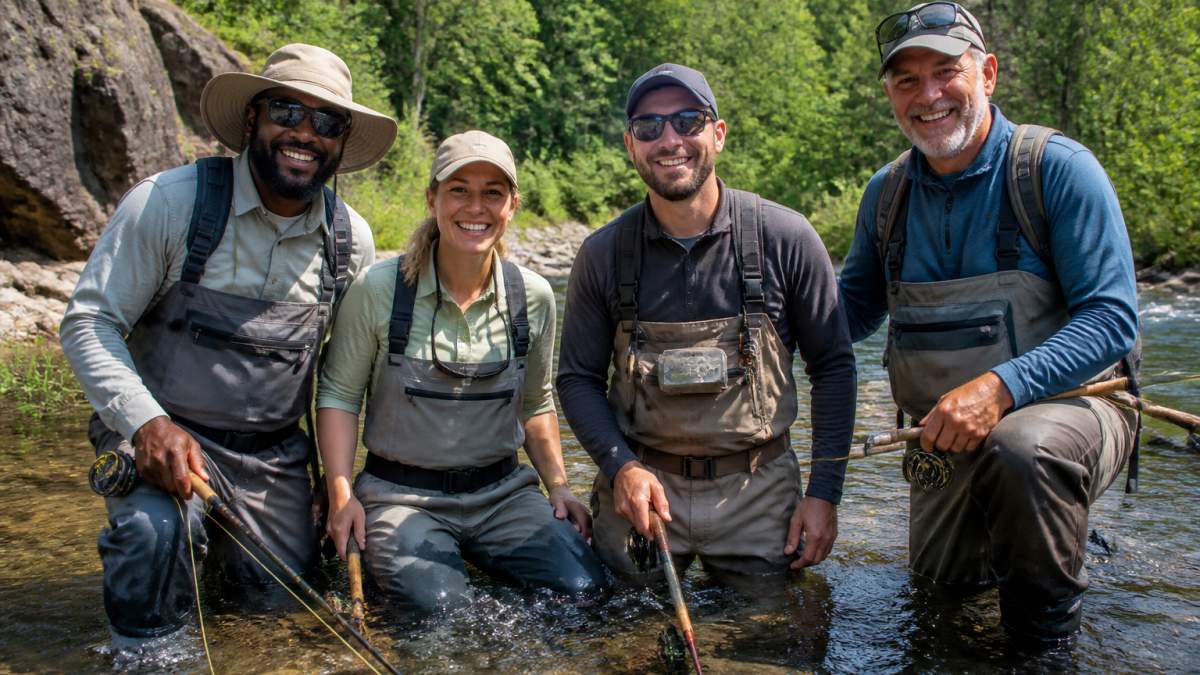
Guided fly fishing trips near Raleigh are the fastest way to shorten the learning curve, especially for beginners. A good guide handles logistics, reads the water, and puts you on fish while teaching technique in real time.
Here's what a typical trip looks like:
- Gear provided - Rods, reels, flies, and waders are usually supplied, so you don't need to buy anything first
- Instruction built in - Casting, mending, and reading water get covered as you fish, not in a classroom
- Local knowledge - Guides know which stretch is producing and which fly is working that week
- Half-day and full-day options - Shorter trips suit first-timers, longer ones suit anglers chasing specific species
NC Wildlife Resources Commission Fishing Regulations: Licenses, Limits, and Access Rules
Anyone age 16 or older needs a valid North Carolina fishing license to fish public waters. The NC Wildlife Resources Commission license and regulations portal lays out every license type, season, and creel limit you need to know. But the license is only the first box to check, the rules that actually trip up beginners are the ones layered on top of it.
License basics for beginners
North Carolina offers resident and non-resident licenses in annual, short-term, and lifetime options; a short-term license is usually cheaper if you only fish a few weekends a year. For trout waters, you need the trout privilege added to your base license, a plain freshwater license does not cover designated trout streams.
Trout waters carry extra rules
The Commission designates certain streams as Public Mountain Trout Waters, which carry their own season, size, and creel rules on top of the statewide license. Some are catch-and-release only, some artificial-lures-only, some allow a daily limit of a few trout. The designation is posted at access points, but check current regulations before fishing any mountain or tailwater stream.
Public access and private property
This is the rule beginners break without knowing it. Many Piedmont rivers run through private property, and the bank is private even where the water looks public. In North Carolina, the public's right to fish is generally tied to navigable waters, and the streambed and banks can be privately owned. Stick to designated public access points, state parks, wildlife areas, and marked boat ramps, rather than climbing a fence to reach a good-looking run.
Accessibility and ADA access
If you or someone in your group needs accessible bank access, several state park and wildlife area locations offer paved paths, accessible fishing piers, or graded bank access. The NC State Parks access and trail information lists official entry points, and park staff can confirm which spots have accessible features. Calling ahead is the reliable move, since accessibility varies by location and can change with construction or flooding.
What to confirm before you go
- Your license is current and matches the water you're fishing
- You have the trout privilege if you're fishing designated trout waters
- You know the daily creel limit and size rules for your target species
- You understand which waters are designated trout waters, since they carry extra rules
- You're fishing legal access points, not crossing private land to reach the bank
- You've checked whether the specific stretch is catch-and-release or artificial-lures-only
The NC Wildlife Resources Commission fishing page is the only source worth trusting for current limits. Rules change, and a forum post from three years ago won't help you.
Seasonal Patterns and Water Conditions for Raleigh-Area Fly Fishing
Water temperature drives everything. Trout feed best when water sits in the mid-50s to mid-60s Fahrenheit; bass and sunfish turn on past 60.
| Season | Best Target | Water Temp Range | Key Tip |
|---|---|---|---|
| Spring | Trout, bass | 50-65°F | Fish hatches, expect crowds |
| Summer | Bass, sunfish | 65-80°F | Go early, target tailwaters |
| Fall | Trout, bass | 55-68°F | Best overall month is October |
| Winter | Trout | 40-50°F | Slow down, fish deep pools |
Gear, Flies, and Access: What to Bring and Where to Park
A 9-foot, 5-weight fly rod handles most water around Raleigh. It's the standard all-around setup for trout and bass. Pair it with a weight-forward floating line and a 9-foot leader tapered to 4x or 5x tippet.
- Fly rod and reel (5-weight is the safe pick)
- Waders or wading boots with good grip
- Polarized sunglasses to spot fish and cut glare
- A small fly box with a mix of nymphs, dry flies, and streamers
- Nippers, forceps, and a landing net
Frequently Asked Questions
Do I need a fishing license to fly fish in North Carolina?
Yes. Anyone 16 or older needs a valid North Carolina fishing license to fish public waters, including all the fly fishing spots near Raleigh covered here. A basic inland fishing license covers most Piedmont rivers and lakes; trout waters may require a trout privilege stamp. Buy online through the NC Wildlife Resources Commission or at local tackle shops. Short-term licenses are available for visitors.
What are the best trout streams within a few hours of Raleigh?
The Smith River in Virginia offers reliable cold-water fisheries.
What gear do I need for fly fishing in local Piedmont waters?
A 9-foot 5-weight fly rod handles most Piedmont bass and sunfish. For trout in tailwaters, a 9-foot 4- or 5-weight works well. Bring waders or wet-wading boots, a landing net, nippers, and a small fly box. If you book a guided trip, rods, reels, and flies are typically provided, so you can try the sport before buying equipment.
Are there guided fly fishing trips available near Raleigh?
Yes. Local outfitters offer half-day and full-day guided trips on Piedmont rivers and nearby tailwaters. Guides provide equipment, flies, and local knowledge of where fish are holding. Trips suit complete beginners and experienced anglers alike. Pricing depends on trip length, group size, and destination, so check the outfitter's website for current rates and availability.