 how-to
How to Practice Fly Fishing Etiquette on Public Waters
Last Updated: November 9, 2026
Quick Summary
Fly fishing etiquette on public waters means giving other anglers generous room, sharing productive water fairly, and leaving the river as you found it. Stay at least one casting distance from anyone already fishing, enter pools from the tail, and watch your back cast. Courtesy keeps the water enjoyable for everyone and protects the fish.
- Give other anglers a buffer of at least one full casting length.
- Enter a pool from the tail, never from above another angler.
- Check behind you for other anglers before every back cast.
- Stop casting near anyone playing a fish and give them room.
- Ask politely to share a spot, and accept a no gracefully.
Table of Contents
- How Much Space to Give Other Anglers Fishing
- Fly Fishing River Access Etiquette: Boundaries, Rights and Regulations
- How to Ask an Angler to Share a Fishing Spot
- Taking Turns on Crowded Water: A Practical Decision Guide
- Etiquette for Boats, Rafts and Mixed-Use Waterways
- Booking Your First Guided Trip With Smith River Outfitter
- Frequently Asked Questions
Public rivers and streams belong to everyone, which is exactly why good manners on the water matter so much.
Fly fishing etiquette is the practice of giving other anglers room, sharing productive water fairly, and leaving the river as you found it.
Here is the core idea: every angler on a public river is sharing a resource. For help learning these unwritten rules on crowded water, see why a professional guide is worth hiring.
Good etiquette also protects the fish. Anglers who play a fish quickly, avoid crowding a pool, and keep wet hands off the fish help keep the population healthy for the next person.
How Much Space to Give Other Anglers Fishing
Give other anglers a generous buffer, often a full casting length or more. That gap helps prevent tangled lines, spooked fish and hard feelings.
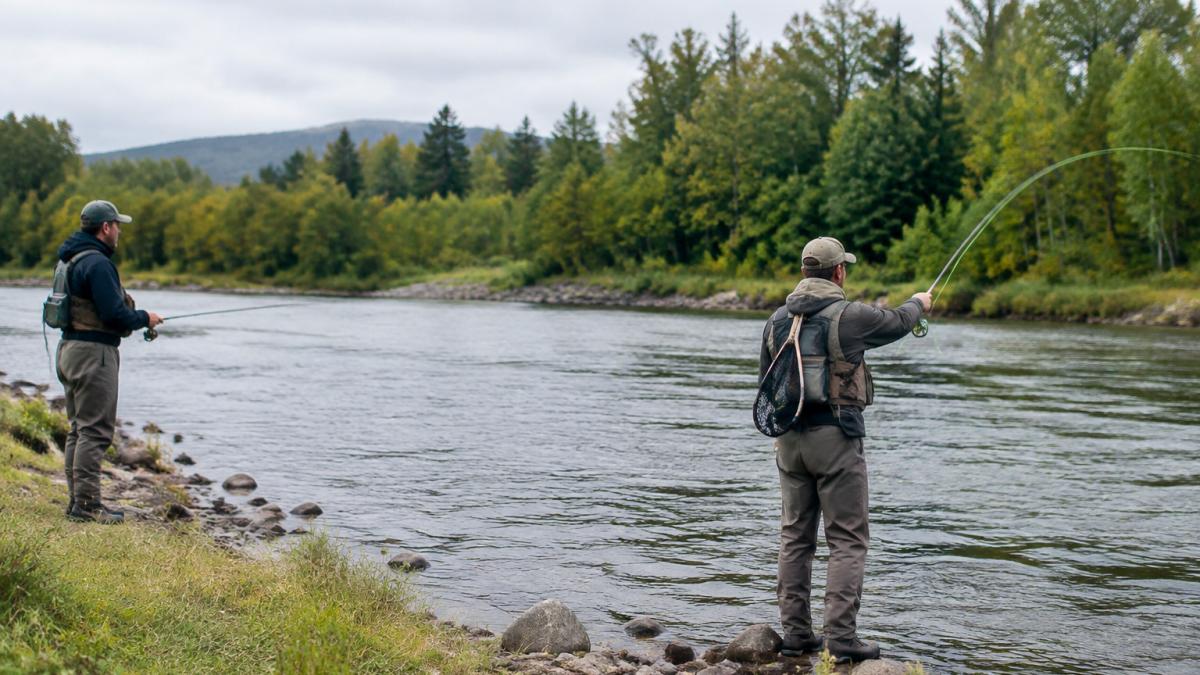
Start by reading the water before you step in. Note where others are standing, where they are likely casting, and which seams and pockets they are working.
- Stay at least one casting distance away from anyone already fishing
- Enter a pool from the tail, never from above another angler
- Keep your wading path quiet and slow
A common mistake is walking straight into a run that someone has already been fishing for an hour. Ask, wait, or move on.
Staying Out of Another Angler's Casting Lane
Your back cast is the biggest hazard on a crowded river. Before you cast, check behind you and above you for other anglers, trees and brush.
Watch for drifting lines too. If your fly crosses another angler's line, the courteous move is to lift your rod and let the line pass. Tangled leaders waste both your time.
Yielding to an Angler Playing a Fish
When someone is playing a fish, stop casting near them and give them room. A fish that runs into your line can break off, and the angler loses a fish they worked hard to hook.
Move downstream and wait. Most anglers appreciate that, and you will often get your turn sooner than you expect.
Fly Fishing River Access Etiquette: Boundaries, Rights and Regulations
Etiquette and legal access are not the same thing, and confusing them is one of the most common sources of conflict on public water. Etiquette is about courtesy; access law is about what you are legally allowed to do. A spot can be legal to fish and still be rude to occupy, and a spot can be courteous to ask about and still be off-limits by law.
The practical rule is this: know the legal boundary before you rely on etiquette to smooth things over.
How access rules actually vary
Access rules are set by state law and by the ownership of the riverbed and banks, so they can differ from state to state and even from stretch to stretch. To find legal and courteous places to fish near you, see nearby public access points.
Because of that variation, do not assume the rules you learned on one river apply to another. Before you fish unfamiliar water, confirm three things: who owns the riverbed, where the ordinary high-water mark falls, and whether there is a public access easement or right-of-way.
Reading the bank and the boundary
On the water, the boundary is usually marked by the ordinary high-water mark, the line on the bank where the water has left its mark through erosion, vegetation change, or a distinct debris line. Below that line is typically the public channel; above it is typically private land. Stay below the line unless you have permission to cross private property.
- Confirm which bank is public before you cross
- Use marked access points and parking areas rather than informal pull-offs
- Respect posted signs, seasonal closures, and reservation or permit systems
- Do not cross private land to reach public water, even if others clearly have
Watch out: A gate that is open is not permission. Posted signs, fences, and cultivated land are signals to stop and confirm access before proceeding.
Where to confirm the rules
Your state wildlife agency is a primary source for fishing regulations, and many publish river-specific access maps and boundary information. Local land trusts, parks departments, and the agency that manages a given access site can confirm parking, launch, and closure rules. When in doubt, call before you go rather than arguing at the put-in.
Etiquette beyond the legal line
Even where access is clearly legal, etiquette still applies. Do not park in a way that blocks a launch or a neighbor's driveway. Do not cross a bank that is legally public but obviously in use by another angler.
The anglers who keep access open are the ones who treat every boundary, legal and social, with the same care.
How to Ask an Angler to Share a Fishing Spot
Ask politely and keep it short. A simple, friendly question works better than walking in without a word.
Try something like: "Mind if I fish the tailout below you when you're done?" This shows respect and gives the other angler control.
If they say no, accept it gracefully and move on. Shared water works best when everyone feels in control of their own space.
Taking Turns on Crowded Water: A Practical Decision Guide
Crowded water is where etiquette gets tested. The principles are simple, share, take turns, don't crowd, but the decisions are situational. Use the scenarios below to decide quickly and calmly, rather than defaulting to either hovering over someone or walking away frustrated.
Scenario 1: One angler is working the only good pool
If a single angler is already fishing the one productive pool, do not wade in above or beside them.
If they say yes, fish the tailout efficiently and then move on. If they say no, thank them and go. Most practitioners find that a polite ask gets a yes more often than silent hovering does.
Watch out: Do not stand at the head of the pool waiting for them to leave. That reads as pressure, and it spooks fish in the water you are both trying to fish.
Scenario 2: Several runs are open but one is clearly best
When multiple runs are available, pick the one furthest from other anglers, even if it is not the most productive. Fish it thoroughly and efficiently, make your presentations count, cover the water in a systematic grid, and then move. Occupying marginal water for an hour blocks others from using it and rarely produces more fish than a focused pass.
A useful rule of thumb: if you have cast through a run without a take, move on rather than cycling the same water repeatedly while someone waits.
Scenario 3: The river is crowded everywhere
If every access point and run is occupied, the courteous move is to change your plan rather than squeeze in. Options include fishing a different stretch, returning at a different time of day (early morning and late evening are typically less crowded), or walking farther from the parking lot, where pressure drops off quickly.
Scenario 4: Someone is fishing a spot you want to fish later
If you want a specific run that someone is currently working, ask whether they plan to move upstream or downstream, and let them know you will fish behind them when they are done. This is the standard "leapfrog" pattern on crowded rivers: anglers work in the same direction, each taking a turn on productive water, rather than leapfrogging ahead of one another.
Scenario 5: You are the one being asked
When someone asks to share, answer clearly and briefly. "I'm working up through this run, give me about twenty minutes and the tailout is yours" is better than a vague shrug. Clear answers prevent the awkward hovering that ruins everyone's day.
The efficiency principle behind all of it
Every scenario above comes back to one idea: fish efficiently and move. The angler who covers water systematically and moves on shares the river well; the angler who camps on one pool all afternoon does not, even if they are polite about it. Treat productive water as something you borrow for a turn, not something you own for the day.
The article's scenarios point to a few quick decisions anglers can make on crowded water.
| Situation | Recommended move | Why |
|---|---|---|
| One angler on the only good pool | Watch from the bank, then ask a specific question | Gives them control and avoids cutting in |
| Several runs open, one clearly best | Pick the run furthest from others | Spreads anglers out and avoids blocking water |
| Every run is occupied | Change stretch, time or walk farther | Squeezing in causes conflict |
| Want a run someone is working | Ask their direction and fish behind them | Standard leapfrog pattern on crowded rivers |
| Asked to share a spot | Answer clearly with a time frame | Prevents awkward hovering |
Etiquette for Boats, Rafts and Mixed-Use Waterways
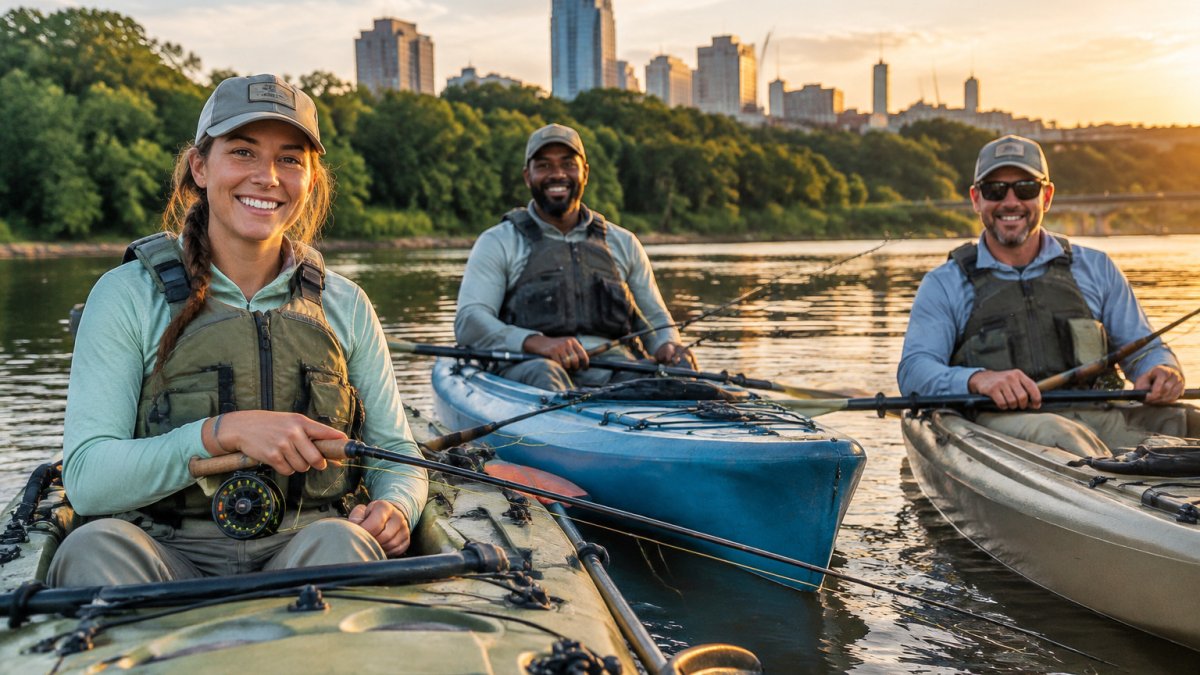
Boats, rafts and wade anglers often share the same river. Give boats the right of way in the channel, and keep your line clear of their path. Anglers on the bank should wade quietly and avoid spooking fish in areas boats are using.
Mixed-use rivers also include swimmers, paddlers and dog walkers. Keep dogs under control, keep noise low, and give others space to pass.
Booking Your First Guided Trip With Smith River Outfitter
If etiquette feels like a lot to learn on your own, a guide can help.
To book, visit our website and contact our team with your experience level and any gear questions. Follow the step-by-step booking process to plan your first trip. You can also review what guided trips cost before you commit.
BUTTON: Book Your Guided Trip CARD_TITLE: New to fly fishing on public water? CARD_TEXT: Smith River Outfitter Raleigh Fly FIshing guides teach etiquette and technique on local rivers.
Frequently Asked Questions
How much space should you leave between fly fishers on a river?
A common courtesy is to leave enough room that neither angler's line, back cast or wading path crosses the other's water. On a narrow run that often means at least one full pool length, and on wider rivers you should give the other person room to make a complete cast without worrying about hooking you. If you are unsure, ask the angler how much room they need before you move in. Most anglers appreciate the question and will tell you plainly what works for them.
Is it rude to fish upstream or downstream of another angler?
It depends on the water and the position. Fishing upstream of someone is generally considered the courteous choice because you will not drift line or disturbance down onto fish they are working. Fishing downstream of another angler is acceptable if you keep well out of their drift and do not wade through water they are actively fishing. When in doubt, ask. A simple question about where they are fishing usually settles the matter before anyone's line gets tangled.
What should you do if someone is already fishing the water you want?
Do not move in ahead of them, even if the spot looks productive. Find out how they plan to fish the water and whether they are staying or moving on. If they are staying, look for another pool or run nearby, or come back later. If they are moving on, wait a reasonable time and then ask whether you can take their spot. Most anglers will tell you when they are finished, and taking turns keeps the water enjoyable for everyone.
What are the basic rules for sharing public fishing access?
Stay on the public portion of the water and respect the access points and boundaries that apply to that stretch. Keep your noise and conversation low, pack out everything you bring in, and keep dogs under control. Share productive water by taking turns and moving through efficiently rather than working one pool for an hour. Be aware of local regulations, which can vary by river and state, and check current rules before you head out.