 how-to
How to Find Trout in Rivers: A Step-by-Step Guide
Table of Contents
- What You'll Need Before You Start
- How to Read Water for Fly Fishing
- Step 1: Scout the River Before You Fish
- Step 2: Focus on High-Percentage Holding Water
- Step 3: Match Your Approach to Seasonal Trout Behavior in Rivers
- Step 4: Select the Best Bait for River Trout
- Step 5: Use Stealth and Proper Presentation
- Common Mistakes to Avoid
- Frequently Asked Questions
Last Updated: September 27, 2026
What You'll Need Before You Start
To find trout in rivers, you need to start with the right gear. You don't need expensive equipment, but a few essentials make a real difference.
Polarized sunglasses are non-negotiable. They cut water glare and let you see beneath the surface. Without them, you're fishing blind.
You'll also want a good pair of wading boots with felt or rubber soles. Rivers are slippery. A fall wastes time and risks injury.
A fly rod (typically 8-9 feet) works well for most river conditions. Pair it with a floating line and a leader (the thin section connecting your line to the fly). Beginners often start with a 9-foot leader tapered to 4X or 5X tippet.
Bring a net to land fish safely. A small pack holds extra flies, sunscreen, and water. A thermometer helps you understand water temperature, which affects trout behavior.
At Smith River Outfitter Raleigh Fly FIshing, we recommend starting simple. Master the basics before upgrading gear.
How to Read Water for Fly Fishing
Reading water is the single most important skill to find trout in rivers. Trout hold in specific spots based on current, depth, and food availability. Start by observing the water's movement: fast water, slow water, and the seams between them. Trout position themselves where food drifts to them without exhausting effort.
Identifying Current Seams and Feeding Lanes
A current seam is where fast and slow water meet. Trout rest in calm water while grabbing food from the current. Look for lines on the water surface marking seams. Aquatic insects drift in the current, and trout intercept them in feeding lanes, typically 2-4 feet wide alongside banks, rocks, or structure.
Here's what to look for:
- Water that moves visibly faster in one direction
- A visible line or color change marking the boundary
- Slight surface disturbance or texture change
- Deeper water just behind structure
The most productive seams run parallel to current. Trout face upstream. Position yourself downstream and cast upstream into the seam. Within a single seam, trout often hold 6-12 inches inside the primary seam in a secondary micro-current rather than right on the boundary, this is where your fly should drift. Also look for micro-eddies (tiny spirals behind pebbles or rocks), oxygenated zones where trout rest between feeding bursts.
Spotting Structure and Cover
Structure (rocks, logs, undercut banks, vegetation) creates pockets of slower water where trout rest without fighting current. Cut banks with overhangs are high-percentage spots. Look for large rocks, fallen trees, depth changes, and weed beds. Rocky substrate with small stones indicates current and oxygenation and usually holds more trout than sandy or silty bottoms.
Water flowing around a boulder creates a stagnation zone directly behind it. But 12-18 inches downstream, a sweet spot forms where current resumes at manageable velocity, this is where trout hold. In undercut banks, trout position themselves at the mouth where they access both cover and current. When casting at structure, target the transition zone where current resumes first.
Reading Depth and Oxygen Gradients
Moving water carries more dissolved oxygen than still water. In deep, slow pools, trout hold deeper (3-6 feet) for cooler water. In fast runs, they hold in 1-2 feet because current keeps it oxygenated. Darker water indicates depth; lighter, textured water indicates shallower zones with more current where trout feed more aggressively.
Step 1: Scout the River Before You Fish
Never start fishing without understanding the water. Spend 15-20 minutes observing before you cast.
Walk the bank slowly. Look for color changes, surface disturbance, and areas where water moves differently. Notice where the current accelerates and where it slows.
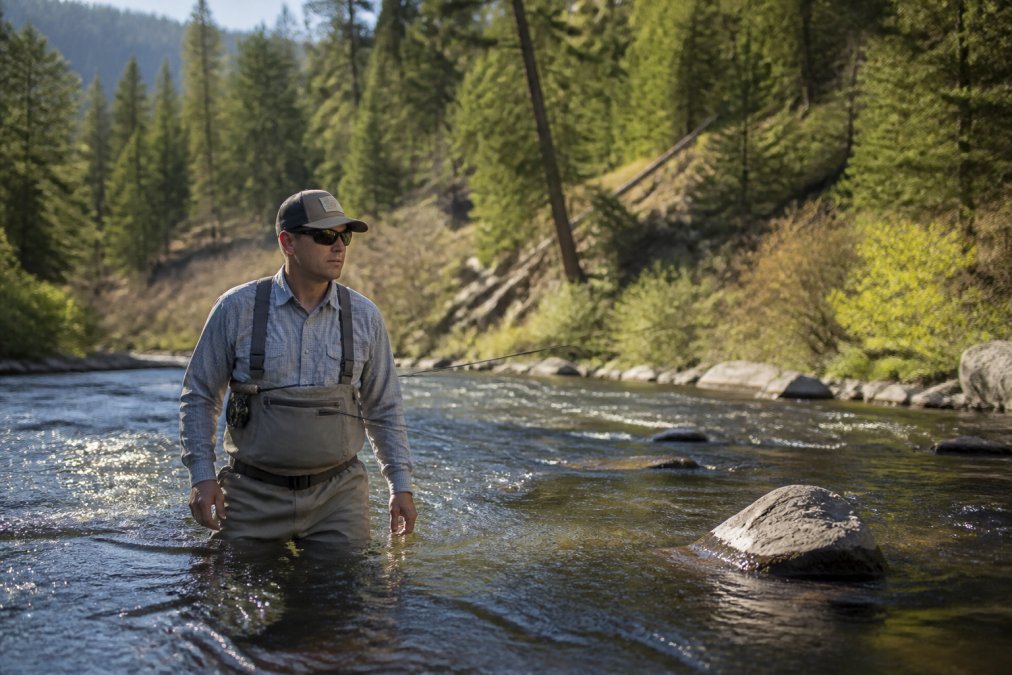
Pay attention to water temperature. Cold water (below 50°F) slows trout metabolism. They hold tight to cover and move less. Warmer water (55-65°F) makes them more active and willing to chase food.
Look for signs of activity. Rising fish, insect hatches, or baitfish movement tell you where trout are feeding. If you see nothing, focus on structure and current seams.
Identify your target zones before entering the water. This saves time and prevents spooking fish. Trout detect vibrations and sudden movement. Stealth starts on the bank.
Step 2: Focus on High-Percentage Holding Water
High-percentage water combines three factors: current (food delivery), depth, and cover (safety). Trout need all three with minimal effort to hold position.
Pools and Runs
A pool is deeper, slower water where trout rest with minimal energy. Fish the head first (food and oxygen enter here) and the tail (where water accelerates). A run is moderate-depth water with steady current, often holding more trout than pools. Cast slightly upstream and let your fly drift naturally.
Pocket Water and Tailouts
Pocket water consists of small areas with rocks creating multiple seams and eddies. Cast directly into pockets and move quickly. Tailouts (where pools transition to shallower water) concentrate food and are underrated spots. Fish tailouts with short drifts; accuracy matters more than distance.
Step 3: Match Your Approach to Seasonal Trout Behavior in Rivers
Trout behavior changes with seasons and barometric pressure. These affect trout positioning and feeding intensity as much as temperature does.
How Barometric Pressure Affects Trout
Rising barometric pressure makes trout more active; they move shallower and feed aggressively. Fish shallower water and use larger flies. Falling barometric pressure suppresses feeding; trout move deeper and tighter to cover. Fish deeper structure and use smaller flies. Stable pressure means normal feeding based on temperature and time of day. Track pressure with a weather app and adjust accordingly.
Spring and Early Summer
Spring brings warmer water and increased insect activity. Focus on nymphing (subsurface flies imitating immature aquatic insects), the primary food source. Fish deeper in early spring; as water warms, trout move shallower. On rising pressure days, fish shallower water; on falling pressure days, retreat to deeper pools.
Late Summer and Fall
Late summer means warmer water; when it exceeds 68°F, trout stress and hold in the coolest, deepest water. Fish early morning and late evening. Fall brings cooling water and renewed activity, prime fishing season. Use streamers (larger flies imitating baitfish) near structure. Stable or rising pressure in fall allows all-day fishing.
Winter Patterns
Winter slows trout metabolism. Fish the deepest pools with small nymphs, fishing slowly, trout won't chase far. On high-pressure winter days, trout are slightly more active; fish slightly shallower. On low-pressure days, fish the most sheltered, deepest water.
Weather and Wind Considerations
Overcast days are often better than sunny days. Cloud cover makes trout less cautious. They move shallower and feed more confidently. Overcast weather often correlates with falling or stable pressure, which can suppress feeding, but the reduced light typically compensates.
Wind affects surface presentation. A light breeze (5-10 mph) creates surface texture that helps hide your fly line and reduces trout's ability to see you. Moderate wind (10-15 mph) makes dry fly fishing difficult but can improve nymph fishing by creating current disturbance. Strong wind (15+ mph) makes wading dangerous and casting difficult; consider sitting out extreme wind days or fishing sheltered sections.
Rain typically improves fishing.
Step 4: Select the Best Bait for River Trout
Fly selection matters, but presentation matters more. A mediocre fly drifted perfectly beats a perfect fly drifted poorly.
Step 5: Use Stealth and Proper Presentation
Stealth separates good anglers from great ones. Trout spook easily.
Common Mistakes to Avoid
Fishing too fast. Beginners rush. They move from spot to spot without giving trout time to respond. Slow down. Fish each area thoroughly.
| Seasonal Strategy | Water Temperature | Best Technique | Peak Times |
|---|---|---|---|
| Spring/Early Summer | 50-60°F | Nymphing, shallow water | Mid-morning, afternoon |
| Late Summer/Fall | 60-68°F | Streamers, seams | Early morning, evening |
| Winter | Below 50°F | Small nymphs, deep pools | Midday (warmest hours) |
Frequently Asked Questions
What is the best bait for trout in a river?
The best bait for river trout depends on what's naturally available in the water. Live nymphs, small minnows, and aquatic insect imitations work well. Match the hatch by observing what insects are present. Nymphs are highly effective year-round because trout feed on them subsurface 80% of the time. Spinners and streamers imitate larger prey and work well in faster current. Your guide can show you what's producing on your specific river section that day.
How do seasonal changes affect where trout hold in a river?
Seasonal trout behavior in rivers shifts with water temperature and food availability. In spring, trout move to shallower water near banks as temperatures rise. Summer heat pushes them to deeper pools and beneath undercut banks where water stays cooler. Fall brings them back to mid-depth runs as temperatures drop. Winter forces them into the deepest, slowest pockets where they conserve energy. Understanding these shifts helps you find fish faster instead of searching random spots.
What structural features should I target to find trout?
Focus on structure that provides food, shelter, and current breaks. Trout hold behind rocks, fallen trees, and undercut banks where they escape strong current while staying in feeding lanes. Seams where fast and slow water meet concentrate food. Eddies trap insects and provide rest zones. Deeper pools offer security, while shallower riffles provide oxygen and feeding opportunities. Combine structure with depth and current speed to identify high-percentage water.
How can I spot trout in clear water?
Polarized sunglasses eliminate surface glare and let you see beneath the water. Look for shadows, shapes, and movement rather than trying to spot the fish's color. Trout often hold tight to structure, so scan the edges of rocks, logs, and banks closely. Watch for the white of their mouth opening as they feed. Fish often face upstream, so approach from downstream. Early morning and late evening provide better visibility than bright midday sun.