 ultimate-guide
Fly Fishing for Trout in NC: 2026 Angler's Guide
Table of Contents
- Why North Carolina Is a Top Destination for Fly Fishing for Trout
- Best Trout Streams in North Carolina: A Numbered Guide
- Choosing the Best Trout Flies for NC Streams
- NC Wildlife Resources Commission Trout Regulations You Need to Know
- Guided Fly Fishing Trips in Raleigh: What to Expect
- Essential Gear for Fly Fishing for Trout in NC
- Seasonal Patterns: When to Fish for Trout in NC
- Conclusion
- Frequently Asked Questions
Last Updated: September 16, 2026
Why North Carolina Is a Top Destination for Fly Fishing for Trout
North Carolina holds some of the most productive wild trout water in the eastern United States, with public access, cold water, and fishable hatches across all four seasons. This guide from Smith River Outfitter Raleigh Fly FIshing covers where to go, what to tie on, and how to stay legal.
Best Trout Streams in North Carolina: A Numbered Guide
These three waters show what the state offers: one technical tailwater, one backcountry freestone, and one floatable river with a genuine wild fish population.
1. Davidson River
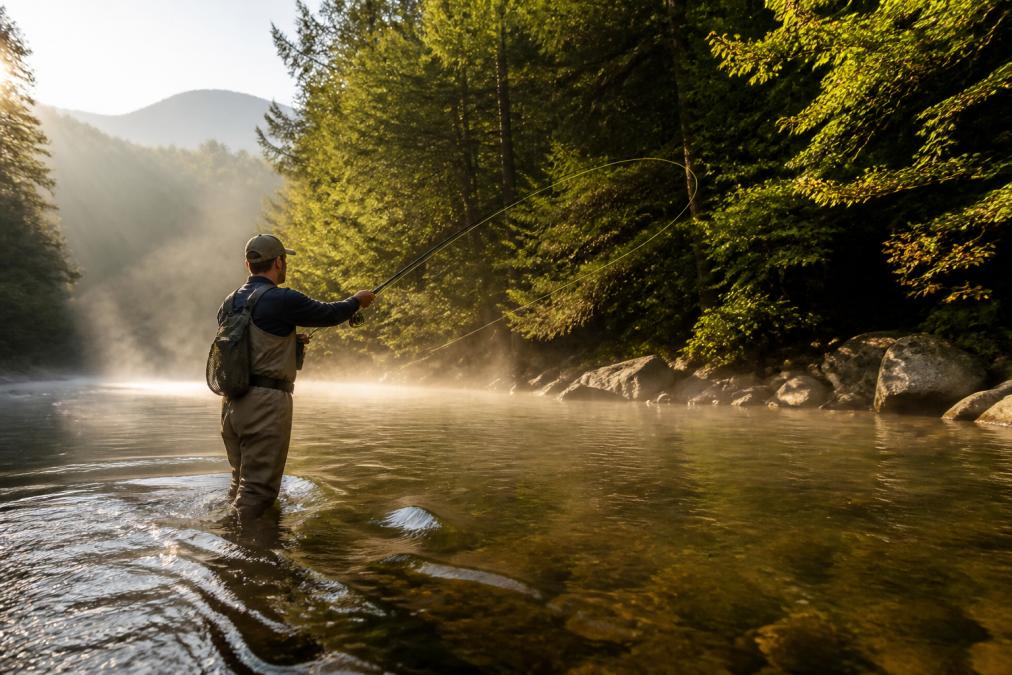
The Davidson River near Brevard is the state's best-known technical tailwater. Fish hold in clear, stable flows under heavy pressure, so drag-free drifts and light tippet are essential. Small midge and mayfly patterns in the 18-22 range are standard, and quiet waders catch noticeably more fish.
2. Wilson Creek
Wilson Creek in the Pisgah National Forest offers backcountry water with wild rainbow and brown trout. Access requires hiking, and the reward is less pressure and more willing fish. A 7.5- to 9-foot rod in a 3 or 4 weight handles the tight casting lanes.
3. Smith River
The Smith River tailwater below Philpott Dam fishes well year-round thanks to cold releases, and much of it is floatable. Nymphing and streamers produce consistently, and the river's size suits anglers building confidence with longer casts.
| Stream | Character | Best Technique | Access |
|---|---|---|---|
| Davidson River | Technical tailwater | Small dry flies, midges | Roadside and wading |
| Wilson Creek | Backcountry freestone | Dry-dropper, nymphing | Hike-in |
| Smith River | Floatable tailwater | Nymphing, streamers | Wading and float |
Choosing the Best Trout Flies for NC Streams
The best trout flies for NC streams match what is hatching on the water in front of you, not what worked two states away. Mountain streams run smaller, faster, and often clearer than western rivers, so size and silhouette matter more than pattern name. Read the water type first, then the hatch.
Tailwater vs. Freestone: Two Different Fly Boxes
Davidson River and Smith River are tailwaters, cold, steady, nutrient-rich, and loaded with midges and small mayflies year-round. Pressured, educated fish demand small flies and long, light leaders. Freestone water like Wilson Creek and higher Pisgah tributaries runs more variable: spate flows after rain, warmer summer afternoons, and a broader mix of caddis, stoneflies, and terrestrials.
Matching the Hatch: Common Aquatic Insects
Blue-winged olives (BWOs) are the workhorse mayfly, hatching in size 16-20 on overcast days from fall through spring and again on cool summer evenings. Caddis, tan and olive, sizes 14-16, dominate late spring and early summer into dusk. Midges in sizes 18-24 are the constant tailwater food source, which is why a Zebra Midge under an indicator produces on the Davidson when nothing is rising.
A Working Fly Box by Water Type
Tailwater box (Davidson, Smith River):
- Zebra Midge, sizes 18-22, in black, red, and silver, the default tailwater producer
- Pheasant Tail Nymph, sizes 16-20, as a dropper under a midge or small dry
- Parachute Adams, sizes 16-20, for BWO and midge emergences
- Griffith's Gnat, sizes 18-22, for midge clusters on flat water
- RS2, sizes 18-22, for selective tailwater fish on small mayflies
Freestone box (Wilson Creek, high tributaries):
- Elk Hair Caddis, sizes 14-16, tan and olive, the single most reliable dry on freestone water
- Stimulator, sizes 10-14, for stoneflies and as an attractor
- Parachute Adams, sizes 12-16, for general mayfly hatches
- Hare's Ear Nymph, sizes 12-16, as the dropper
- Woolly Bugger, sizes 8-10, in black and olive, for stained water and streamer fishing
- Ant and Beetle patterns, sizes 14-16, for summer terrestrials along grassy banks
Reading the Rise
A splashy rise usually means caddis or stoneflies, and a skittered dry draws a strike. A subtle, sipping rise means midges or small mayflies, go smaller, lengthen the leader, and dead-drift. If nothing is rising, do not force the dry; a nymph under an indicator or a swung streamer out-fishes a dry on most quiet-surface days.
NC Wildlife Resources Commission Trout Regulations You Need to Know
Trout fishing in North Carolina is regulated by the NC Wildlife Resources Commission, and rules change by water classification. Check current regulations for your specific stream before you fish.
Licenses and Permits
A valid North Carolina fishing license is required, and anglers fishing public mountain trout waters also need a trout privilege license. Both are available through the NC Wildlife Resources Commission license portal. Short-term and annual options exist, so visitors on a long weekend are not stuck buying a full year.
Creel Limits and Catch-and-Release Rules
Creel limits vary by classification. Hatchery-supported waters generally allow a daily limit, while wild trout waters and delayed-harvest sections restrict or prohibit harvest. Many delayed-harvest stretches require artificial flies or lures with a single hook and full release. Check your stream's rules before you go, the boundary between classifications is often just a bridge or tributary mouth.
Guided Fly Fishing Trips in Raleigh: What to Expect
Guided fly fishing trips in Raleigh give beginners a structured way to learn casting, reading water, and fly selection without spending a season figuring it out alone.
Essential Gear for Fly Fishing for Trout in NC
A 9-foot, 5-weight fly rod covers most North Carolina trout water, from the Davidson to the Smith River. Pair it with a weight-forward floating line, a 9-foot tapered leader, and 4X through 6X tippet to handle everything from small tailwater midges to a size 10 streamer. For tight, brushy freestone water like Wilson Creek, a shorter 7.5- to 8-foot rod in a 3 or 4 weight casts more accurately in the lanes you will actually get.
Layering for Mountain Weather
Temperatures swing hard in the Appalachian mountains, and a 30-degree shift in a day is common in spring and fall. A light rain jacket earns its place on almost every trip, and synthetic or wool beats cotton once you are wet. Waders are worth the weight on cold tailwaters like the Davidson and Smith River, where water stays in the 40s and 50s year-round.
Wading Safety on NC Streams
Slick bedrock, mossy boulders, and sudden drop-offs are the real hazards on Western North Carolina streams, not deep water. Felt soles are increasingly discouraged because of invasive species transfer, so studded rubber is the safer all-around choice. A wading staff is not optional on the Davidson or any tailwater where dam releases can raise levels while you are mid-river.
Backcountry Preparedness
For hike-in water like Wilson Creek and the higher Pisgah tributaries, add a hydration pack, a printed map, and a basic first-aid kit. Cell service is unreliable to nonexistent in many of these gorges, so do not count on your phone for navigation or emergencies. Tell someone your plan and expected return time before you head in.
The Small Stuff That Matters
Polarized sunglasses cut glare so you can see fish and read the bottom. A small net with a rubber bag lets you release fish without handling them, and nippers, floatant, and split shot round out the basics. Organize your fly box by water type (tailwater vs. freestone) to save time on the bank.
You do not need a quiver of rods to fish North Carolina trout water. One 9-foot 5-weight and one shorter 3- or 4-weight cover nearly every situation you will encounter, from tailwater midges to backcountry dry-dropper fishing.
Seasonal Patterns: When to Fish for Trout in NC
Spring and fall are the strongest windows for fly fishing for trout in NC, with cool water, active hatches, and comfortable wading. Summer pushes fish into shaded pockets and spring-fed tributaries, especially at lower elevations.
| Season | Water Temperature | Best Approach | Notes |
|---|---|---|---|
| Spring | Cold to warming | Dry-dropper, nymphs | Hatches build, stocking begins |
| Summer | Warm at low elevation | Early mornings, high water | Fish shaded pockets |
| Fall | Cooling | Streamers, dry flies | Aggressive feeding |
| Winter | Cold | Small nymphs, deep drifts | Tailwaters fish best |
Conclusion
The hardest part of fly fishing for trout in NC is not the fishing, it is knowing which stream to fish, which fly to tie on, and which regulations apply once you get there.
Frequently Asked Questions
Which river in North Carolina is best for fly fishing?
The Davidson River near Brevard is often considered the best for fly fishing for trout in NC, known for its wild rainbow and brown trout. Other top choices include Wilson Creek, the Smith River, and the Watauga River. Each offers different challenges, from technical dry-fly fishing to deep nymphing. Guided fly fishing trips in Raleigh can help you access these waters with local expertise.
What are the best trout flies for NC streams?
The best trout flies for NC streams depend on the season and hatch. Common patterns include Blue-Winged Olives, Elk Hair Caddis, and Pheasant Tails. In spring and fall, dry flies like Adams and Stimulators work well. For nymphing, Zebra Midges and Hare's Ears are reliable. Always check local fly shops for current recommendations, as hatches vary by watershed.
Do I need a special permit for trout fishing in North Carolina?
Yes, you need a valid North Carolina fishing license with a trout privilege stamp to fish for trout in public waters. The NC Wildlife Resources Commission requires this for anyone 16 and older. You can purchase a license online or at local retailers. Some waters, like hatchery-supported streams, may have additional regulations, so always check the current rulebook.
What are the best months for trout fishing in North Carolina?
Trout fishing in NC is productive year-round, but spring (March to May) and fall (September to November) are prime. Cooler water temperatures keep trout active and feeding. Summer can be tough in lower elevations, pushing fish to higher, cooler streams. Winter offers solitude and can be excellent on tailwaters. Guided trips in Raleigh can help you plan around seasonal patterns.
I've never fly fished before. Can a guide really teach me in one day?
Absolutely. Professional guides are experienced in teaching beginners. A full-day trip typically covers casting basics, reading water, and fly selection. You'll practice on the water with immediate feedback. Most beginners catch fish by the end of the day. Guides provide all necessary gear, so you don't need to invest before trying. It's a supportive, low-pressure environment.