 ultimate-guide
How to Choose a Fly Rod: A 2026 Guide
Table of Contents
- Understanding Fly Rod Basics: What Makes a Rod Right for You
- Fly Rod Weight Guide: Finding the Right Balance
- Fly Rod Length Guide: Matching Rod Size to Your Fishing Environment
- Fly Rod Action Explained: Slow, Medium, and Fast
- How to Match Fly Rod and Line: The Complete Connection
- Choosing the Right Rod for Your Target Species
- Testing and Buying Your First Fly Rod: What Beginners Need to Know
- Conclusion: Your Path to the Right Rod
- Frequently Asked Questions
Last Updated: October 18, 2026
Understanding Fly Rod Basics: What Makes a Rod Right for You
A fly rod is a specialized tool designed to cast lightweight flies using a weighted line, rather than a heavy lure. At Smith River Outfitter Raleigh Fly FIshing, we provide expert-led fly fishing experiences tailored to enthusiasts of all skill levels, and we've noticed a common mistake is picking a rod based on what looks cool rather than what matches your actual fishing situation.
The right fly rod isn't about finding the "best" rod in absolute terms. It's about matching four key variables: line weight, rod length, action (how it bends), and the species you're targeting. Get these wrong, and casting becomes frustrating; get them right, and the technique clicks quickly.
Most beginners don't realize that a fly rod, line, reel, and leader work as an integrated system. The rod doesn't cast the fly by itself; the weighted line does the work, and the rod propels that line. You're not shopping for a rod in isolation; you're building a matched setup where each component serves a specific purpose.
Fly Rod Weight Guide: Finding the Right Balance
A fly rod's weight determines what size line it casts and what species it suits. Weights run from 1 to 14, with lower numbers for small fish in tight spaces and higher numbers for large saltwater species.
Most beginners should start with a 5 or 6 weight rod. These handle trout in small to medium streams, bass in ponds, and panfish effectively. A 5 weight is more forgiving to learn on, requires less power to load, and is more versatile across fly sizes. A 6 weight adds distance and handles wind better but demands better technique.
Here's how rod weight correlates to common fishing scenarios:
| Rod Weight | Best For | Line Size | Typical Species |
|---|---|---|---|
| 3-4 | Small streams, delicate presentations | Light | Small trout, panfish |
| 5-6 | Medium streams, versatile use | Medium | Trout, bass, general fishing |
| 7-8 | Large rivers, windy conditions | Heavy | Larger trout, saltwater bass |
| 9+ | Saltwater, big fish | Very heavy | Tarpon, permit, pike |
Many beginners choose a lighter weight to feel more "sporting." A 3 weight feels elegant but demands excellent technique; while learning, you'll spend more time frustrated than fishing. Start with what works, then graduate to lighter weights once your technique is solid.
Fly Rod Length Guide: Matching Rod Size to Your Fishing Environment
Fly rod length typically ranges from 7 to 9 feet, with most general-purpose rods at 8 or 9 feet. Length affects casting distance, line control, and performance in different environments.
An 8-foot rod is the standard for good reason: enough length for reasonable casting distance while remaining manageable in tight spaces. On small streams with overhanging brush, an 8-footer gives you control without sacrificing distance.
A 9-foot rod adds a foot of casting distance and slightly better line control on larger water, making it the go-to for bigger rivers and open areas.
Shorter rods (7 feet and under) are specialty tools for extremely tight water and small creeks where you cast 15-20 feet with precision.
When choosing length, think about where you'll actually fish most often. Small regional streams call for an 8-footer; larger rivers call for a 9-footer.
Fly Rod Action Explained: Slow, Medium, and Fast
Rod action describes how much the rod bends and where along the blank. This directly affects how the rod feels during casting and how forgiving it is to imperfect technique.
Slow action rods bend deep into the rod, from handle toward tip. They're forgiving, load easily, and don't require precise timing, but recover slowly, costing distance and accuracy on longer casts.
Medium action rods bend primarily in the upper half to two-thirds. They're the sweet spot for most anglers: predictable loading, quick enough recovery for good distance, and reasonable forgiveness. Most general-purpose rods are medium action.
Fast action rods bend primarily in the upper third or quarter. They load and recover fast, delivering maximum distance and accuracy, but demand better technique, if your timing is off, you'll feel it immediately.
For your first rod, medium action is the right choice. It teaches you proper technique without punishing mistakes.
How to Match Fly Rod and Line: The Complete Connection
The fly line is where the power comes from; the rod's job is to accelerate that line forward. That's why matching rod weight to line weight is non-negotiable.
Beyond weight, understand line types. Floating lines are standard for most freshwater fly fishing, they stay on top and are easiest to control. Sinking lines sink at various rates for fishing deeper, and intermediate lines sink slowly for just below the surface.
For your first setup, buy a floating line that matches your rod weight. Once you understand how the system works, you can experiment with sinking lines or different line tapers.
The leader connects the fly line to your fly. Most are 7.5 to 12 feet long and taper from thicker at the line end to thinner at the fly end, transferring energy smoothly so the fly turns over naturally.
Choosing the Right Rod for Your Target Species
Different species require different rod weights and actions because of their size, the flies you'll use, and the fishing environment.
Trout are the most common beginner target and why most fly rods are designed as they are.
Bass fishing in freshwater often uses 6, 7, or 8 weight rods. Bass flies are larger and heavier than trout flies, and you're often casting into wind or around structure.
Saltwater species like redfish, snook, and tarpon require heavier rods, typically 8 to 12 weights, because the flies are larger, the distances are greater, and the fish are stronger. Saltwater fly fishing is specialized and isn't where most beginners start.
If you're just beginning, assume you'll fish for trout first. That means a 5 or 6 weight rod in the 8 to 9 foot length range is your target.
Testing and Buying Your First Fly Rod: What Beginners Need to Know
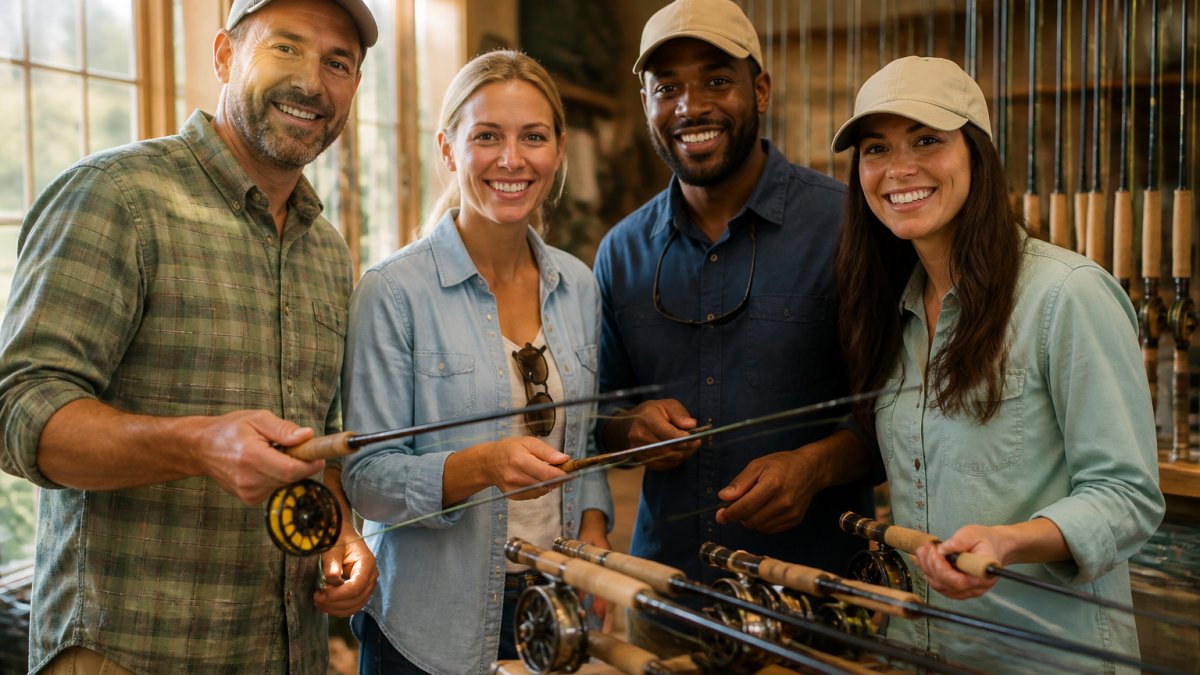
Before you buy, test the rod if possible.
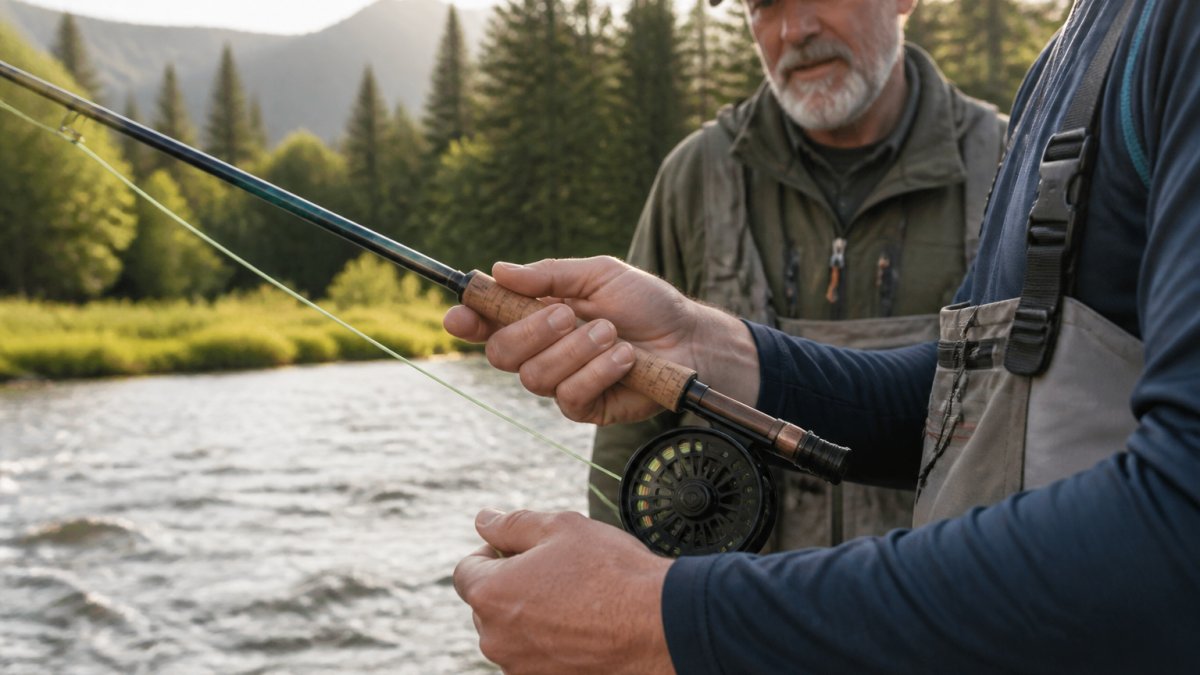
When you test a rod, pay attention to how it feels during the cast. Does it load smoothly or feel jerky? Does it recover quickly or feel sluggish? Does the grip fit your hand?
Rod construction is often overlooked. Fly rods are made from graphite, fiberglass, or bamboo. Graphite is standard today, light, strong, and affordable.
Another practical factor is one-piece versus two-piece design. One-piece rods are stiffer and perform slightly better but are difficult to transport.
When you buy your first rod, consider a complete starter kit with a matched rod, reel, line, and leader. This eliminates guesswork about whether components work together, and many kits are reasonably priced.
Your first rod doesn't need to be expensive. A quality beginner rod in the 5 or 6 weight range can be found in the mid-range price category. As you develop skill and preferences, you can invest in higher-end rods, many anglers fish for years with a moderately priced rod and catch plenty of fish.
When you're ready to purchase, Smith River Outfitter Raleigh Fly FIshing offers guidance on how to choose a fly rod and build the right setup for your specific situation.
Conclusion: Your Path to the Right Rod
Choosing a fly rod comes down to four variables: weight, length, action, and target species. Start with a 5 or 6 weight rod in 8 or 9 feet with medium action. This setup handles trout, bass, and panfish effectively and teaches proper technique without overwhelming you.
The most important decision you'll make is matching your rod, line, reel, and leader into a cohesive system. A $300 rod with mismatched components will frustrate you. A $150 rod with proper matching will serve you well.
Before you commit, test the rod if possible. How it feels in your hand and loads during a cast matters more than brand name or price tag, many beginners discover they prefer a different weight or length only after casting one.
Selecting the right fly rod is the foundation for enjoying fly fishing. The good news is that the decision doesn't require spending a fortune or becoming an expert overnight.
Frequently Asked Questions
What fly rod weight should I use for trout fishing?
For trout, a 4-weight or 5-weight fly rod is standard. A 4-weight handles smaller streams and dry flies well, while a 5-weight works better in larger rivers and windy conditions. If you're just starting out, a 5-weight offers more forgiveness and casting power. The weight rating matches your fly line weight, so they work together as a system. Beginners often find 5-weight easier to learn with because it's more forgiving of casting mistakes.
How do I choose the right fly rod length?
Rod length depends on where you fish. For small streams and tight spaces with brush or overhangs, use 7 to 8 feet. For larger rivers and open water, 9 to 10 feet gives you better line control and casting distance. Most beginners start with a 9-foot rod because it's versatile enough for many situations. Shorter rods are easier to handle in confined spaces, while longer rods let you cast farther and manage line better in bigger water.
What is the difference between fast-action and slow-action fly rods?
Fast-action rods bend mostly in the tip section, which means they load quickly and cast farther, good for experienced anglers and windy conditions. Slow-action rods bend throughout the entire blank, which gives a softer casting feel and is easier for beginners to learn with. Medium-action rods split the difference and work well for most fishing situations. Fast-action requires better technique, while slow-action is more forgiving of casting mistakes.
Should I buy a one-piece or multi-piece fly rod?
One-piece rods have better performance and feel because there's no ferrule joint, but they're difficult to transport and store. Two-piece rods are the standard choice for most anglers because they break down for travel and storage while maintaining solid performance. If you're traveling to fish or need to fit your rod in a car, go with a two-piece. One-piece rods are best for anglers with dedicated storage and local-only fishing.
How do I know if a fly rod will work for the species I want to catch?
Match your rod weight to your target species. Trout typically use 3-6 weight rods, bass use 6-8 weight, and saltwater species need 8-12 weight. Each species also requires specific line control and casting distance. A guide can help you dial in the exact setup for your target fish and local water conditions. The right rod for bass won't work well for trout, so knowing what you want to catch is the first step in selection.
Can I use the same fly rod for different fishing conditions?
A 5-weight or 6-weight all-around rod works reasonably well in many situations, but specialized rods perform better. A lighter rod excels in small, delicate streams, while a heavier rod handles wind and larger water. Most experienced anglers own multiple rods because one rod can't be optimal everywhere. If you're starting out, choose a versatile weight that covers the conditions you'll fish most often, then add specialty rods as your skills grow.
What role does the ferrule and rod components play in my choice?
The ferrule (the joint connecting rod sections) affects how the rod loads and casts. Better ferrules mean tighter connections and more consistent performance. The guides direct your line smoothly, and the reel seat holds your reel securely. A quality grip (handle) reduces fatigue during long days on the water. These components matter more once you have experience, but as a beginner, focus on rod weight, length, and action first. Quality construction becomes more important as you fish more.