 how-to
Is Fly Fishing Hard to Learn? A Beginner's Honest Guide
Table of Contents
- The Honest Truth About How Hard Fly Fishing Is
- Why Fly Fishing Feels Challenging at First
- How Long Does It Take to Learn Fly Fishing
- Fly Fishing Casting Techniques Every Beginner Needs
- Can You Teach Yourself to Fly Fish
- Beginner Fly Fishing Gear: What You Actually Need
- Your First Day on the Water: What to Expect
- Frequently Asked Questions
Last Updated: October 11, 2026
The Honest Truth About How Hard Fly Fishing Is
While fly fishing hard to learn might sound intimidating, the truth is it's easy to start but difficult to master. That's the real answer, and it matters because most beginners expect either instant success or impossible complexity. Neither is accurate.
Newcomers typically cast within hours and catch fish within weeks. But the learning curve doesn't flatten, the skills separating competent anglers from great ones take years to develop.
The truth is simpler than most guides admit: fly fishing is hard to learn in the way that tennis or golf is hard to learn. You can play your first match or round today. You'll probably enjoy it. You probably won't be very good. And that's completely fine.
Why Fly Fishing Feels Challenging at First
Fly fishing feels harder than spinning or baitcasting because your hands, arms, timing, and line control all demand attention simultaneously.
Most beginners struggle with three specific things:
Casting mechanics feel unnatural. You load the rod with line weight, stop sharply, and let the rod's flex do the work, a motion that doesn't exist in everyday life. Your muscle memory from baseball or conventional fishing actually works against you.
The learning happens in stages. Backyard practice builds basic timing, but on the water you face wind, current, distance, and the pressure of catching fish, variables that force constant adaptation.
Reading water is a separate skill entirely. You can cast perfectly and still put the fly in the wrong place. Identifying where fish actually hold, under banks, behind rocks, in current seams, requires observation and experience. This skill develops slowly over many outings.
How Long Does It Take to Learn Fly Fishing
First Session (2-4 hours)
You can learn the basic casting motion in your first few hours. By the end of a first session, you'll cast 20-30 feet with reasonable accuracy on calm water. You may hook a fish, but landing it is a separate skill. First-session success means comfort with the rod and understanding how the cast works, not fish caught.
First Month (4-6 outings)
After 4-6 days on the water, your casting becomes automatic and you cast 30-40 feet consistently. You're landing most hooked fish and reading water intentionally, identifying current seams and pools where fish hold. Your fly selection improves as you ask better questions about hatching insects. Physical endurance builds; wading all day no longer exhausts you.
First-month milestones: casting 30-40 feet accurately, landing 60-70% of hooked fish, identifying 2-3 likely holding spots on a stretch of water, and managing basic line control in light to moderate current.
First Season (15-25 days on the water)
One full season (15-25 days across spring, summer, and fall) transitions you from learning to doing. You read water confidently, recognize common hatches, cast accurately in moderate wind, and catch fish regularly. You understand seasonal rhythms and develop judgment about when to switch flies or tactics.
First-season milestones: reading water accurately 70-80% of the time, landing 75-85% of hooked fish, making reasonable fly choices based on conditions and hatches, and fishing comfortably in varied water conditions.
Year Two and Beyond (30+ days annually)
Year two is when you refine: casting in wind, matching hatches precisely, managing complex current, and predicting fish behavior. The learning curve flattens but doesn't stop.
What "Regular Practice" Actually Means
These timelines assume 2-3 outings per month. If you fish once monthly, double the timelines. Backyard casting practice (15-20 minutes, 2-3 times weekly) accelerates progress but doesn't replace time on the water.
Fly Fishing Casting Techniques Every Beginner Needs
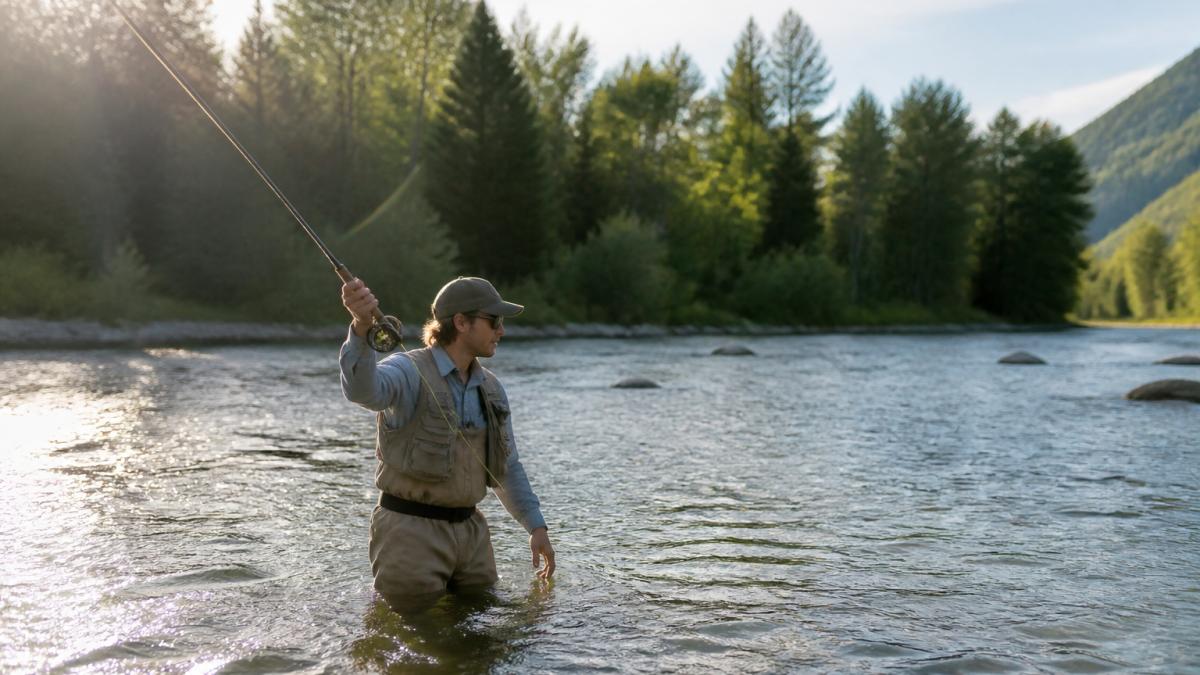
The basic forward and backcast works like this: load the rod by pulling line, accelerate backward to 1 o'clock, pause (critical, most beginners rush it), then accelerate forward to 10 o'clock. The rod's flex does the work. The pause should feel like one breath count. Too short and your forward cast collapses; too long and the line falls.
Building the loop creates a narrow V shape for accuracy. Tight loops come from smooth rod acceleration, sharp stops, a straight wrist, and matching line speed to distance.
Distance comes last. Start at 15-20 feet, master timing, then add line gradually. Practice 15 minutes of focused casting 2-3 times weekly; muscle memory builds through consistent, correct repetition.
Can You Teach Yourself to Fly Fish
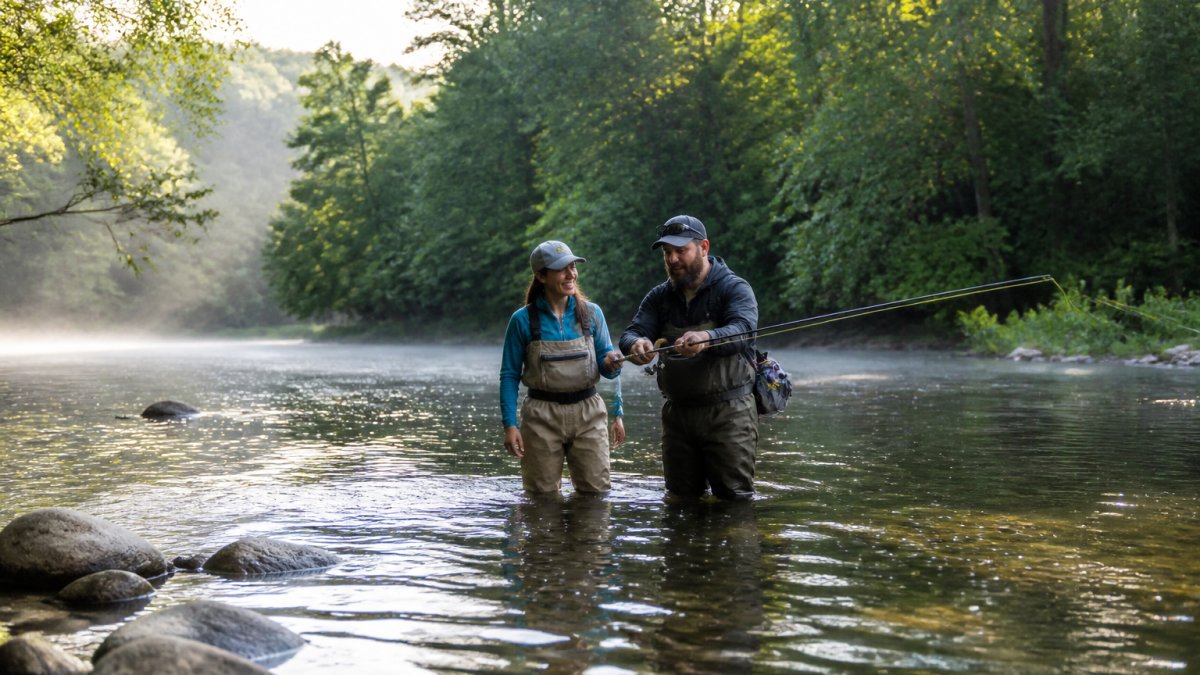
You can teach yourself the basics, but you'll hit a ceiling quickly, which is why understanding that fly fishing hard to learn requires either patience or instruction helps set realistic expectations. Self-teaching struggles because: you can't see your own cast (bad habits lock in fast), water reading can't be taught from video, and problem-solving is slower without experience. A guide diagnoses casting issues in seconds; you might spend weeks on random fixes.
Self-teaching works better if you start with solid instructional videos, practice casting before fishing, fish weekly, keep a journal, and join a local club. Many successful fly fishers teach themselves after initial instruction.
Beginner Fly Fishing Gear: What You Actually Need
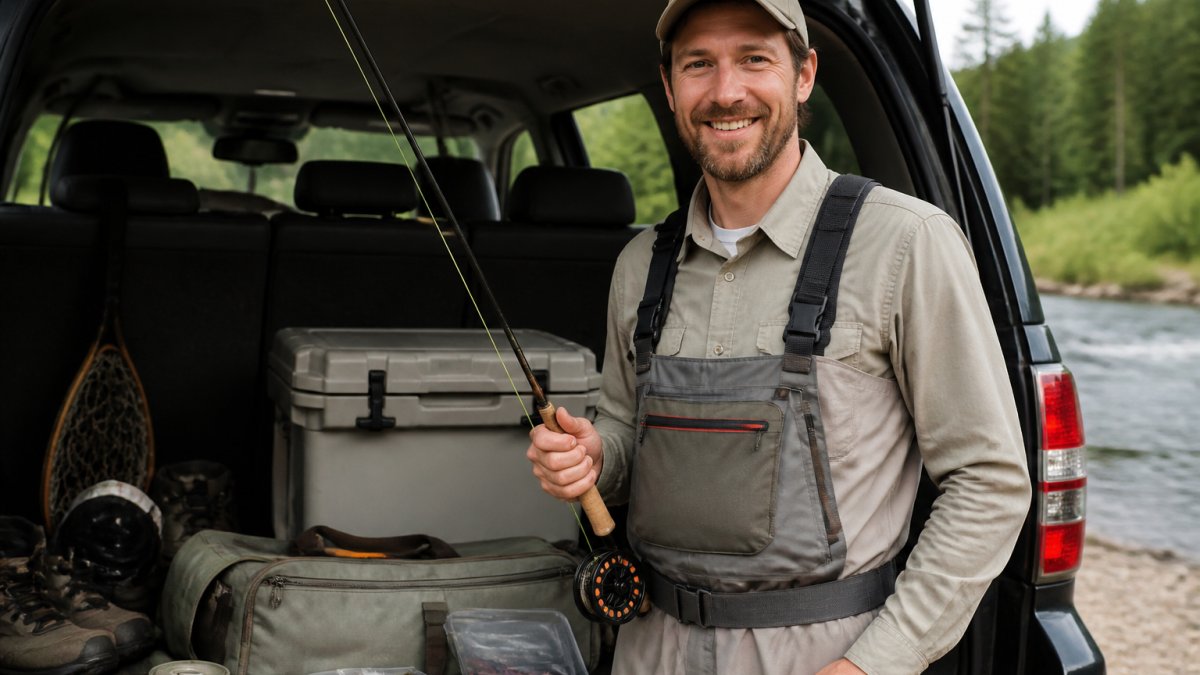
The rod and reel are your foundation. A beginner combo costs $100-200. Get a 5-weight rod, 8.5-9 feet long (easier to cast and control line). A basic single-action reel holding 100+ yards of backing is fine.
The line matters more than the rod. A weight-forward floating line is what you need. It's designed to load the rod efficiently and present the fly gently. A quality line runs $30-50 and lasts years if you care for it.
Leader and tippet are cheap but essential. These are the thin, nearly invisible sections between your line and fly. A 7.5-foot tapered leader and a spool of 4X or 5X tippet cost under $20 total. You'll replace tippet every few outings.
Flies are inexpensive. A basic starter box with 20-30 flies costs $15-30. You don't need fancy patterns, simple nymphs, dry flies, and streamers catch fish. Buy more as you learn what works locally.
Waders keep you comfortable. Chest waders run $80-150 for beginner-quality. Neoprene waders are warmer but bulkier. Breathable waders are lighter but more delicate. For starting out, either works.
Other essentials: wading boots ($60-100), fly box ($10-20), forceps ($5-10), polarized sunglasses ($30-80), vest or pack ($40-80). Total startup cost: $350-600. Start with rod, reel, line, leader, tippet, and flies. Add waders and boots once committed.
Your First Day on the Water: What to Expect
Before You Go: Pre-Trip Preparation
Don't show up unprepared. The night before, or the morning of:
- Review casting basics on video (5-10 minutes) focusing on the pause.
- Rig your rod at home. Attach reel, thread line, tie leader and tippet, and test everything moves smoothly.
- Pack deliberately: waders, boots, dry clothes, polarized sunglasses, forceps, fly box (15-20 basic patterns), water, snacks, sunscreen, hat.
- Check weather and water conditions. Cold water requires smaller, slower presentations. High water means fishing near banks. Wind means shorter casts.
First Hour: Casting Practice and Wading Orientation
Spend the first 45-60 minutes on fundamentals: practice casting 20 times in calm water focusing on the pause, cast to a target 20 feet away 10 times, get comfortable wading by walking upstream and downstream, and practice mending line 5-10 times. By the end of the first hour, you should cast 20-30 feet confidently and wade stably.
Second Hour: Fishing with Structure
Choose a simple pool or run with visible structure. Start with a small nymph (size 14-16), cast upstream and across, and watch for a pause in your line. Repeat 5-10 times before moving. When you hook a fish, keep the rod at 45 degrees and maintain steady tension. Move 20-30 feet downstream every 10-15 minutes.
Third Hour: Observation and Adjustment
By hour three, you've cast, waded, and fished. Now you're building intuition.
- Watch for rising fish. If you see a fish break the surface, that's a dry fly opportunity. Switch to a dry fly (a simple pattern like an Adams or Elk Hair Caddis) and cast above the rise. This is exciting and teaches you how fish actually feed.
- Notice insect activity. Look at the water and the air. Are small insects hatching? Are they mayflies, caddisflies, or something else? Are fish feeding on them? This observation builds your ability to match hatches.
- Adjust your fly if nothing is working. After 20-30 minutes with no takes, switch to a different size or pattern. Try a smaller fly, a larger fly, or a different color. This teaches you that fly selection matters.
- Take a break. Sit on the bank, eat a snack, and watch the water. Fly fishing is as much observation as it is action. Some of your best learning happens when you're not casting.
What Actually Happens: Realistic Outcomes
- Expect to trip or stumble. Wading in current while managing a rod is awkward. You'll step wrong. You'll drop something. Everyone does.
- Your first cast will probably be messy. The rod will feel strange. Your timing will be off. This is normal. By cast 20, it feels more natural.
- You'll probably hook 1-3 fish. Whether you land them is another question. Landing a fish requires keeping tension on the line, managing rod angle, and staying calm. You'll likely lose your first few. This is also normal.
- You'll get tired. Fly fishing uses muscles you don't normally use. Your forearm will fatigue. Your legs will ache from wading. Bring water and snacks. Take breaks.
- You'll see things you didn't expect. Fish rising. Insects hatching. Herons. Deer. Beavers. The natural world is more active than you realize.
End of Day: What to Do Now
Before you leave:
- Rinse your gear. Rinse your waders, rod, and reel with fresh water to remove algae and sediment.
- Dry your line. Hang your line to dry or wipe it with a cloth. Wet line left in the sun degrades faster.
- Write down what happened. Note the water temperature, weather, what flies you used, what worked, what didn't, and how many fish you hooked and landed. This journal becomes invaluable as you progress.
- Reflect on what felt hard. Was it casting? Wading? Reading water? Fly selection? Knowing what's hard helps you focus practice.
Frequently Asked Questions
How long does it take to learn fly fishing well enough to catch fish?
Most beginners can catch fish within their first few outings after learning basic casting and water reading. However, the learning curve extends across your first season. Casting mechanics improve with 10-20 hours of practice on the water. Reading water and selecting the right fly take longer, typically 20-40 hours before you're consistently making good decisions. Muscle memory and confidence continue building over months.
Can you teach yourself to fly fish, or do you need lessons?
You can teach yourself fly fishing, but professional instruction accelerates progress significantly. Self-teaching through YouTube videos and backyard practice works, but it's easy to develop bad casting habits that are hard to break. A single guided session corrects form issues in real time. Many beginners find that combining one or two lessons with independent practice is the most efficient path to competence.
What's the hardest part of learning fly fishing?
The casting motion is the initial hurdle, it requires coordination and timing that feel unnatural at first. Beyond that, reading water and matching the hatch present ongoing challenges. Understanding fish behavior, water conditions, and fly presentation separates beginners from intermediate anglers. Patience is equally critical; fly fishing rewards persistence but punishes rushing.
Do I need to buy expensive gear before I start?
No. Many outfitters provide beginner-quality rods, reels, and lines for guided trips. This lets you test whether fly fishing suits you before investing in your own equipment. Once committed, a basic setup costs less than many hobbies, though quality varies by budget. Renting or borrowing gear is a smart first step before purchasing.