 how-to
Fly Fishing for Stress Relief: A Beginner's Guide
Table of Contents
- How Fly Fishing Reduces Stress and Anxiety
- Fly Fishing Mental Health Benefits: What the Research Shows
- Mindfulness and Fly Fishing: Finding Calm in Focused Attention
- Beginner Fly Fishing Tips for a Relaxing First Outing
- Fly Fishing Gear for Beginners: What You Actually Need
- Building Your Relaxation Routine on the Water
- Frequently Asked Questions
Last Updated: October 5, 2026
How Fly Fishing Reduces Stress and Anxiety
Fly fishing stress relief works because it combines focused attention, rhythmic physical activity, and immersion in nature, proven ways to calm your nervous system. On the water, your brain shifts out of worry mode and into the present moment: casting becomes meditative, and flowing water buffers you from daily demands.
The mechanism is simple: fly fishing demands your full attention. You can't think about work stress while reading water, selecting a fly, and casting at once, so anxiety has no room.
Physical activity matters too. Casting uses your arms, shoulders, and core, and walking the stream bed provides low-impact exercise that triggers endorphin release.
Nature plays a critical role too: flowing water has a documented calming effect on the nervous system, and the outdoors reduces cortisol and promotes mental restoration.
Fly Fishing Mental Health Benefits: What the Research Shows
Research consistently shows that time spent fishing improves mental well-being: anglers report lower stress scores and improved mood versus baseline, plus reduced anxiety, better focus, and a sense of accomplishment.
Be honest about what the data shows: most research measures self-reported stress reduction immediately after fishing. That's real and valuable, but it doesn't prove fly fishing replaces professional mental health treatment.
What fly fishing does exceptionally well is provide a healthy escape from daily demands, breaking the stress cycle and giving your mind permission to rest, a regular break that makes a measurable difference in well-being.
Anglers frequently report problems feel more manageable after time on the water, partly because you've given your brain a break from worry, and partly because reading water exercises concentration in a healthy way.
Mindfulness and Fly Fishing: Finding Calm in Focused Attention
Mindfulness means paying full attention to the present moment without judgment. Fly fishing is a natural mindfulness practice because the activity forces present-moment awareness.
When you're casting, you can't think about an email from two hours ago; when you're reading the water for rises, you're completely focused on what you observe.
The rhythmic nature of casting amplifies this effect. The repetitive motion and timing create a meditative rhythm, and your nervous system responds by signaling safety and control.
Many people find that their best thinking happens while fishing. Not forced thinking, just clarity that emerges when your mind is calm and focused. That's mindfulness at work.
Beginner Fly Fishing Tips for a Relaxing First Outing
Most beginner guides tell you to relax and have fun, but few explain how to structure an outing so relaxation is likely. Here is a practical routine, plus the safety and planning details wellness articles usually skip.
Before you go: a 10-minute prep ritual.
- Check the weather and water conditions. Sudden storms, high wind, and rising water turn a calm outing stressful; if the forecast is marginal, reschedule.
- Confirm access and permits. Many public waters require a state fishing license, and some access points or private stretches require additional permits. Check your state fish and wildlife agency website before you leave.
- Tell someone where you are going and when you expect to return. Cell service is unreliable near water.
- Pack for sun and hydration: sunscreen, a hat, polarized sunglasses, and more water than you think you need. Sun exposure and dehydration both worsen anxiety.
Choose a calm location deliberately.
For a first relaxation-focused outing, prioritize easy wading, gentle current, and low crowds over productive fishing. A slow tailwater, wide flat, or stocked pond all work.
Pace the session in three phases.
- Arrive and settle (15-20 minutes). Don't rig up immediately. Sit by the water and notice the sound, temperature, and light. This is the transition out of "worry mode."
- Fish in short blocks (20-30 minutes). Cast, watch, adjust. When your shoulders tighten or your inner critic gets loud, stop casting and watch the water for a few minutes.
- Close deliberately (10 minutes). Before you drive away, sit again and notice your breathing and mood. This bookend turns a nice afternoon into a repeatable practice.
Use casting itself as the mindfulness anchor.
Pick one thing to track per block: the pause at the top of the back cast, the feel of the rod loading, or the moment the line straightens.
If fishing frustrates you, change the goal.
Some people find tangles, snags, and missed strikes genuinely overstimulating. If that is you, try these adjustments:
- Fish small, simple water where success is likely.
- Use a single fly and short leader to reduce rigging decisions.
- Set a rule: no more than 20 minutes of active casting, then 10 minutes of observation.
- Try a stillwater or pond where you can fish from shore without wading.
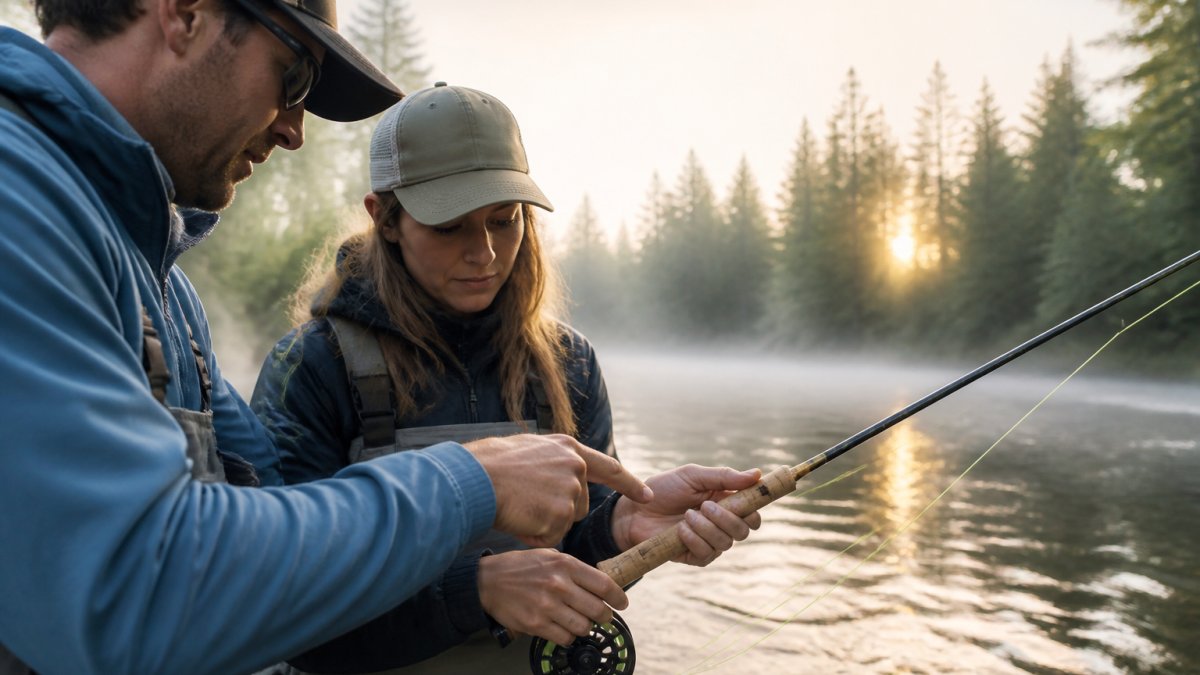
- Consider a guided half-day so someone else handles knots, flies, and logistics while you focus on the experience.
Safety basics that protect the relaxation.
- Wear a wading belt with waders, and use a wading staff in any current you cannot clearly see the bottom of.
- Felt or rubber soles with studs grip differently on different substrates; ask locally what works.
- Never wade alone in fast or deep water, and never turn your back on moving water.
- Carry a small first-aid kit and a whistle.
- Polarized sunglasses are eye protection as much as gear; a weighted fly or split shot can do real damage.
Accessibility and sensory considerations.
You do not need to wade to fly fish; many productive spots have bank access, docks, or paved paths. If you have mobility limitations, look for handicap-accessible fishing piers, which many state agencies list online.
If you are new to wading, wear proper footwear with good grip and use a wading staff in any current you cannot see the bottom of. Slipping and falling ruins the relaxation instantly and creates real safety risk. Take your time and stay within your comfort zone.
Fly Fishing Gear for Beginners: What You Actually Need
You do not need premium gear to relax on the water, just gear that works, fits, and doesn't create new problems. The bigger question most guides skip is how to try fly fishing without spending hundreds on equipment you may use twice.
The realistic minimum.
- Rod and reel. A balanced 8- to 10-foot combo in a 4- to 6-weight is the standard beginner range. Look for something light in hand, not stiff; entry-level combos from established brands perform well enough to learn on.
- Line. A weight-forward floating line matched to the rod weight. Floating line is easier to see and mend, which reduces frustration.
- Leader and tippet. A tapered leader in the 3X-5X range plus a spool of tippet covers most beginner situations.
- Flies. Five to ten proven patterns in two or three sizes, chosen for your local water. Ask a fly shop what is hatching.
- Waders and boots. Only necessary for cold water or wading deeper than your knees. Otherwise, wet-wade in quick-dry pants and sturdy shoes with grip.
- Vest or small pack. A simple chest pack or sling bag is enough; you do not need a full vest.
- Accessories. Nippers, forceps, floatant, and a small fly box. Polarized sunglasses and a hat are non-negotiable for eye safety and sun protection.
How to try it without buying anything.
This is the single biggest barrier for beginners.
- Borrow. Ask friends, family, or a local club. Many fly fishing clubs and Trout Unlimited chapters run loaner programs or beginner days with gear provided.
- Rent. Many fly shops and outfitters rent rods, reels, waders, and boots by the day or half-day, letting you learn on quality equipment before buying.
- Take a guided trip. A half-day guided trip usually includes rods, waders, flies, and instruction, and is often the cheapest way to learn correctly the first time.
- Take a class. State fish and wildlife agencies, community colleges, and fly shops frequently offer beginner classes, sometimes free or low-cost.
- Buy used. Rods and reels hold up well; a used combo from a reputable shop or club swap meet is a legitimate starting point.
What to skip at first.
- A second rod. One is enough.
- Chest-high waders if you're fishing warm shallow water.
- A large fly selection. You'll use a handful of patterns most days.
- Expensive reels. For most freshwater fishing, the reel holds line; the drag rarely matters.
- Gadgets. Indicators, weights, and tools are useful later, not on day one.
Fit and comfort matter more than brand.
Waders that are too tight restrict movement; boots that are too loose cause blisters and slips; a rod too stiff for your casting stroke feels like work. Try before you buy, or buy from a shop with a return policy.
A realistic budget range.
Costs vary by region and brand. Renting or borrowing for your first few outings costs a fraction of investing in new gear.
Beginners who want to try fly fishing without committing several hundred dollars to gear they might not use again. Renting, borrowing, or taking a guided half-day lets you learn on quality equipment and decide whether to invest.
state fish and wildlife agency license and access information
Building Your Relaxation Routine on the Water
Fly fishing stress relief works best as a regular practice, not a one-time event.
Establish a rhythm. Fish the same water at the same time when possible.
Make it non-negotiable. Treat your fishing time like an appointment with yourself.
Combine it with other calming practices. Arrive early and sit quietly before fishing, noticing your breathing.
Track how you feel. Notice your stress level before and after fishing. Does your sleep improve?
Invite others or go solo, intentionally. Some find fishing with a friend adds joy; others need solitude.
Adjust as needed. If your usual spot feels crowded, try a different time or location; if you're frustrated, shorten the outing.
According to research on nature-based stress reduction, regular outdoor time produces cumulative mental health benefits.
If you're in the Raleigh area and want to start fly fishing for relaxation, Smith River Outfitter Raleigh Fly Fishing offers guided experiences tailored to your skill level. We know the local water and can take you to places where you'll feel calm and successful. [EXTERNAL_LINK: professional guidance significantly improves the learning experience and increases long-term enjoyment.
Start with a short outing. See how you feel.
| Aspect | Beginner Timeline | What to Expect |
|---|---|---|
| First outing | 2-3 hours | Calm, some casting practice, basic fish-reading |
| After 3-4 outings | Improved muscle memory | More relaxation, fewer frustrations |
| After 8-10 outings | Growing confidence | Noticeable stress relief, better focus |
| Regular practice (monthly+) | Sustained routine | Consistent mental health benefits |
Frequently Asked Questions
Is fly fishing actually good for mental health?
Fly fishing combines several stress-reducing elements: time in nature, rhythmic physical activity, focused attention, and escape from daily demands. Research indicates that fishing participation correlates with lower stress scores and improved mental clarity. However, benefits depend on approaching the experience as relaxation rather than performance. The key is mindfulness, being present with the water and casting, rather than fixating on catching fish.
Can a complete beginner enjoy fly fishing for relaxation without prior experience?
Yes. You don't need to be skilled to experience the calming effects of fly fishing. In fact, beginners often find the learning process itself meditative because it demands present-moment attention. Professional guides can teach basic technique in a single outing, allowing you to focus on the rhythmic casting motion and natural surroundings. Many beginners report feeling more relaxed after their first trip, regardless of whether they caught fish.
What makes fly fishing more mindful than other types of fishing?
Fly fishing requires continuous focus: reading water, adjusting your cast, observing insect activity, and refining technique. This sustained concentration naturally quiets mental chatter and anchors you to the present moment. The rhythmic, repetitive nature of casting, combined with the soothing sounds of flowing water, creates a meditative state similar to yoga or tai chi. You're not passively waiting; you're actively engaged with your environment.
How long should a relaxing fly-fishing outing be for beginners?
A half-day outing (3-4 hours) is ideal for beginners seeking relaxation. This length allows time to learn basics, settle into the rhythm of casting, and experience the calming effects of nature without fatigue or frustration setting in. Shorter trips may feel rushed; longer days can become physically demanding for those new to the sport. Many anglers find that 3-4 hours provides the perfect balance between instruction, practice, and genuine relaxation.