 how-to
7 Steps to Safely Release Trout So They Survive
Last Updated: November 1, 2026
Quick Summary
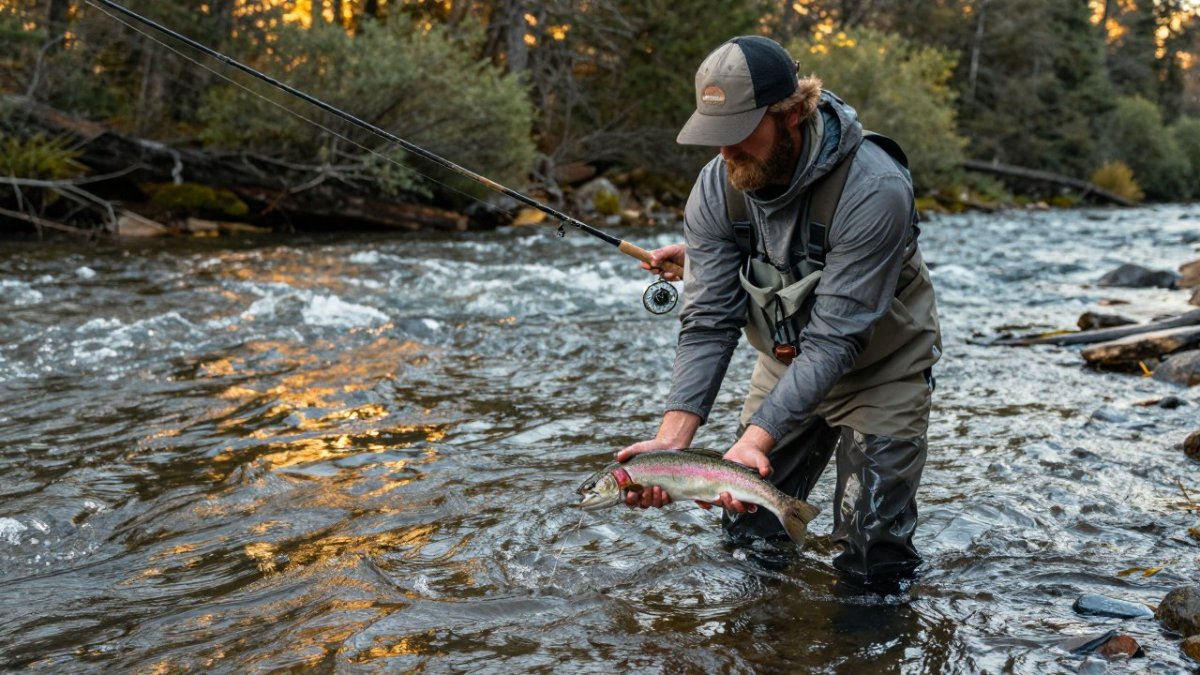
To release trout safely, land them quickly, keep them in the water in a rubber mesh net, and use wet hands and forceps to back out a barbless hook fast. Face the fish upstream in gentle current and hold it upright until it kicks away strongly on its own.
- Land the fish fast, since a long fight builds lactic acid and weakens trout.
- Use a rubber mesh net, long-nose forceps, and wet hands, and never touch the gills.
- Pinch the barb down with forceps or cut the line on deep hooks.
- Face a tired trout upstream in the current and wait for a strong kick.
- Above 70°F water, stop fishing for trout and target warm-water species instead.
Table of Contents
- Step 1: Play and Land the Fish Quickly to Reduce Stress
- Step 2: Use Trout Handling Tools for Anglers That Protect the Fish
- Step 3: Keep Hands Wet and Keep Contact With Gills to Zero
- Step 4: Choose Barbless Hooks for Trout Survival
- Step 5: Remove the Hook Fast and Get the Fish Back in the Water
- Step 6: Reviving a Tired Trout by Facing It Upstream
- Step 7: Read the Signs Before You Release Trout for Good
- Book a Guided Trip and Practice Catch and Release With a Pro
- Frequently Asked Questions
Step 1: Play and Land the Fish Quickly to Reduce Stress
Learning how to safely release trout to ensure survival starts with the fight, not the release. Every second a trout spends tired and stressed raises its odds of dying after you let it go. Land the fish fast, then get it back in the water fast.
A long fight burns through the fish's energy and builds up lactic acid in the muscles, which can weaken a trout well after release.
So how do you shorten the fight? Use tackle heavy enough for the fish you expect. Keep steady side pressure. Skip the hero photo marathon. If you want to go deeper on landing technique, our guide on how do you land and release fish safely walks through the whole process.
A clean hook set also helps. A trout hooked in the jaw fights less and recovers faster than one hooked deep. If you want to fix that part of your game first, read how to set the hook fly fishing.
- Keep the fight short when you can
- Skip the long photo session
- Land the fish with a net, not by dragging it onto rocks
Step 2: Use Trout Handling Tools for Anglers That Protect the Fish
Useful trout handling tools include a rubber mesh landing net, forceps, and wet hands.
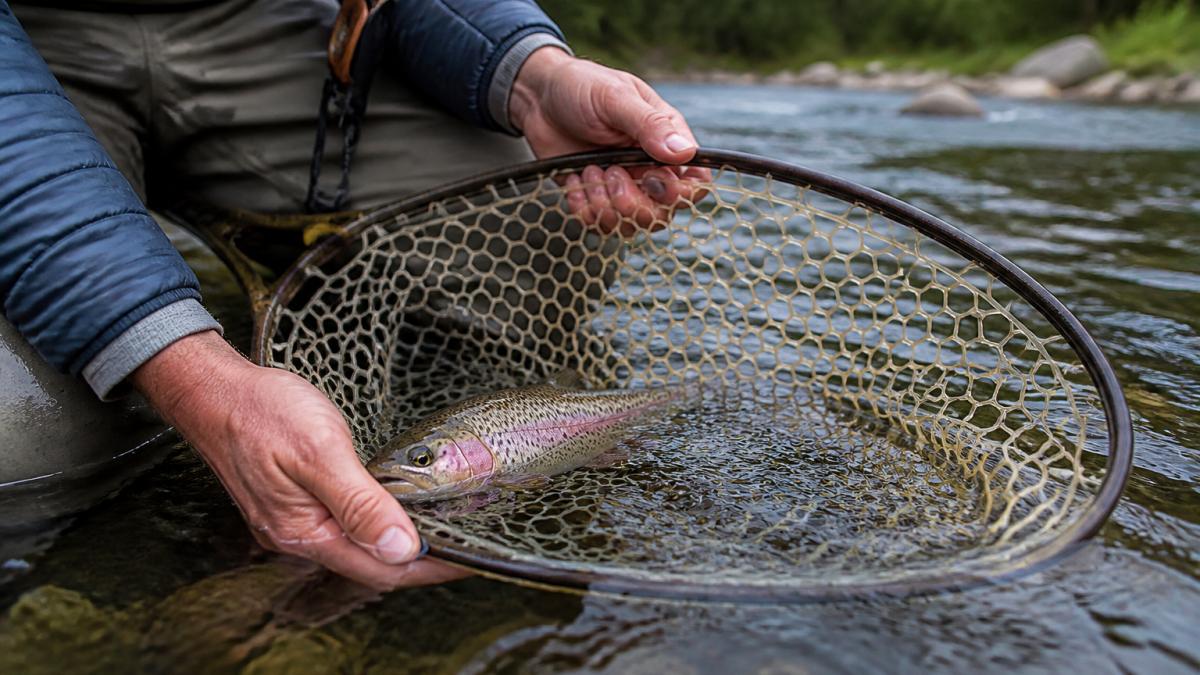
Why a Rubber Mesh Landing Net Matters
A rubber mesh net is a useful tool for handling fish gently. It supports the fish's body instead of letting it flop, and the soft mesh is less likely to scrape off the slime coat, the fish's natural shield against infection.
A knotted nylon net can catch fins and strip scales. A rubber mesh net lets you keep the fish submerged while you unhook it.
Forceps matter too. Long-nose forceps let you back the hook out without squeezing the fish or digging around. Keep them clipped to your vest.
- Rubber mesh net, not nylon
- Long-nose forceps for hook removal
- Wet hands, always
Step 3: Keep Hands Wet and Keep Contact With Gills to Zero
Dry hands can strip the mucus layer off a trout's skin. That layer helps guard against bacteria and fungus, so keeping hands wet before handling is a widely recommended practice. The right handling also depends on which trout you are holding.
Why Wet Hands Matter (The Mechanism)
A trout's slime coat is a protective layer. Dry hands, wool gloves, and dry net mesh can abrade that coat. Wet your hands before contact, and keep the fish in the water whenever you can.
Species-Specific Handling Nuances
Most content treats "trout" as one animal. In practice, Brook, Brown, and Rainbow trout differ in size, behavior, and stress tolerance, and those differences should shape how you handle them.
Smaller trout such as brook trout can be more sensitive to handling. Keep them submerged in the net, and use forceps rather than your fingers when possible.
Keep the fight short with any trout, and allow enough revival time before release, especially in warm water.
Treat every trout with the same care, since rough handling adds up over a day of fishing.
The Gills and the Jaw
Avoid touching the gills (Catch and Release Fishing Best Practices). The gills are how the fish breathes, and handling them can cause damage. Equally, do not lift a trout by the jaw and let it hang, that puts stress on the spine and gills. Support the fish under the belly if you must lift it, keep it horizontal, and keep that lift short.
- Wet hands before any contact
- Never touch the gills
- Support the belly if you lift, and keep the fish horizontal
- Match handling to species: Brook trout get the most care, Browns get the longest revive
If you want to go deeper on landing technique, our guide on how do you land and release fish safely walks through the whole process.
Step 4: Choose Barbless Hooks for Trout Survival
Barbless hooks can be an easy upgrade for catch and release. A barbless hook generally backs out more easily, which can mean less tissue damage and less handling time.
Pinch the barb down on your existing hooks with forceps. It takes seconds and costs nothing. Barbless hooks also make release quicker, which is the whole goal.
If a fish is hooked deep, cutting the line and leaving the hook is often recommended over digging for it.
- Pinch the barb down with forceps
- Carry barbless flies
- Cut the line on deep hooks
Step 5: Remove the Hook Fast and Get the Fish Back in the Water
Speed matters. Time out of the water adds stress. Keep the fish in the net, in the water, and back the hook out with forceps.
Here's the sequence:
- Keep the fish submerged in the net
- Grip the hook with forceps and back it out
- If it's deep, cut the line and leave the hook
- Lower the net and let the fish rest
Don't squeeze the fish to hold it still. Let the net do the work. If you want a photo, lift the fish briefly, support it horizontally, and get it back in the water fast.
Step 6: Reviving a Tired Trout by Facing It Upstream
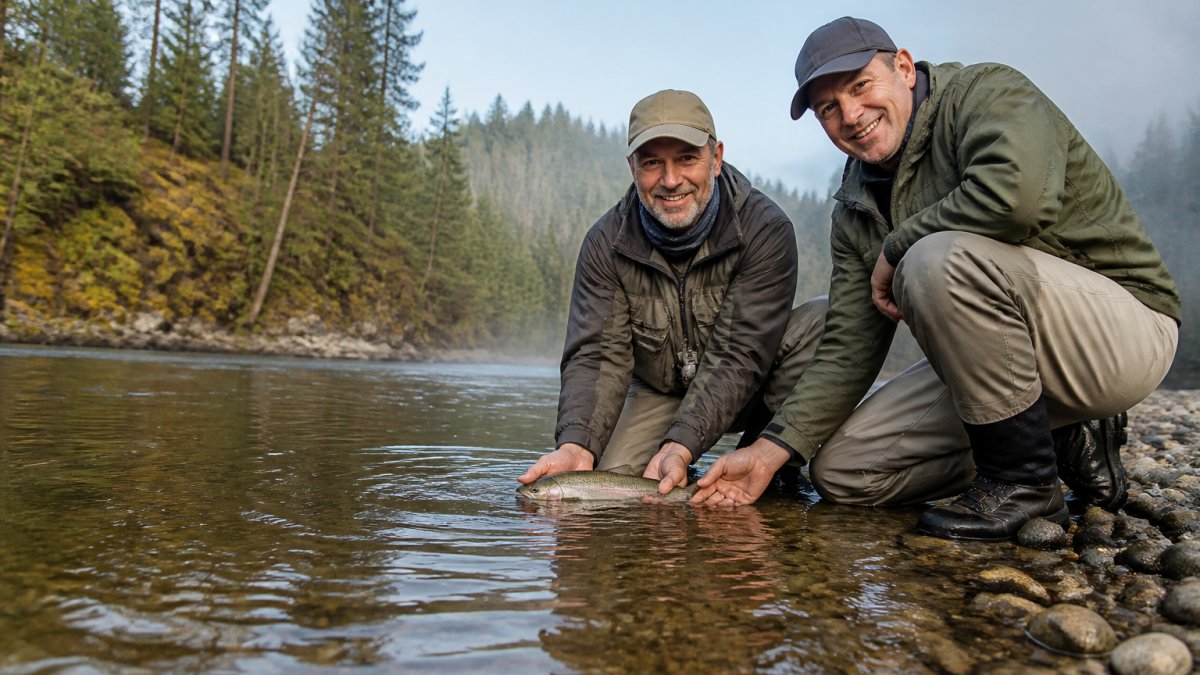
Reviving a tired trout means holding it in the current, facing upstream, until it swims off on its own. Face the fish into the gentle current. That pushes oxygenated water through its gills. Hold it upright and let it breathe.
Don't let go too soon. If the fish rolls or floats, it's not ready. Keep supporting it until it holds itself steady and kicks away.
- Face the fish upstream
- Hold it upright in the gentle current
- Wait for a strong kick before letting go
Revival can take longer on a hot day. Be patient, and avoid releasing a fish that cannot hold itself steady.
Step 7: Read the Signs Before You Release Trout for Good
Before you release trout for good, read the water and the fish. Water temperature is an important factor. Warm water holds less dissolved oxygen, which makes recovery harder for a tired trout.
Consider water temperature and how hard the fish has to work to recover before you tie on a fly.
Water Temperature Decision Matrix
| Water Temp | Dissolved Oxygen Risk | Release Outlook | What To Do |
|---|---|---|---|
| Below 60°F | Low | Excellent | Normal catch-and-release; still keep handling short |
| 60-65°F | Moderate | Good | Fish early, release fast, skip photos |
| 65-68°F | Elevated | Guarded | Fish only if you can land in under 30 seconds; no lifting |
| 68-70°F | High | Poor | Treat as a stop-fishing threshold unless you are certain of cold inflows |
| Above 70°F | Severe | Very poor | Stop fishing for trout; target warm-water species instead |
Trout are cold-water fish, and their oxygen demand rises as water warms. Check your state fish and wildlife agency's current advisories before you go, as they often list heat-related guidance for specific rivers.
The Oxygen and Flow Check
Temperature is only half the equation. Low, slow water holds less oxygen and gives a tired fish fewer places to recover. Before you fish, look at:
- Flow: Low flow can concentrate fish and reduce available oxygen.
- Algae and clarity: Heavy algae or unusual water color can sometimes signal low oxygen.
- Time of day: Early morning is often the coolest part of the day.
- Recent rain: Cool rainwater can sometimes improve conditions.
When To Stop Fishing Entirely
Some days it is best not to fish for trout at all, such as when water is very warm, flows are very low, or fish appear stressed at the surface.
Reading the Fish Before Release
Once you have decided conditions are acceptable, check how the individual fish is recovering:
- The fish holds itself upright without your hand
- The fish kicks away strong, not with a weak flutter
- The fish does not roll, list, or float belly-up
- The fish moves into current rather than drifting downstream
If any of these signs are missing, keep reviving the fish. If it still cannot right itself after a while, consider whether to release it at all.
Book a Guided Trip and Practice Catch and Release With a Pro
Reading about catch and release is one thing. Doing it right, on the water, with a guide watching your hands, is another. That's where Smith River Outfitter Raleigh Fly FIshing comes in.
Guided trips can help you learn how to play, land, and release trout with care. Our team is glad to help you plan your day on the water.
If you're ready to plan your day, read how to book a private fishing trip. Want to know what the day looks like first? See what to expect on guided fly fishing.
Get started with Smith River Outfitter Raleigh Fly FIshing and enjoy your time on the water.
Frequently Asked Questions
How long can a trout stay out of the water before it is harmed?
Keep a trout out of the water as briefly as you can. Every extra second adds stress. If you want a photo, wet your hands, lift the fish briefly with support under the belly, and put it back. Plan the shot before you lift so the fish is never waiting on you.
Do barbless hooks actually increase trout survival rates?
Barbless hooks can make hook removal easier, since they generally back out more readily. Many anglers also crimp the barb on a standard hook, which gets you most of the benefit without buying new tackle. Pair barbless hooks with forceps and you can often free a fish without ever touching it.
How can you tell if a trout is sufficiently recovered to be released?
Watch for steady upright balance, gill plates moving at a normal rhythm, and the fish trying to swim out of your hands. A recovered trout holds itself in the current instead of rolling or tipping sideways. If it lists, floats belly-up, or drifts with the current, keep reviving it facing upstream in gentle water. Release it when it appears able to swim away under its own power.
Should you use a net when catch and release fishing for trout?
A rubber mesh landing net is a useful tool for catch and release. It can help you control the fish without squeezing it, and it lets you keep the trout in the water while you remove the hook. Keep the net submerged and lead the fish into it headfirst. Avoid lifting the net high out of the water, and never let a trout bounce on dry ground or rocks.
Releasing trout well is a skill you build with practice, not a box you check once. Book a trip with Smith River Outfitter Raleigh Fly FIshing and learn proper catch-and-release from guides who do it every day. We provide the gear, the local water knowledge, and hands-on coaching for beginners and experienced anglers alike. Get started with Smith River Outfitter Raleigh Fly FIshing and fish with confidence.