 ultimate-guide
Local Fly Fishing Guide Service Costs: A 2026 Pricing Guide
Table of Contents
- What Determines Fly Fishing Guide Service Costs
- Full Day vs Half Day Fly Fishing Trip Rates
- What to Expect on a Guided Fly Fishing Trip
- Fly Fishing Guide Tipping Etiquette and Gratuity Standards
- Equipment, Gear Rental, and What's Included in Your Guide Fee
- Is a Guided Fly Fishing Trip Worth the Investment
- Conclusion
- Frequently Asked Questions
Last Updated: September 18, 2026
What Determines Fly Fishing Guide Service Costs
The price of a fly fishing guide service depends on several interconnected factors that go far beyond simple hourly rates. Understanding what drives costs helps you evaluate whether a guide is offering genuine value or simply charging premium prices.
Primary cost drivers include the guide's experience level and local expertise, water type (private vs. public access), seasonal demand, equipment included, and instruction provided. A guide with 20 years of experience commands different rates than one with two seasons. Local knowledge is invaluable, a guide who knows where fish hold during different conditions solves a problem that would take you months or years alone.
Water access is another major factor. Exclusive access to private water or premium river sections has real value built into the fee. High-demand seasons and popular destinations command higher rates. Equipment rental, tackle provision, and lunch inclusion all affect final cost.
Full Day vs Half Day Fly Fishing Trip Rates
A half day trip runs 4-5 hours and works well for beginners learning casting and presentation, or experienced anglers practicing specific techniques without full-day commitment.
A full day trip extends 8-10 hours, covering more water and allowing guides to adapt to changing conditions (morning hatches, midday slowdowns, evening rises). You'll fish different water types and refine technique across multiple scenarios, dramatically increasing success and learning for serious anglers or travelers.
| Trip Duration | Typical Hours on Water | Best For | Cost Consideration |
|---|---|---|---|
| Half Day | 4-5 hours | Beginners, testing interest, local residents | Higher per-hour rate |
| Full Day | 8-10 hours | Serious learners, visitors, maximum fishing | Lower per-hour rate |
What to Expect on a Guided Fly Fishing Trip
You'll meet your guide at an agreed location, usually an hour before sunrise. The guide assesses your skill level through conversation and observation, determining the day's teaching focus and water selection. Beginners start on easier water; experienced anglers head to technical sections.
The guide demonstrates proper casting technique with hands-on instruction, watching your form and correcting grip, stance, or arm motion for noticeable improvement within minutes.
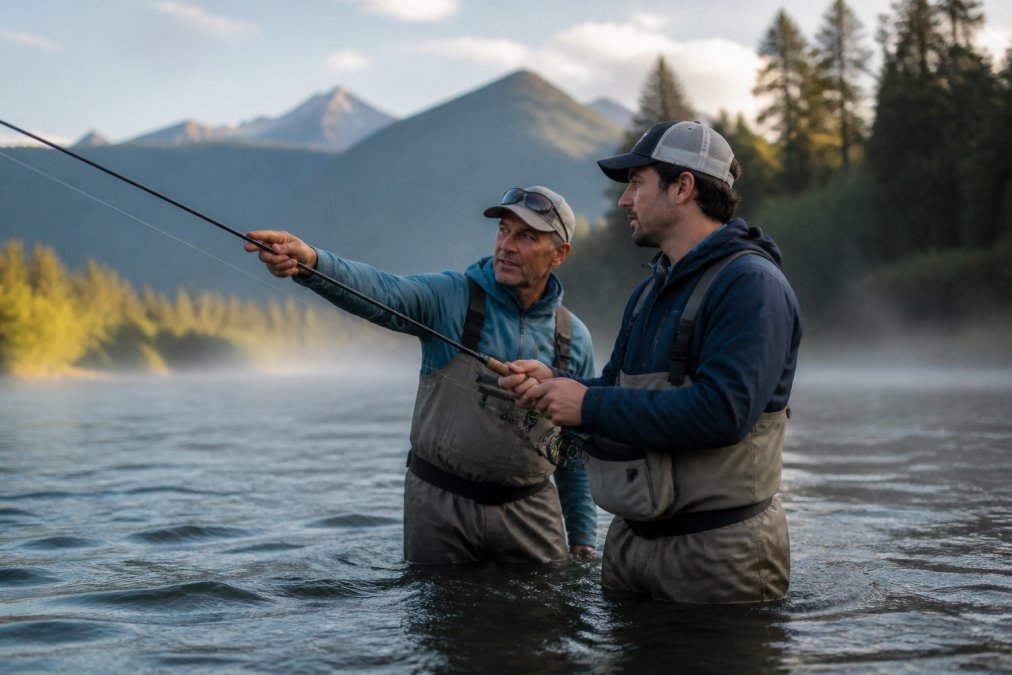
On the water, the guide directs casting location, fly selection, and water reading. They watch for rises, check water conditions, and adjust approach based on observations, providing real-time feedback on your presentation.
Lunch happens midday at a scenic spot, where the guide shares insights about local water, seasonal patterns, and fly selection strategy.
By day's end, you'll have caught fish, improved your casting, and learned water reading and fly selection. You'll also know whether fly fishing is worth pursuing seriously.
Fly Fishing Guide Tipping Etiquette and Gratuity Standards
Tipping a fly fishing guide follows different conventions than tipping a restaurant server, and understanding these norms prevents awkward moments at the end of your trip.
Gratuity for fly fishing guides is customary but not mandatory.
Equipment, Gear Rental, and What's Included in Your Guide Fee
What's included in a fly fishing guide service fee varies significantly between guides and outfitters, directly impacting total cost and leaving anglers vulnerable to upselling.
The Standard Guide Fee Baseline
Most professional guides operating through established outfitters include these items in their quoted rate:
- Waders and boots (properly fitted to your size)
- Rod and reel (matched to the water type and your skill level)
- Basic terminal tackle (leaders, tippet, split shot, strike indicators)
- Fly selection (a working assortment for current conditions)
- Lunch and non-alcoholic beverages
- Instruction and real-time coaching
- Access to the guide's preferred fishing locations
What Gets Charged Separately (and Why)
Some guides and outfitters charge separately for:
- Equipment rental beyond waders and boots, A high-end rod and reel might rent for an additional fee per day if not included. This is reasonable; the guide is protecting their capital investment.
- Premium fly selection, Some guides tie custom flies or stock rare patterns; these might be sold à la carte at $2-4 per fly rather than included in the base rate.
- Lunch, Budget guides sometimes exclude lunch, expecting you to bring your own or purchase it separately. This typically saves the guide $15-25 per angler.
- Alcohol, Non-alcoholic beverages are standard; beer or wine is almost never included and typically costs $5-8 per drink.
- Gratuity, This is always separate (see tipping section).
The Hidden Cost Trap
A guide quoting a certain rate for a half day might actually cost more with equipment rental and flies. Ask: "What is your all-in cost for one angler, including every piece of equipment, tackle, and lunch?" to get a true total.
Evaluating Equipment Quality
Included equipment should be functional and well-maintained. Check that waders fit snugly with no tears, boots have good tread, rods cast smoothly, and flies are neatly tied. Neglected equipment signals poor maintenance and is a red flag.
Bringing Your Own Gear
If you own a fly rod and reel, mention it when booking. Some guides may adjust their fee since they don't need to provide equipment. However, the guide's primary value is instruction and local knowledge, not equipment rental.
Is a Guided Fly Fishing Trip Worth the Investment
Whether booking a professional guide makes sense depends on your situation, goals, and budget. Rather than relying on intuition, a structured cost-benefit analysis reveals when a guide delivers measurable return on investment.
The Cost-Benefit Framework
Total cost: Guide fee ($200-600) + equipment rental if not included ($40-80) + gratuity ($30-120) = $270-800.
Scenario 1: The Complete Beginner
Beginner with no equipment: Solo approach costs $70 and likely ends in frustration. Guided approach ($450 all-in) delivers fish, proper casting instruction, water reading skills, and confidence. The guide eliminates 6-12 months of solo learning. Verdict: Guides are nearly always worth it for beginners.
Scenario 2: The Experienced Angler Visiting New Water
Experienced angler visiting new water: Solo approach takes 2-3 days to learn patterns. Guided approach ($500 all-in) compresses learning into one day and increases total catch rate. Verdict: Guides are worth it for visitors with limited time.
Scenario 3: The Local Angler with Regular Access
Local angler seeking skill advancement: One guide trip per year ($450) accelerates skill development by 6-12 months. Over 5 years, annual trips cost $2,250 but keep you progressing faster than solo fishing. Verdict: Guides are worth it occasionally (1-2 times per year).
Scenario 4: The Budget-Conscious Angler
Budget-conscious beginner: DIY setup costs $420-810 plus 24 trips × $30 (gas/access) = $1,320 total, plus 12 months of learning. One guide trip ($450) saves $870 in equipment depreciation and 6-12 months of frustration. Verdict: One guide trip is cheaper than DIY learning.
The Depreciation Factor
Equipment depreciation is often overlooked. A rod and reel can lose value if you decide fly fishing isn't for you. A guide trip has no depreciation risk and provides immediate certainty about whether to pursue the sport.
When NOT to Book a Guide
Guides are not worth the investment if you're already competent on familiar water, have unlimited time to learn, are testing interest on a tight budget, or want entertainment rather than instruction.
Conclusion
Local fly fishing guide service costs reflect genuine value, expert instruction, local knowledge, equipment access, and dramatically higher success rates than solo fishing. Understanding what drives these costs helps you evaluate whether a particular guide's rate is fair and what you're actually getting for your investment.
Frequently Asked Questions
How much does a fly fishing guide service cost?
Fly fishing guide service costs vary based on trip length, location, guide experience, and what's included. Half-day trips are generally shorter than full-day excursions, and rates can vary for individual anglers versus groups. For current pricing on local fly fishing guide services, contact your outfitter directly for a quote tailored to your specific needs and preferences.
How much should I tip a fly fishing guide?
Standard fly fishing guide tipping etiquette suggests a gratuity for good service, similar to restaurant tipping. Some anglers tip higher if they had an exceptional experience or caught significant fish. Tipping recognizes the guide's expertise, local knowledge, and effort in ensuring a rewarding outing. Cash tips are preferred by most guides and are often given directly at the end of the trip.
What's included in a guided fly fishing trip fee?
Most guide fees cover the guide's expertise and instruction, access to productive local waters, and use of the guide's boat or float trip equipment. Many outfitters include basic tackle and fly selection, though some charge separately for specialty flies or terminal tackle. Equipment rental policies vary, some guides provide rods and reels for beginners, while others may charge an additional gear rental fee. Always confirm inclusions before booking to avoid surprises.
Are fly fishing guides worth the investment?
Guided trips offer significant value for beginners learning proper casting technique and fly selection, as well as for experienced anglers seeking local expertise and private water access. A professional guide accelerates your learning curve, increases your catch rate through local knowledge, and provides instruction that DIY fishing cannot match. The instructional value and access to productive waters often justify the cost, especially for visitors unfamiliar with the area.