 blog
Why Fly Fishing Instruction Helps Adults Learn Faster
Last Updated: November 4, 2026
Quick Summary
Fly fishing instruction is structured, professional coaching on casting, presentation, knots, and stream reading, delivered on the water by a guide who corrects errors in real time. It compresses months of guesswork into a few focused hours, so beginners who book a lesson early often progress faster than those who spend a year casting alone.
- Unlearning a self-taught habit takes longer than learning the skill fresh.
- Learn two knots well rather than five badly.
- A guided day includes casting instruction before the first real drift.
- Common casting flaws include breaking the wrist instead of the elbow.
- Ask whether a guided day includes structured casting instruction and feedback.
Table of Contents
- Why Fly Fishing Instruction Shortens the Adult Learning Curve
- Fly Fishing Classes for Beginners Replace Trial and Error With Structure
- What to Expect From a Fly Fishing Guide on Your First Trip
- Fly Fishing Casting Lessons Fix the Loop Before It Becomes a Habit
- Stress Reduction, Focus, and Low-Impact Exercise on the Water
- Fly Fishing Lesson Cost and the Cost-Benefit Case for Instruction
- Overcoming the Intimidation Factor and Finding Your Fishing Community
- Book Your First Guided Day With Smith River Outfitters
- Frequently Asked Questions
Why Fly Fishing Instruction Shortens the Adult Learning Curve
Adults rarely struggle with fly fishing because they lack effort. They struggle because self-taught habits harden fast. Fly fishing instruction compresses months of guesswork into a few focused hours on the water. Beginners who book a lesson early often progress faster than those who spend a year casting alone in a backyard.
Here is the core problem. A self-taught caster cannot see their own loop. They repeat the same wrist error until it feels natural. By the time they seek help, the bad habit has deep roots.
Fly fishing instruction is structured, professional coaching on casting, presentation, knots, and stream reading, delivered on the water by a guide who corrects errors in real time. That definition matters, because it separates a lesson from a guided trip where nobody teaches you anything.
Below, we break down what instruction actually changes, what it costs in time and money, and how to choose the right first step.
What Self-Teaching Costs You in Time and Bad Habits
The biggest cost of going alone is not money. It is the slow drift into habits that feel right and cast wrong.
A common mistake is practicing a tailing loop for weeks without knowing it. The fly cracks off the water, tangles, or spooks fish, and the new angler may blame the fish or the fly.
Video helps, but it hides the feel. You can watch a perfect cast a hundred times and still not know what your wrist is doing.
- Unlearning a habit takes longer than learning it fresh
- Bad timing ruins presentation, drift, and mending
- Frustration builds before the first fish ever rises
- Gear gets blamed for problems that are technique
Fly Fishing Classes for Beginners Replace Trial and Error With Structure
Structure is the difference between a hobby that sticks and one that ends in the garage. Fly fishing classes for beginners follow a sequence: gear basics, knot tying, casting fundamentals, then reading water. Each skill builds on the last.
Knots, Leader and Tippet, and Reading a Hatch
Three skills separate a frustrated beginner from a confident one.
Knot tying comes first. An improved clinch or a non-slip loop knot holds under pressure. Learn two knots well rather than five badly.
Leader and tippet control how the fly lands. A long, fine tippet gives a soft presentation. A short, heavy one turns over big flies. Matching the setup to the water is a skill, not a guess.
Reading a hatch means watching what insects the fish are eating. Trout Unlimited's guide to aquatic insects explains how mayflies, caddisflies, and stoneflies move through their life stages. Matching the hatch starts with recognizing the bug on the water, not buying every fly in the shop.
Entomology sounds intimidating. It is really just observation. A guide points at the rise form and names the insect. That single lesson saves seasons of confusion.
What to Expect From a Fly Fishing Guide on Your First Trip
Most first-timers want to know one thing: will this feel like a test? It should not. A good guide meets you where you are, explains the plan, and keeps the pressure low.
Here is what a guided day typically looks like:
- A short briefing on gear, safety, and wading
- Casting instruction before the first real drift
- On-the-water coaching with immediate feedback
- Help with presentation, mending, and hook sets
- Catch and release handling and a debrief at the end
If you want the full walkthrough of how a guided day runs, read what to expect on guided fly fishing. It covers timing, gear, and what your guide handles for you.
A guided day follows a predictable sequence from the first briefing to the final debrief.
| Step | What happens |
|---|---|
| 1 | Short briefing on gear, safety, and wading |
| 2 | Casting instruction before the first real drift |
| 3 | On-the-water coaching with immediate feedback |
| 4 | Help with presentation, mending, and hook sets |
| 5 | Catch and release handling and a debrief at the end |
Fly Fishing Casting Lessons Fix the Loop Before It Becomes a Habit
Casting lessons work because feedback beats repetition. A guide watches your loop, spots the tail or the wide arc, and corrects it in the moment. You feel the fix instead of just hearing about it.
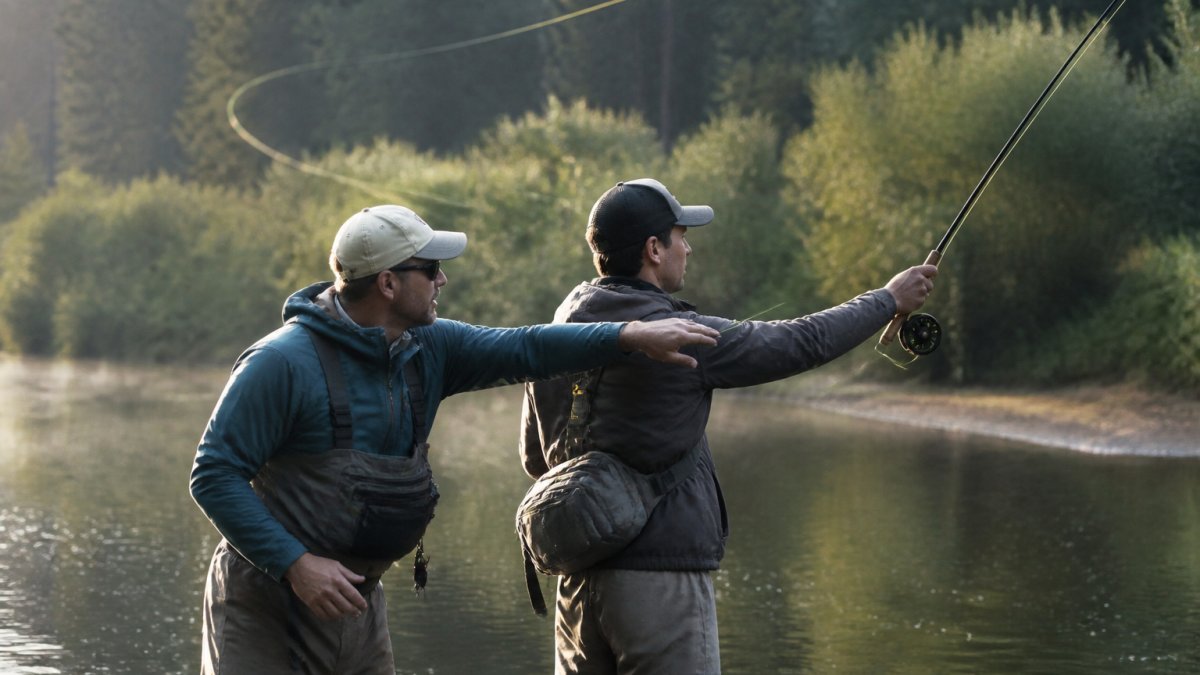
The most common casting flaws we correct:
- Breaking the wrist instead of the elbow
- Starting the forward cast too early
- Using too much power and collapsing the loop
- Failing to pause at the top of the back cast
One lesson will not make you an expert. But it can fix the error that has been holding you back for months. If you want to reinforce the mechanics between lessons, our guide to casting a fly rod correctly breaks down the stroke step by step.
Stress Reduction, Focus, and Low-Impact Exercise on the Water
Fly fishing is quietly demanding. You stand, wade, cast, and watch. The focus required crowds out the noise of a work week. Many anglers describe the rhythm of casting as a form of moving meditation.
The physical side is real but gentle. Wading builds balance and leg strength. Casting works the shoulders and core. It is low-impact exercise that never feels like a workout.
The mental benefits may be the strongest draw. research on nature and stress from the American Psychological Association links time outdoors with lower stress and better mood. Combine that with the concentration casting demands, and the appeal makes sense.
Mindfulness on the water is not a buzzword here. It is the natural result of watching a drift and waiting for a rise. For a deeper look, explore fly fishing for stress relief.
Fly Fishing Lesson Cost and the Cost-Benefit Case for Instruction
Here is the honest math. A lesson costs money up front, while self-teaching costs time, wasted gear, and lost seasons. The question is which cost is higher for you.
Pricing depends on format, group size, and length of the outing, so we point anglers to current rates rather than quote figures that change. For a clear breakdown of what guided time runs in this area, see our local fly fishing guide service costs.
The real expense of self-teaching is not the gear you buy; it is the gear you buy twice because you misdiagnosed the problem.
Consider the time ledger.
The gear-damage argument is concrete. A tailing loop cracks a fly off the water and weakens the leader. Bad timing drives a fly into the back of your head or a nearby angler.
There is also a safety line item. Wading a freestone river without instruction is where beginners get hurt. A guide teaches you how to read current seams, where to cross, and how to use a wading staff before you learn the hard way.
Watch out: the cost-benefit case collapses if you book a "guided trip" that is really just a boat ride. Ask whether the day includes structured casting instruction and feedback, or whether the guide only rows and points at fish.
Self-teaching can work. It just takes longer, and it rarely produces clean technique without outside eyes. The break-even point arrives faster than most adults expect, usually within the first season once you count saved gear, saved trips, and saved frustration.
Overcoming the Intimidation Factor and Finding Your Fishing Community
The intimidation factor is real, and it keeps more adults off the water than any technical barrier. Fly fishing looks precise and expensive from the outside.
They will not. Every experienced angler started clumsy. Guides are used to first-timers, and the learning curve flattens fast with good coaching. What instruction actually provides is a safe-to-fail environment.
The social side is the part most guides undersell, and it is where instruction pays off long after the lesson ends. Fly fishing has a strong community culture built around local clubs, fly shops, and organized outings.
Group classes are the most efficient entry point for the social angle.
Conservation ties into the same culture. Catch and release, clean wading practices, and respect for the resource are shared values. Learning them early makes you a better steward and a more welcome member of the community.
Watch out: the intimidation factor does not disappear after one lesson. The first solo trip without a guide is where many adults freeze and retreat to the car.
The community is what keeps people in the sport long after the first lesson. Technique gets you on the water; the people you meet keep you coming back.
Book Your First Guided Day With Smith River Outfitters
The fastest way to skip the trial-and-error phase is to learn from someone who fishes these waters every week. Our guides provide expert-led instruction for every skill level. We combine professional guidance with deep local knowledge, so your time on the water is both educational and rewarding.
Ready to shorten your learning curve? Book your first guided day with Smith River Outfitters and start casting with confidence.
Frequently Asked Questions
What are the benefits of taking fly fishing instruction as an adult?
Adults who take fly fishing instruction skip months of trial and error. A guide corrects your casting loop, teaches knots, leader and tippet setup, and explains how to read a hatch, all on the water in a single session. Beyond technique, structured lessons build confidence, reduce the intimidation factor of a new sport, and add a low-impact outdoor activity that supports focus and stress relief. You leave with repeatable skills instead of a pile of YouTube tips that never quite worked.
Is a guided fly fishing lesson worth the cost?
Fly fishing lesson cost depends on trip length, group size, and whether equipment is included, so check current rates directly with the outfitter. The cost-benefit case is strong for beginners: you use the guide's rods, reels, flies, and local knowledge instead of buying gear before you know the sport suits you. One session also prevents months of practicing a flawed cast, which is harder to unlearn later. Compare the lesson fee against what you would spend on gear and wasted trips.
How long does it take an adult beginner to learn fly fishing?
Most adults can make a usable cast and understand basic presentation and drift within a few hours of fly fishing casting lessons. Getting consistent, though, takes practice on the water. A single guided day gives you the fundamentals and a clear picture of what to work on next. Adults who practice between trips and book follow-up instruction usually see steady improvement within a season, especially with feedback on mending, line control, and reading water.
Do I need my own gear for a first fly fishing lesson?
No. Most guided trips and fly fishing classes for beginners include rods, reels, leaders, tippet, and flies, so you can try the sport before investing. Ask what to expect from a fly fishing guide at booking: confirm whether waders, boots, and a valid fishing license are covered or if you need to arrange them. Wearing layers, sunglasses, and a hat is usually all you need to bring. Rent or borrow gear first, then buy once you know the rod weight and setup that fit your local water.
The gap between wanting to fly fish and actually catching fish is smaller than it looks. It closes fastest with a guide beside you, correcting the loop, reading the water, and putting you on fish. Get started with Smith River Outfitter Raleigh Fly FIshing and trade months of guesswork for a single well-taught day on the river.