 blog
Best Fly Rod Weights for Trout: A 7-Weight Guide
Last Updated: November 12, 2026
Quick Summary
The best fly rod weights for trout are 5-weight for all-around fishing, 3-weight for small streams, and 7-weight for big water and big trout. Most trout anglers fish fly rod weights between 3-weight and 7-weight, and the 5-weight is the most common trout rod in America.
- A rod's weight rating is the weight of the fly line it casts, not the rod's own weight.
- Most beginners should start with an 8'6" or 9' 5-weight with a weight-forward floating line.
- A 3-weight handles trout up to roughly 12 inches comfortably, while a 7-weight covers 18-24 inch fish.
- A 6-weight is the best single-rod compromise for anglers who fish varied water.
- A 7-weight is not a beginner's first trout rod and feels like a broom on a small creek.
Table of Contents
- How Fly Rod Weights for Trout Actually Work
- All Seven Trout Rod Weights Compared
- Matching Rod Weight to Water Type and Fish Size
- 7-Weight Fly Rod Uses Beyond Trout
- Why a 6-Weight Fly Rod for Trout Is the Versatile Pick
- Finding the Best Budget 7-Weight Fly Rod
- What to Look For in a 7-Weight Fly Rod Combo
- Book a Guided Trip to Test Rod Weights on Local Water
- Frequently Asked Questions
How Fly Rod Weights for Trout Actually Work
A fly rod's weight rating is not the rod's own weight. It is the weight of the fly line the rod is built to cast, measured on a numbered scale from 1 to 12. That single number decides how far you can cast, how softly a fly lands, and how much wind you can fight.
Pick the wrong weight and everything feels hard. The rod loads poorly, your casts wobble, and delicate presentations fall apart.
The American Fly Fishing Trade Association tracks the line standards behind those numbers. Most trout anglers fish lines between 3-weight and 7-weight. The rest of this guide compares all seven options, then shows you how to match one to your water, your fish, and your flies.
All Seven Trout Rod Weights Compared
No single weight does everything. Each one trades power for finesse, and the right pick depends on the water you fish most. The table below gives the short version; the notes after it explain the trade-offs, the outfit pieces that pair with each weight, and where each rod stops working.
| Weight | Best For | Main Strength | Main Limitation | Typical Rod Length | Matching Line and Leader | Fly Size Range |
|---|---|---|---|---|---|---|
| 2-weight | Tiny creeks, small trout | Ultra-soft presentations | Almost no wind or distance | 6'6"-7'6" | Weight-forward floating line; 9-12 ft leader, 5X-7X tippet | Size 16-24 dries and small nymphs |
| 3-weight | Small streams | Delicate dry fly landings | Struggles with heavy flies | 7'-8' | Weight-forward floating line; 9-12 ft leader, 4X-6X tippet | Size 14-22 dries, light nymphs |
| 4-weight | Mixed small water | Light feel with some backbone | Limited reach on big rivers | 7'6"-8'6" | Weight-forward floating line; 9-12 ft leader, 4X-5X tippet | Size 12-20 dries, small streamers |
| 5-weight | All-around trout | Balance of finesse and power | Not ideal in strong wind | 8'-9' | Weight-forward floating line; 9-12 ft leader, 3X-5X tippet | Size 8-18 dries, nymphs, light streamers |
| 6-weight | Rivers, bigger fish | Handles wind and larger flies | Less delicate on calm water | 8'6"-9'6" | Weight-forward floating or sink-tip line; 7.5-9 ft leader, 2X-4X tippet | Size 4-14 streamers, large nymphs |
| 7-weight | Big water, big trout | Casts heavy flies and distance | Overkill on small creeks | 9'-10' | Weight-forward floating or sinking line; 7.5-9 ft leader, 1X-3X tippet | Size 2-10 streamers, heavy nymphs |
| 8-weight | Salmon, steelhead, wind | Serious power and reach | Too much rod for most trout | 9'-10' | Weight-forward floating or sinking line; 6-9 ft leader, 0X-2X tippet | Size 1/0-8 streamers, large flies |
2-Weight and 3-Weight: Small Stream Specialists
These rods shine where casts are short and trout spook easily. A 2-weight or 3-weight lets a small dry fly land like a snowflake. On tight creeks lined with brush, that softness puts more fish in the net. Rod lengths run short, usually 6'6" to 8', so you can cast under branches and around rocks without loading a long blank.
The trade-off is real. Light rods hate wind and heavy flies. A 2-weight tops out around a size 16 dry in any breeze, and a 3-weight starts to fold when you tie on a weighted streamer or a strike indicator. If you plan to cast streamers or fish open water, step up.
For a deeper look at light rods on tight water, read our guide to the best fly rod for small streams.
4-Weight and 5-Weight: The All-Around Choices
The 5-weight is the most common trout rod in America, and for good reason. It balances delicate presentation with enough power for moderate distance and light wind. Most beginners should start here. An 8'6" or 9' 5-weight with a weight-forward floating line and a 9-12 ft leader handles dries, nymphs, and light streamers, and it remains the default recommendation for mixed river fishing.
A 4-weight adds finesse for calm, clear water. It feels lighter in hand and lands flies softer. But it gives up some punch when the wind picks up or you tie on a bigger fly. A 4-weight is a strong second rod for anglers who already own a 5-weight and fish spring creeks or calm tailwaters where trout inspect flies closely.
These two weights cover most trout fishing you will ever do. If you want the full picture on choosing a rod, our guide to choosing a fly rod walks through length, action, and line matching.
6-Weight, 7-Weight, and 8-Weight: Power and Reach
Big water and big fish call for more rod. A 6-weight handles wind, larger flies, and longer casts. A 7-weight pushes further and turns over heavy streamers with ease. An 8-weight is the tool for salmon, steelhead, and nasty conditions. Rod lengths stretch to 9'-10' in these weights, and lines shift from pure floating to sink-tip or full sinking when you need to get deep.
The cost is finesse. Heavy rods land flies harder and feel clumsy on small creeks. A 7-weight will spook trout in shallow, clear water that a 4-weight would fish cleanly. An 8-weight is more rod than almost any trout situation requires, and it makes a poor first trout rod. Match the weight to the water, not to your ego.
Watch out: buying a 7- or 8-weight as your only trout rod usually leads to frustration on small water; treat these as specialized tools or second rods.
Matching Rod Weight to Water Type and Fish Size
Water type and fish size decide your weight faster than anything else. Small creeks with small trout reward light rods. Wide rivers with bigger fish reward power.
Step 1: Start with water type.
- Tiny creek or brushy brook (under 15 feet wide): 2-weight or 3-weight
- Small to medium stream (15-40 feet wide): 4-weight or 5-weight
- Big river (over 40 feet wide) with mixed trout: 5-weight or 6-weight
- Big trout water with wind and heavy flies: 6-weight or 7-weight
- Steelhead or salmon water: 7-weight or 8-weight
Step 2: Adjust for fish size.
Fish size matters just as much as water type. A 6-inch brook trout feels like a trophy on a 3-weight. That same rod would be underpowered against a 20-inch brown in fast current.
Step 3: Factor in flies and wind.
Fly size and pattern weight push the decision as much as fish size. Size 16-22 dries and small nymphs fish well on 3- and 4-weights.
Step 4: Match rod length and line to the weight.
Rod length and line weight work together. Short rods (6'6"-7'6") in 2- and 3-weights keep casts tight on small water.
Step 5: Check seasonal and local conditions.
Season and local rules can change the answer. Spring high water and fall spawning runs often push anglers toward heavier rods, while summer low, clear water rewards lighter tackle.
Local water changes the answer too. Our trout fishing guide for North Carolina breaks down which weights suit regional rivers and hatches.
7-Weight Fly Rod Uses Beyond Trout
A 7-weight is often sold as a trout rod, but it earns its keep elsewhere. Common 7-weight fly rod uses include casting streamers for big browns, chasing bass in warm water, and fighting wind on open lakes. It also handles light saltwater work and small steelhead.
That range makes the 7-weight a smart second rod. Pair it with a 5-weight and you can fish almost anything.
One warning: a 7-weight is not a beginner's first trout rod. On a small creek it feels like swinging a broom.
Why a 6-Weight Fly Rod for Trout Is the Versatile Pick
A 6-weight fly rod for trout is the best single-rod compromise for anglers who fish varied water. It casts far enough for big rivers, turns over bushy flies, and cuts through afternoon wind. Yet it still lands a dry fly softly enough on calm evenings.
Where it falls short is the tiny stuff. On a brushy creek, a 6-weight is more rod than you need. But if you fish rivers, lakes, and windy days, the 6-weight does more jobs well than any other weight.
Finding the Best Budget 7-Weight Fly Rod
The best budget 7-weight fly rod is one that matches a quality line and a smooth, moderate-fast action. You do not need to spend the most to fish well. You need a rod that loads easily and a reel with a reliable drag.
Watch out: a cheap rod paired with a cheap line will cast poorly no matter your skill. Spend your money on the line first, then the rod.
Shop by these priorities:
- A moderate-fast action that suits beginners
- A reel with a smooth drag for bigger fish
- A rod tube for travel and storage
- A warranty you can actually use
What to Look For in a 7-Weight Fly Rod Combo
A 7-weight fly rod combo bundles rod, reel, and line together. That saves time and usually money. The catch is quality: some combos cut corners on the line, which is the part that matters most.
Check these before you buy:
- Line quality: a matched weight-forward floating line
- Reel drag: smooth and adjustable, not just a clicker
- Rod action: moderate-fast for control and distance
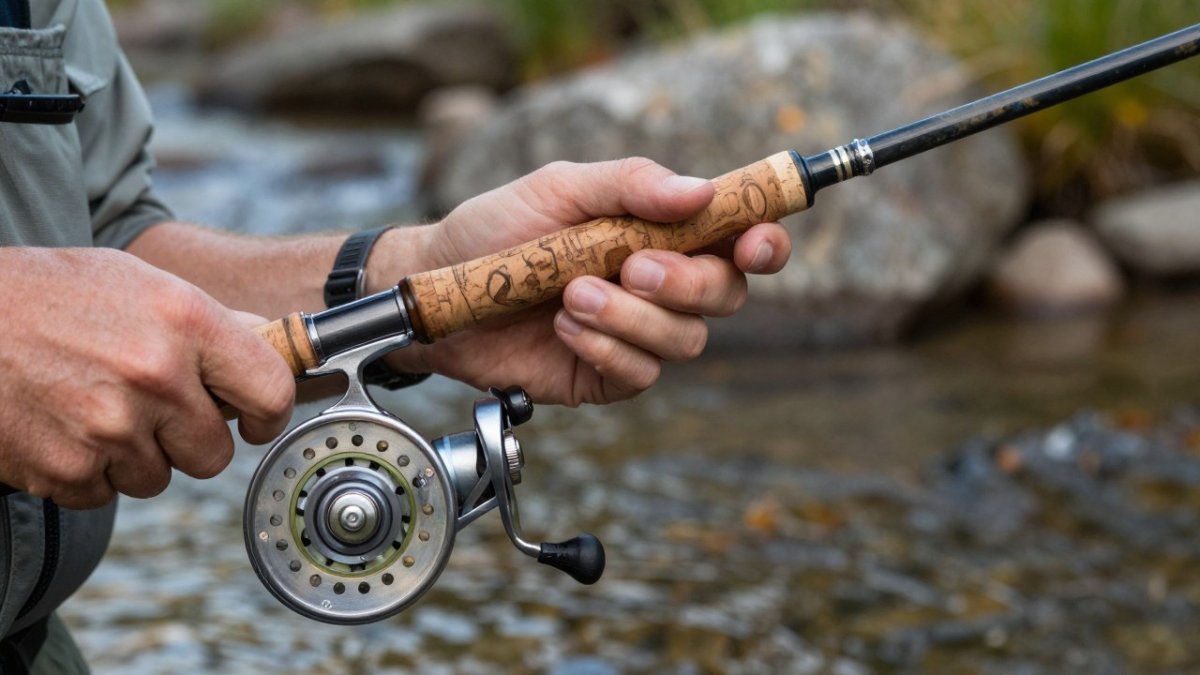
- Grip and guides: comfortable cork and corrosion-resistant guides
If you plan to fish with a guide, ask whether gear is supplied. Our article on whether fly fishing guides provide gear explains what to expect so you can pack right.
Book a Guided Trip to Test Rod Weights on Local Water
Reading about fly rod weights only goes so far. The fastest way to learn which weight suits you is to cast a few on real water.
If you are ready to test rods on local water, learn how to book a fly fishing guide step by step.
Choosing a trout rod comes down to matching line weight to your water, your fish, and your flies. Smith River Outfitter Raleigh Fly FIshing helps you skip the guesswork with expert-led trips, quality loaner gear, and patient coaching for every skill level. Our guides know local waters and tailor each outing to how you want to fish. Get started with Smith River Outfitter Raleigh Fly FIshing and cast the right rod weight with confidence.
Frequently Asked Questions
What is the best fly rod weight for trout fishing?
A 5-weight is the most common starting point for trout because it handles dry flies, nymphs, and light streamers on typical rivers. If you fish mostly small creeks, a 3-weight or 4-weight gives a softer presentation. For bigger rivers, wind, or larger fish, a 6-weight adds line control and casting distance. The right fly rod weights depend on your water, not a single universal answer.
What do you use a 7-weight fly rod for?
A 7-weight fly rod uses center on power and distance: casting large streamers, punching through wind, and handling bigger fish. Trout anglers reach for one on big rivers, stillwater, or when throwing heavy flies. It also crosses over to bass, steelhead, and light saltwater. It is more rod than most small-stream trout fishing needs, but it earns its place when conditions demand it.
Is a 7-weight fly rod too big for trout?
For small-stream brook trout, yes, a 7-weight is too much rod and will land flies heavily. On large rivers, lakes, or when casting big streamers in wind, a 7-weight is a reasonable trout tool. It sacrifices delicate presentation for power and casting distance. Most trout anglers pair a 5-weight or 6-weight with a 7-weight rather than using the 7-weight alone.
What should a beginner choose for trout?
Start with a 9-foot 5-weight. It is forgiving to cast, handles common trout flies, and works on most rivers and creeks you will fish first. Pair it with a matching weight-forward floating line and a reel that balances the rod. Choosing gear that fits the water you actually fish is worth the time.