 how-to
When Should You Fly Fish Near Raleigh?
Last Updated: October 25, 2026
Quick Summary
The best time fly fishing near Raleigh is spring (April-May) and fall (September-October), when water temperatures range from 55-70°F and fish feed aggressively throughout the day. Summer requires early morning before 9 AM or evening after 6 PM fishing, while winter is slowest but possible on hatchery-supported waters.
- April is peak season with water at 55-65°F and excellent conditions for trout, bass, and panfish
- Summer fishing shifts to dawn before 9 AM or dusk after 6 PM as water reaches the low 80s
- Fall (September-October) is the second-best season with water cooling to 60-70°F and aggressive feeding
- Check water temperature at depth before every trip, trout bite best at 55-65°F, bass at 60-75°F
- Overcast days improve midday fishing year-round by cooling water and triggering feeding
Table of Contents
- Why Timing Matters for Fly Fishing Success
- Month-by-Month Guide to Fly Fishing Conditions
- Best Time of Day for Fly Fishing Near Raleigh
- Fly Fishing for Trout in NC: Seasonal Patterns and Water Temperature
- Fly Fishing for Bass Near Raleigh: Year-Round Opportunities
- Best Time to Fly Fish in North Carolina: Water Conditions and Weather
- Planning Your First Guided Fly Fishing Trip
- Frequently Asked Questions
Why Timing Matters for Fly Fishing Success
The difference between a productive day and a frustrating blank comes down to timing. Water temperature, daylight hours, and seasonal patterns shift throughout the year, understanding them tells you exactly when to be on the water.
Most beginners show up whenever they have a free afternoon and wonder why nothing bites. That's poor timing, not bad luck.
Month-by-Month Guide to Fly Fishing Conditions
Spring (March-May): Peak Season for Multiple Species
Spring is the best time for fly fishing in the Raleigh area.
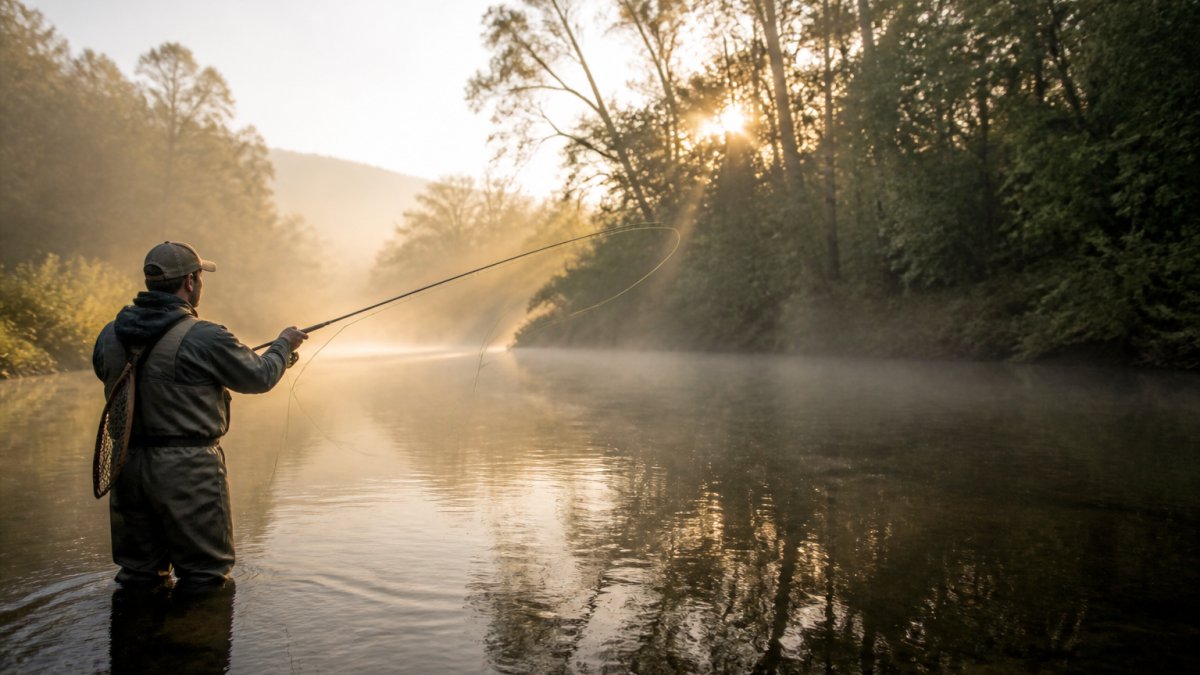
Early spring (March) brings water temps in the low 50s.
Mid-spring (April) is peak season.
Late spring (May) brings warmer water (65-70°F) and longer daylight. Early morning and evening remain best, midday becomes viable, and patterns shift toward larger nymphs and emerging insects.
Summer (June-August): Shifting to Early Morning and Evening
Summer flips the script. Water temps climb into the 70s and can reach the low 80s by August, pushing fish into deeper, cooler water.
June is a transition month with productive mornings.
Mountain streams stay cooler longer than Piedmont rivers. If you're targeting trout in NC during summer, head to higher elevation waters.
Fall (September-November): Renewed Activity and Cooler Water
Fall brings the second-best fly fishing season of the year. Water temps drop into the comfortable range (60-70°F in September, 50s by November) and fish feed actively again.
September and early October are excellent.
Late October and November stay productive but get trickier. Water falls into the 40s-50s; fish still bite, but timing and location must be precise, and early morning usually beats midday.
Winter (December-February): Challenges and Opportunities
Winter is the hardest season.
December and early January offer occasional good days when temps spike slightly. By mid-January through February, expect slow fishing.
Hatchery-supported waters often fish better in winter because stocked trout feed even in cold water, while wild trout streams become very challenging.
Water temperature and fish activity shift dramatically throughout the year near Raleigh.
| Month | Water Temperature | Best Species | Peak Conditions |
|---|---|---|---|
| March | Low 50s | Bass, panfish, trout | Fish move shallow, first winter activity |
| April | 55-65°F | Trout, bass, panfish | Peak season for multiple species |
| May | 65-70°F | Trout, bass, panfish | Longer daylight, early morning and evening best |
| June-July | 70s to low 80s | Bass, panfish | Early morning before 9 AM or after 6 PM |
| August | Low 80s | Bass, panfish | Dawn and dusk only, daytime nearly impossible |
| September-October | 60-70°F | Bass, panfish, trout | Second-best season, aggressive feeding |
| November | 40s-50s | Bass, panfish, trout | Productive but requires precise timing |
| December-February | 30s-40s | Stocked trout | Slow fishing, hatchery waters better than wild |
Best Time of Day for Fly Fishing Near Raleigh
Time of day matters as much as season. Water temperature drives this pattern.
Summer: Early morning (before 9 AM) and evening (after 6 PM) are the only reliable windows. Midday rarely pays off.
Winter: Midday often beats early morning because water is slightly warmer and fish are more active when sun warms the surface.
Overcast days: Cloud cover cools water and triggers feeding, so midday fishing improves even in summer.
Fly Fishing for Trout in NC: Seasonal Patterns and Water Temperature
Trout respond directly to water temperature.
Hatchery-supported waters (stocked regularly) fish best in spring, fall, and winter.
Wild trout streams (mountain areas) follow natural patterns and fish best at 55-65°F, spring (April-May) and fall (September-October).
For a deeper dive into trout-specific seasonal patterns and water temperature dynamics in the region, explore fly fishing for trout in NC: 2026 angler's guide.
Fly Fishing for Bass Near Raleigh: Year-Round Opportunities
Bass are more flexible than trout.
Spring (March-May): Bass move shallow to spawn and bite aggressively on larger flies.
Summer (June-August): Bass move deep to escape heat.
Fall (September-November): Bass feed heavily to prepare for winter.
Winter (December-February): Bass slow down but still bite.
Bass are less sensitive to temperature swings than trout.
Best Time to Fly Fish in North Carolina: Water Conditions and Weather
Season and time of day set the window. Water conditions decide whether that window actually produces. The problem with most timing advice is that it stops at "fish early in summer" and never tells you what to measure, where to measure it, or what number changes your fly. This section does that for Raleigh-area waters.
Water temperature: the number that overrides everything else
Carry a stream thermometer and take a reading at the depth you plan to fish, not at the surface.
- Trout: Feeding is most consistent from roughly 55-65°F. Below about 50°F, expect fish to hold in slower, deeper water and eat smaller offerings. Above about 68-70°F, trout become stressed and seek cold refuges, spring seeps, deep pools, shaded tributary mouths. Pushing trout in water above 70°F raises mortality even on a clean release, so the responsible move is to target bass and panfish instead.
- Bass and panfish: A wider comfort band, roughly 60-75°F for aggressive surface and shallow feeding. Below 55°F, slow down and fish deeper. Above 80°F, shift to low light and shaded banks.
A practical rule: if you only check one thing before you leave, check water temperature at your intended destination. It tells you which species to rig for and whether to fish the morning or the evening.
Flow and the post-rain window
Rivers and creeks respond to rain fast in the Piedmont. The productive window is usually the falling limb, after the peak passes and the water clears enough to see roughly a foot down.
Use the public USGS streamflow gauges to read discharge and stage before you drive. Compare today's reading to the seasonal median for that gauge; a flow near or slightly above median with a falling trend is the classic green light.
Clarity, light, and cloud cover
- Clear water: Fish see the fly and see you. Longer, finer leaders, smaller flies, and casts that land away from the fish's window matter more than pattern choice.
- Slightly stained (roughly 12-18 inches of visibility): Often the most forgiving condition. Fish are less leader-shy and will move farther for a fly.
- Overcast and low light: Cloud cover flattens the light and pulls fish shallower and farther from cover. This is when midday fishing works even in summer. Bright, cloudless midday pushes fish deep and tight to structure.
Barometric pressure and fronts
A common pattern is that feeding picks up as a front approaches and pressure falls, then slows in the bright, high-pressure hours right after it clears. Stable pressure with cloud cover is the most reliable combination. Don't over-index on the barometer, water temperature and flow outrank it, but if you're choosing between two otherwise equal days, take the one ahead of the front.
Wind
A light ripple breaks up the surface and pushes terrestrials and spent insects onto the water, which helps. Hard wind ruins casting and makes small dry flies impractical. On breezy days, fish the wind-blown bank and switch to a heavier fly you can actually deliver.
Putting the conditions together
The best time fly fishing in North Carolina is when season, time of day, and water conditions align. In practice that means: pick your species window from the seasonal calendar, confirm water temperature is inside that species' comfort band, check that flow is near median and falling, and favor overcast or low-light hours.
Planning Your First Guided Fly Fishing Trip
A guided trip removes the guesswork, but the planning around it is where most first-timers lose a day. This section covers the practical pieces: when to book, what the day actually looks like, what you legally need before you wet a line, and how to build a realistic day trip from Raleigh.
When to book
Book spring (April-May) or fall (September-October) for the most reliable conditions and comfortable weather. If you can only go once, aim for mid-April or mid-October. Summer trips should be booked as dawn or dusk half-days; winter trips are best as midday floats or walk-ins on hatchery-supported water. Book two to four weeks out in peak spring and fall, and be flexible, a guide will often move a trip a day or two to dodge a blown-out river.
What a guided day looks like
Most full-day trips run roughly 6-8 hours on the water, and half-days run about 4. A typical schedule:
- Meet at the put-in or shop early, often before sunrise in summer.
- A short casting and rigging session if you're new.
- Fish the first productive window (dawn in summer, mid-morning in spring and fall).
Ask your guide up front whether the trip is a float or a wade. Float trips cover more water and suit beginners who don't want to wade; wade trips put you closer to the fish and teach more, but demand more balance and stamina.
Licenses and rules you need before you go
You need a valid state fishing license before you fish, and trout waters require the trout privilege in addition to the basic license (License Types and Fees). Buy online through the state wildlife agency's licensing portal before your trip, don't assume the shop or the guide can sell you one on the morning of.
Access and etiquette
Public access varies widely. Some stretches are accessible from road pull-offs and state-managed access areas; others cross private land and require permission or a paid access arrangement. Your guide handles access for guided trips, but if you plan to fish on your own afterward, confirm access points in advance, a list of public fishing access points near North Raleigh is a good starting reference.
Gear: what to bring and what to skip
Don't buy gear before your first trip. Most guides provide rods, reels, leaders, and flies, and will size the setup to the water. Bring polarized sunglasses, a hat, layers, water, snacks, sunscreen, and wading shoes if you own them. Ask whether waders are provided, in spring and fall, cold water makes them worth confirming.
Building a realistic day trip
Raleigh sits roughly two to three hours from the mountain trout streams and much closer to Piedmont rivers, creeks, and reservoirs for bass and panfish. That geography shapes your plan:
- Close-to-home half-day (bass and panfish): Leave before dawn, fish a Piedmont river or reservoir from first light to late morning, and be home by early afternoon. Best in spring and fall.
- Mountain trout day trip: Leave around 4-5 AM to be on the water by mid-morning, fish through the afternoon, and plan to be home after dark. Best April-May and September-October. A dawn start matters less in the mountains than being on the water during the temperature-optimal middle of the day in cool months.
- Overnight option: If you want two windows in one trip, stay near the water and fish the evening rise, then the next morning's hatch. This is the single biggest upgrade to a first mountain trip.
Cost and booking
Rates depend on trip length, float versus wade, and what's included. Ask specifically what the price covers, flies, leaders, lunch, and whether the license is your responsibility. Get the cancellation and weather policy in writing, and confirm the meeting time and location the day before.
For where to fish during the optimal windows, see our best fly fishing spots near Raleigh: 2026 guide. To book with a local expert who tracks conditions daily, review our affordable fly fishing guides: your local options.
Frequently Asked Questions
What months are best for trout fishing in North Carolina?
Trout fishing peaks in spring (April-May) and fall (September-October) when water temperatures stay between 50-65°F. Spring offers aggressive feeding after winter, while fall brings renewed activity as temperatures cool. Winter (December-February) can be productive but requires patience and careful timing. Summer trout fishing is possible in mountain streams and hatchery-supported waters, but early morning and evening are essential to avoid warm midday temperatures.
When is the best time of day for fly fishing near Raleigh?
Early morning (sunrise to 9 a.m.) and evening (5 p.m. to dusk) are most productive year-round. Fish feed actively during low-light conditions and cooler temperatures. Spring and fall allow productive fishing throughout the day, while summer requires early starts to avoid heat. Overcast days and light rain extend productive hours by reducing light intensity and triggering feeding behavior.
Can you fly fish for bass near Raleigh year-round?
Yes, bass fishing is possible year-round, but success varies by season. Spring (March-May) and fall (September-October) offer peak activity. Summer bass move to deeper, cooler water and feed mainly at dawn and dusk. Winter bass slow considerably but still bite on warmer days and midday hours when water temperature rises slightly. Local knowledge of seasonal patterns and water conditions improves your chances.
How does water temperature affect fly fishing near Raleigh?
Water temperature directly controls fish metabolism and feeding behavior. Trout are most active between 50-65°F; above 70°F, they seek cooler refuge and feed minimally. Bass feed aggressively in 60-75°F water. Cold water (below 50°F) slows feeding but can still produce results on warmer days. Understanding local water temperatures and seasonal changes helps you time trips for maximum productivity and success.