 blog
blog
Affordable Fly Fishing Guides: Your Local Options
Table of Contents
- Why Affordable Fly Fishing Guides Deliver Real Value
- Understanding North Carolina Fly Fishing Guide Rates
- Beginner Fly Fishing Lessons: What Actually Happens on the Water
- Half-Day Fly Fishing Trips: The Sweet Spot for First-Timers
- What to Bring on a Guided Fly Fishing Trip
- How to Choose a Guide That Matches Your Skill Level and Budget
- Booking Your First Guided Fly Fishing Experience
- Frequently Asked Questions
Last Updated: October 12, 2026
Why Affordable Fly Fishing Guides Deliver Real Value
Fly fishing's barrier to entry feels steep: technique, local water knowledge, and confidence. That's where affordable fly fishing guides change the equation.
A guide turns a frustrating solo attempt into structured learning: immediate casting feedback, insight into where fish hold, and access to productive water.
This guide covers what affordable fly fishing guides deliver and how to match one to your skill level and budget.
Understanding North Carolina Fly Fishing Guide Rates
Most listings advertise a "starting at" rate and stop there, which tells you little about what you'll actually pay. To compare affordability honestly, you need the full cost stack: base rate, inclusions, add-ons, deposit, gratuity, and license.
The four pricing models you'll encounter
Per-boat, flat rate. One price covers boat and guide whether one or two anglers fish, the most common model for float trips.
Per-person rate. Common for walk-and-wade trips and group lessons. The per-person price drops as group size grows, so ask for the group rate before assuming solo is cheaper.
Per-day vs. per-half-day. A half-day isn't half the price of a full day.
Instruction surcharge. Some guides charge a separate rate for dedicated casting lessons (often 2-3 hours) versus a guided fishing trip. If your goal is learning, ask which applies.
What's usually included, and what isn't
Included in most standard trips:
- Rod, reel, line, leaders, and flies
- Waders and wading boots (confirm sizes in advance)
- Access to private or leased water, where applicable
- Basic instruction and on-water coaching
Usually NOT included:
- Fishing license. In most states, every angler 16 and older needs their own license; the guide's does not cover you. Buy yours online before the trip, short-term licenses are inexpensive.
- Gratuity. Customary is 15-20% of the trip rate. Budget for it up front.
- Lunch and drinks on full-day trips, unless the outfitter states otherwise.
- Transportation to and from the meeting point.
- Rental gear if you don't own waders or boots and the guide doesn't supply them.
Deposits, cancellations, and weather
Most guides require a deposit, a fixed amount or percentage of the trip total, to hold your date, with the balance due on the day. Cancellation windows vary widely: some require 48 hours' notice for a full refund, others 14 days or more in peak season. Weather cancellations are usually handled separately, with a reschedule or refund. Get the policy in writing.
How to compare value, not just price
A cheaper trip isn't always the better deal. Two guides may quote similar rates, but one includes waders, flies, and a shuttle while the other charges for each. Compare:
| What to compare | Why it matters |
|---|---|
| Base rate (half-day / full-day) | The headline number, but not the whole story |
| Second-angler fee | Determines true per-person cost |
| Gear included | Waders and boots can add real cost if rented separately |
| License responsibility | You, not the guide, in most cases |
| Deposit and cancellation window | Protects you if plans change |
| Gratuity expectation | 15-20% is standard |
| Group size cap | Smaller groups mean more attention per angler |
A guide who charges slightly more but includes gear, a shuttle, and a smaller group may cost less in total than a "bargain" rate with add-ons. Run the full math.
Beginner Fly Fishing Lessons: What Actually Happens on the Water
Beginner fly fishing lessons focus on casting fundamentals, reading water, and fly selection.
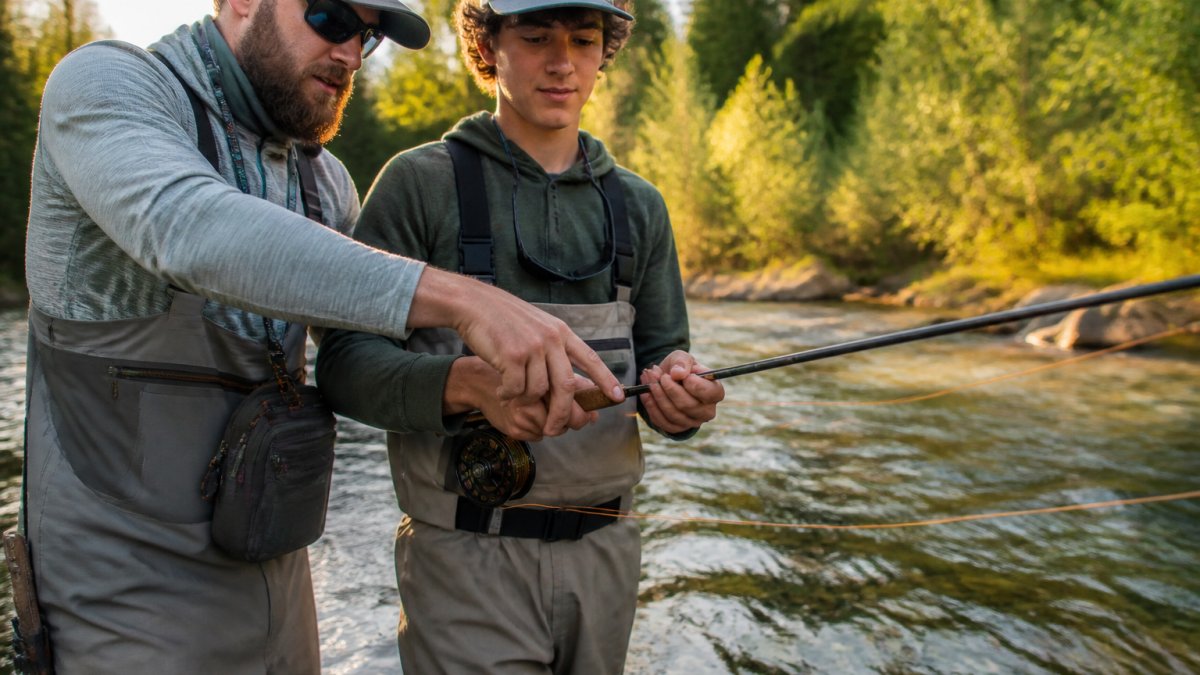
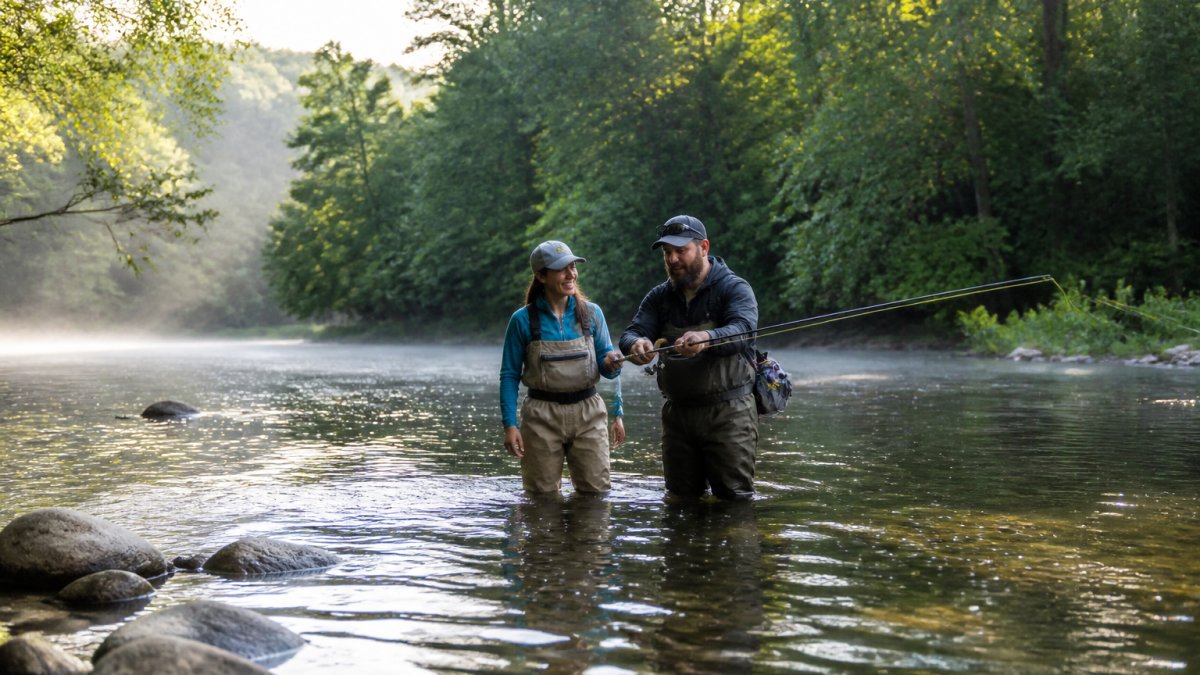
The first lesson covers grip, stance, and the basic casting motion.
Once you're casting competently, the guide moves into reading water: where fish hold in different current speeds, how to approach without spooking them, and which flies match the hatch.
A common beginner mistake is expecting to catch lots of fish immediately. A realistic lesson focuses on technique; fish caught are a bonus.
Many beginners worry they'll hold back a guide or waste their money.
Half-Day Fly Fishing Trips: The Sweet Spot for First-Timers
A half-day trip runs four to five hours on the water, enough time to learn basics, practice casting, and actually fish, without exhaustion or overload.
Half-day trips suit beginners because they compress the experience into a manageable window: instruction, practice, and real fishing without losing a whole day.
Half-day trips also fit weekends and vacations: a morning on the water leaves the afternoon free, appealing to visitors and locals who want an outdoor experience without dominating their day.
The pace differs from a full day: you move purposefully, focusing on productive water and high-percentage presentations.
What to Bring on a Guided Fly Fishing Trip
Pack layers. Water and air temperatures rarely match expectations, so bring a lightweight jacket, a fleece, and a rain layer.
Wear polarized sunglasses.
Bring a brimmed hat or visor.
Wear wading boots with good traction; your guide will say whether felt or rubber soles are required.
Bring a small backpack or chest pack for sunscreen, snacks, and water.
Ask your guide what else to bring. Most include rods, reels, flies, and basic tackle; some ask you to bring your own.
How to Choose a Guide That Matches Your Skill Level and Budget
Choosing a guide is a matching problem, not a shopping problem. The right guide for a first-timer is rarely right for an experienced angler chasing a specific hatch, and the most affordable guide isn't the cheapest, it's the one whose strengths match your goals.
Step 1: Name your primary goal
Pick one. Trying to do everything on a single trip usually means doing none of it well.
- Learn to cast. You want instruction, repetition, and correction. Look for guides who advertise beginner lessons or teaching-focused trips.
- Catch fish. You want water access and local knowledge. Look for guides who emphasize results and target species.
- Learn a new river. You want a guide who fishes that specific water year-round and can explain its seasons and structure.
- Introduce a child or partner. You want a patient guide who welcomes families and can keep a beginner engaged for a few hours.
Your goal determines which questions matter most: a casting-focused trip and a catch-focused trip are different products, even at similar prices.
Step 2: Screen for beginner suitability
If you're new, this is the most important filter. A guide who mostly takes experienced anglers may be excellent and still a poor fit for a first-timer. Look for these signals:
- The listing explicitly mentions beginner instruction or first-timers welcome.
- The guide offers shorter trips (2-5 hours), which suit new anglers better than an eight-hour marathon.
- The guide supplies all gear, so you don't have to buy before you try.
- Reviews mention patience, teaching, or learning, not just fish counts.
- The guide can accommodate children or mobility needs; ask directly if this matters to you.
A beginner specialist has systems for teaching grip, stance, and the basic cast, and knows how to keep a new angler from getting discouraged. That specialization is worth paying for.
Step 3: Verify local knowledge
Local knowledge is the core value a guide provides. Test it with specific questions:
- How long have you guided on this water?
- What's the fishing like in [your month]?
- What species are most active right now?
- How do water levels or recent weather affect the trip?
A guide who answers with specifics, named access points, seasonal patterns, current conditions, draws on real experience; generalities suggest a playbook.
Step 4: Compare on the terms that actually differ
Two guides can quote the same rate and deliver very different trips. Compare on these dimensions:
| Dimension | What to ask | Why it matters |
|---|---|---|
| Trip duration | Half-day or full-day? | Affects both cost and stamina |
| Group size cap | How many anglers per guide? | Smaller groups mean more attention |
| Fishing style | Wade, float, or paddle? | Determines access and physical demand |
| Gear included | Rods, waders, flies? | Changes your true out-of-pocket cost |
| Target species | What will we fish for? | Aligns with your goal |
| Cancellation terms | Deposit, window, weather policy? | Protects your money |
| Review signals | What do past clients praise? | Reveals the real experience |
This is the apples-to-apples comparison most listings never give you. Build it before you book.
Step 5: Read reviews for patterns, not stars
A five-star average tells you little on its own. Read recent reviews and look for repeated themes:
- Do multiple reviewers mention the same strength (teaching, patience, local knowledge)?
- Do any reviewers mention feeling rushed, or that the guide seemed disengaged?
- Do beginners specifically say they felt comfortable?
- Are the reviews recent enough to reflect current service?
Patterns across several reviews beat any single glowing or scathing comment.
Step 6: Ask about licenses, safety, and cancellations before you commit
These details turn a good trip stressful if they're unclear:
- License. Confirm whether you need your own fishing license and where to buy it. In most states you do, and the guide's license does not cover you.
- Safety. Ask what safety equipment the guide carries and how they handle weather or high water. A professional will have clear answers.
- Cancellation. Get the deposit amount, the cancellation window, and the weather policy in writing before you pay.
Booking Your First Guided Fly Fishing Experience
Contact guides directly or through outfitters.
Be clear about your dates, skill level, and goals when you book.
Ask about cancellation policies and bad-weather plans. Most guides have rain dates or refund policies; knowing them upfront prevents surprises.
Confirm what's included, equipment, lunch, licenses, transportation. Each guide operates differently, and clarity prevents frustration on trip day.
Arrive early on trip day to get fitted for waders and other gear; rushing creates discomfort on the water.
Ask questions during the trip. Good guides encourage it. The more you engage, the more you learn.
Fly fishing doesn't have to feel out of reach or prohibitively expensive. Get started with a half-day trip and discover why guided fly fishing builds confidence and lasting memories.
| Trip Type | Duration | Best For | Key Benefit |
|---|---|---|---|
| Half-day wade trip | 4-5 hours | Beginners, busy schedules | Focused instruction, manageable pace |
| Full-day float trip | 8 hours | Intermediate anglers | More water coverage, higher catch potential |
| Beginner lesson | 2-3 hours | First-time casters | Technique foundation in shallow water |
| Intermediate refinement | 4-6 hours | Some experience | Advanced casting and presentation skills |
Frequently Asked Questions
How much does a typical guided fly fishing trip usually cost?
Pricing for guided fly fishing trips depends on trip duration, group size, location, and what equipment is provided. Half-day trips generally cost less than full-day outings. Contact local guides directly for current rates and package options. Many guides offer discounts for groups or multi-day bookings, and some include equipment rental in their base price while others charge separately.
Do I need to bring my own fly fishing gear on a guided trip?
Most professional guides provide all necessary fly fishing equipment, including rods, reels, waders, and tackle, as part of their service. This is especially helpful for beginners who haven't invested in gear yet. Confirm what's included when you book. Some anglers prefer using their own equipment if they have it, which many guides accommodate. Ask about equipment quality and condition before committing.
Is it hard to start fly fishing?
Fly fishing has a learning curve, but beginners can develop functional skills in a single guided session. A professional guide accelerates the process by teaching proper casting technique, reading water conditions, and fly selection. Most beginners catch fish on their first outing with instruction. The sport becomes easier and more rewarding with practice. Don't let the perception of difficulty stop you, guides specialize in working with newcomers.
What should I ask before booking a fly fishing guide?
Ask about the guide's experience level, what waters they fish, typical catch rates, what equipment is provided, cancellation policies, and whether the trip suits your skill level. Inquire about group size, trip duration options, and how they handle weather. Ask for references or reviews from past clients. Confirm what's included in the price and whether gratuity is expected. Request details on accessibility and physical demands of the trip.