 How-to
What Happens on a Guided Fishing Trip: A Beginner's Walkthrough
Last Updated: November 17, 2026
Quick Summary
A guided fishing trip is a professionally led day on the water in which a licensed guide handles the boat, the gear, the fish-finding, and the coaching. Your day starts with check-in and a safety briefing, then the guide reads water conditions and sets up rods, reels, and tackle for you. Half days run about 4 hours and full days about 8 hours, and no guide can promise a catch since fish are wild.
- Guides check your fishing license at the launch before you head out.
- The safety briefing covers life jackets, boat balance, hook awareness, and first aid kit location.
- Many trips supply rods, reels, lines, and flies, so confirm what is included when you book.
- Buy your fishing license before you go because the guide cannot sell you one.
- Tipping is customary and gratuity is not usually included in the guide fee.
Table of Contents
- A Guided Fishing Trip, Hour by Hour
- How Your Guide Finds Fish and Picks the Right Presentation
- Rod, Reel, and Tackle: What the Guide Sets Up for You
- What to Pack for a Day Fishing Trip
- How Long Is a Guided Fishing Trip?
- How Much to Tip a Fishing Guide
- What to Ask a Fishing Guide Before Booking
- What to Expect vs. Reality on Your First Outing
- Frequently Asked Questions
A Guided Fishing Trip, Hour by Hour
A guided fishing trip is a professionally led day on the water in which a licensed guide handles the boat, the gear, the fish-finding, and the coaching. Here is what a guided trip typically involves, hour by hour.
Most first-timers arrive nervous. They shouldn't.
The morning starts before the boat touches water. Guides typically greet you at the launch and check your fishing license before you head out. Then comes the safety briefing: where to stand, how to cast without hooking your neighbor, and what to do when someone yells "fish on."
Before Launch: Check-In and the Safety Briefing
The safety briefing covers the basics: life jackets, boat balance, hook awareness, and where the first aid kit lives. It is not scary. It is the kind of talk that lets you relax, because someone else is handling the hard parts.
On the Water: Reading Conditions and Finding Fish
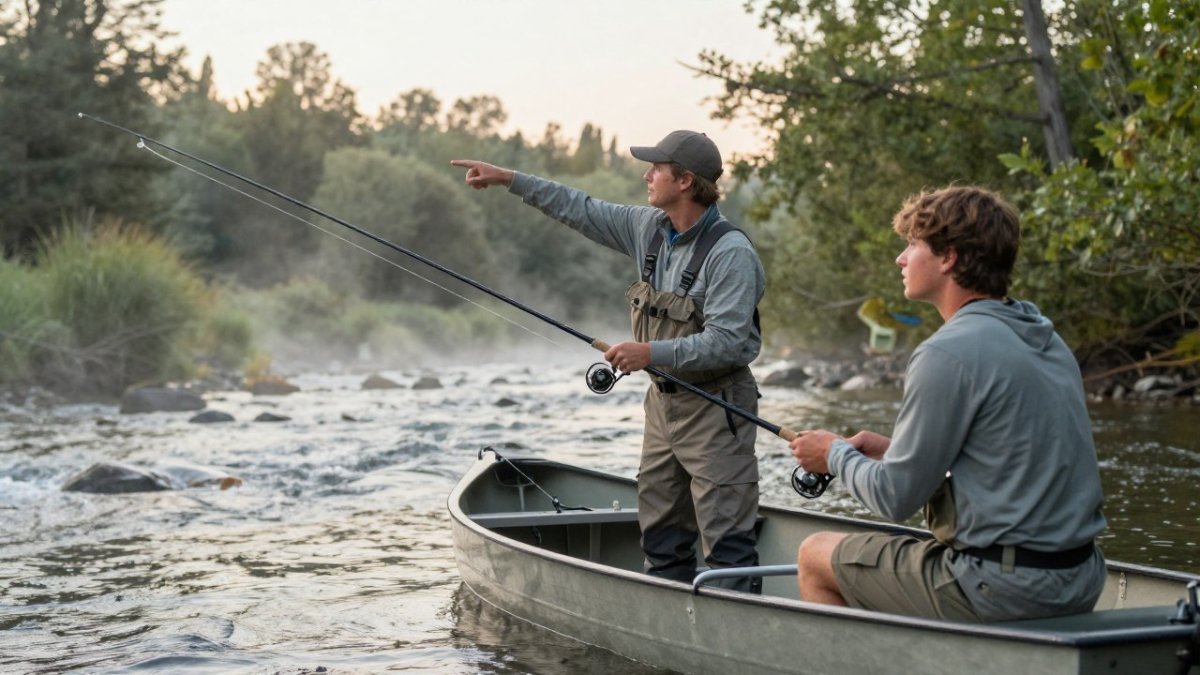
Once you push off, your guide starts reading the water. Water clarity, flow, temperature, insect activity, and weather patterns all feed into the plan.
You will not be asked to figure any of this out. That is the guide's job.
A good guide watches the surface for rises, checks the banks for shade and structure, and adjusts the drift to put you in front of fish. Local knowledge matters here more than any gadget. U.S. Fish and Wildlife Service fishing resources notes that healthy habitat and water conditions drive fish behavior, and guides read those signals in real time.
How Your Guide Finds Fish and Picks the Right Presentation
Fish location matters most. A good guide combines experience with observation to put anglers where fish are holding, then matches the presentation to the conditions.
That means choosing between fly fishing, bait, or lures where rules allow, and picking a fly or lure that matches what fish are eating that day. Water conditions shift hour to hour, so the plan can change mid-trip.
Presentation is how you show the offering to the fish. A drag-free drift, a soft landing, a slow strip: small details decide whether a fish commits. Your guide will call out adjustments as you go, which is where hands-on learning kicks in.
Rod, Reel, and Tackle: What the Guide Sets Up for You
Many guided trips supply rods, reels, lines, and flies, so you may not need to buy gear before you know whether fly fishing suits you. Confirm what is included when you book.
If you want the full rundown on supplied equipment, read do fly fishing guides provide gear before you pack.
What to Pack for a Day Fishing Trip
Pack light but pack smart. Confirm with your provider what gear is supplied and what you must bring, so you do not duplicate gear or forget something essential.
Use this checklist:
- Valid fishing license (buy it before you go; the guide cannot sell you one)
- Government-issued photo ID in case a warden asks
- Polarized sunglasses for glare and eye protection
- Hat, sunscreen, and lip balm
- Rain shell and a warm layer; mornings on the water are colder than the parking lot
- Water bottle and snacks; full-day trips may include lunch, but confirm
- Non-slip shoes with closed toes
- Phone in a waterproof case or dry bag
- Any personal medication, including motion-sickness pills taken before departure
- Small cash tip for the guide or crew
What you bring shifts with the trip type. A freshwater fly trip on a drift boat needs waders or quick-dry pants and layers; an inshore trip needs sun protection and shoes you can get wet; an offshore trip needs motion-sickness precautions, a hat that will not blow off, and a soft-sided bag that stows under a seat. If you have mobility needs or are bringing a child, tell your provider at booking so they can plan accordingly.
Watch out: showing up without a fishing license is the one mistake that can end the day early. Buy yours before you go, and check whether your state requires a separate stamp for the species or water you will fish.
How Long Is a Guided Fishing Trip?
Guided fishing trips vary in length. Confirm the schedule with your provider when you book.
| Segment | Half Day (approx. 4 hours) | Full Day (approx. 8 hours) |
|---|---|---|
| Check-in, license check, safety briefing | 15-20 minutes | 15-20 minutes |
| Rigging and first run to the water | 15-30 minutes | 20-40 minutes |
| Active fishing and coaching | 2.5-3 hours | 5.5-6.5 hours |
| Lunch or snack break | Short, often on the move | 30-45 minutes, usually anchored or beached |
| Return to launch and gear breakdown | 15-20 minutes | 20-30 minutes |
Trip duration can depend on the season and the drive between spots. Ask your provider what a typical day looks like for the month you are booking, and confirm the meeting and return times in writing before you pay a deposit.
Watch out: weather can stretch or shorten the day. Confirm the cancellation and rescheduling policy when you book so a forecast change does not catch you off guard.
How Much to Tip a Fishing Guide
Tipping a fishing guide is customary, and gratuity is not usually included in the guide fee. Many guests tip a percentage of the trip cost, with more for extra effort like gear prep, fish cleaning, or tough conditions.
There is no law on this. Ask the outfitter's office what is standard when you book, and tip in cash at the end of the day. For context on what trips cost, see this guide service cost breakdown.
What to Ask a Fishing Guide Before Booking
Ask about experience, licensing, what's included, and cancellation policy before you pay a deposit. Those four answers tell you most of what you need to know.
Here is what to ask:
- How long have you guided these waters?
- What's included: gear, flies, lunch, photos?
- What happens if weather cancels the trip?
- Do you offer catch and release only, or can we keep fish?
- What skill levels do you teach?
- How many guests per boat?
For a step-by-step walkthrough, read how to book a fly fishing guide. Booking a private trip works a little differently, and this private trip booking guide explains the options.
What to Expect vs. Reality on Your First Outing
Reality check: you probably will not cast like the videos on day one, but most first-timers still enjoy the day.
Here is the honest comparison:
| What Beginners Expect | What Actually Happens |
|---|---|
| Perfect casting right away | Short, coached casts that improve by midday |
| A fish on every cast | Quiet stretches, then a strike that makes the day |
| A high-pressure lesson | A relaxed day with hands-on coaching |
| Needing to buy gear first | Using the guide's rod, reel, and flies |
| Guaranteed catches | Better odds, not a promise, because fish are wild |
No guide can promise a catch, since fish are wild. Some days the fish win, and that is still a good day on the water.
If you want a fuller picture of how a first trip feels, read what to expect on a guided trip.
Your first guided fishing trip should feel like an escape, not an exam. Smith River Outfitter Raleigh Fly Fishing pairs you with a guide who handles the boat, the tackle, and the fish-finding so you can focus on learning and enjoying the water. We offer gear-ready trips for beginners, hands-on casting instruction, and deep local knowledge of where fish hold. Get started with Smith River Outfitter Raleigh Fly Fishing and book a trip that fits your schedule and skill level.
Frequently Asked Questions
Are guided fishing trips worth it for a complete beginner?
For a first-timer, a guided fishing trip shortens the learning curve by a wide margin. A guide can help you learn the basics and show you productive water, so you do not have to buy gear before you know the sport suits you.
What happens if you don't catch any fish on a guided trip?
No guide can guarantee a catch, and any provider promising one deserves scrutiny. What a good guide controls is effort and adaptation: changing flies, adjusting depth, and moving to new water when a spot goes quiet. Even a slow day leaves you with better casting mechanics, a read on the water, and a clear plan for next time. Ask before booking how the guide handles tough conditions.
Do fishing guides fish during a guided trip?
Guides differ in how much they fish during a trip. If you want a guide who fishes alongside you, say so when you book, since expectations differ between providers. On a guided fishing trip, your time on the water should be the priority.
How much do you tip a fishing guide, and is a license included?
Gratuity is generally customary and is often adjusted for extra effort such as early starts or tough conditions. Ask your provider what is standard before you book. A fishing license is generally the guest's responsibility unless the provider says otherwise, so confirm that and any gear included when you ask what to pack for a day fishing trip.