 How-to
How to Choose Fly Fishing Leaders for Current Seams
Last Updated: November 21, 2026
Quick Summary
Choose fly fishing leaders for current seams by reading the seam first, then matching leader length and taper to it: use 7.5 to 9 feet in fast broken seams, 9 to 12 feet in medium seams, and 12 to 15 feet in slow glassy seams. Match tippet to fly size, then go lighter and longer in clear, slow water and shorter and heavier in fast or off-color water.
- A current seam is where fast water meets slow water, and trout hold along that edge.
- Reading a seam takes about thirty seconds before you tie on a leader.
- Divide hook size by three to get your X rating, so a size 16 dry fly pairs with roughly 5X.
- A 20-inch trout in heavy current calls for stepping up one X rating.
- Fix a wrong drift in this order: fly first, tippet second, leader third.
Table of Contents
- Reading a Current Seam Before You Tie On a Leader
- How Leader Length and Taper Control Drift in a Seam
- Fly Leader Length for Trout in Fast Versus Slow Seams
- Matching Tippet Size for Trout Flies to Seam Conditions
- Adjusting for Water Clarity, Current Speed, and Fish Size
- Drag Management: Keeping Slack in the Seam
- Leader Recipes for Three Common Seam Scenarios
- On-Water Troubleshooting and Quick Leader Adjustments
- Frequently Asked Questions
Reading a Current Seam Before You Tie On a Leader
A current seam is the line where fast water meets slow water, and it is the single most important feature to read before you tie on one of your fly fishing leaders. Trout hold along these edges because the seam delivers food while costing them almost no energy. Your leader has one job: keep the fly drifting naturally in that narrow band of soft water.
Most anglers rig first and look second. That is backwards. Reading the water before touching a knot is the habit that makes the biggest difference on the river. The seam tells you the length, taper, and tippet you need.
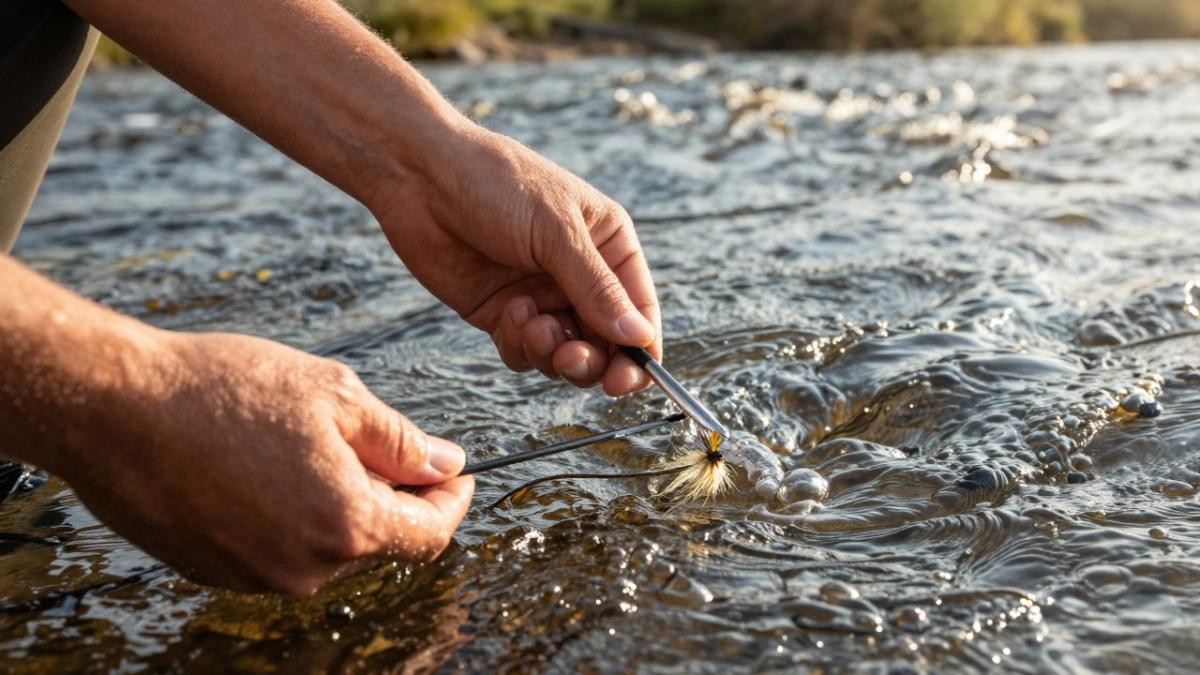
Reading a seam takes about thirty seconds:
- Find the color change where fast water turns glassy
- Watch foam lines and bubbles to trace the drift lane
- Note the depth: a deep seam pushes fish tight to the edge
- Check for structure that breaks the current further out
If you want a deeper walkthrough on identifying seams, our guide on how to read river currents for fly fishing covers the water-reading side in detail.
How Leader Length and Taper Control Drift in a Seam
With fly fishing leaders, length and taper control how softly the fly lands and how long it drifts drag-free. A longer leader with a gradual taper buys you more slack and a gentler presentation. A short, stiff leader turns over hard and drags a fly out of the seam fast.
Think of the leader as a shock absorber. Each section transfers energy more slowly than the last, so the fly lands soft instead of slapping the surface.
Butt Section, Mid-Section, and Tippet: What Each Part Does
A fly-fishing leader is a tapered length of line between the fly line and the fly, built from three parts that each do a different job.
- Butt section: thickest part, transfers energy from the fly line
- Mid-section: steps the diameter down gradually for a smooth turnover
- Tippet: thinnest end, ties to the fly and controls drag
Building your own means tying section to section. Our guide to fly fishing knots every angler needs covers the connections, and the blood knot step-by-step walkthrough shows the exact join we use between sections.
Fly Leader Length for Trout in Fast Versus Slow Seams
Leader length for trout should run longer in slow seams and shorter in fast ones. Fast water hides a heavier tippet and forgives a shorter leader. Slow, clear seams demand length and a lighter touch.
A working starting point:
- Fast, broken seams: 7.5 to 9 feet
- Medium seams: 9 to 12 feet
- Slow, glassy seams: 12 to 15 feet
Add length when fish are spooky. Shorten up when you need to punch a fly into wind or tight cover.
Matching Tippet Size for Trout Flies to Seam Conditions
Match tippet size to fly size first, then adjust for the seam. A general rule: divide the hook size by three to get your X rating. A size 16 dry fly pairs with roughly 5X.
The X Rating and Diameter Chart Anglers Actually Use
The X rating is a numbering system for tippet diameter: higher X means thinner line. It is the fastest way to match tippet to fly without a micrometer.
| Fly Size | Tippet | Best Seam Condition |
|---|---|---|
| Size 6-10 streamer | 0X-2X | Fast, deep water |
| Size 12-14 nymph | 3X-4X | Medium seams |
| Size 16-18 dry fly | 4X-5X | Slow, clear seams |
| Size 20-24 midge | 6X-7X | Glassy tailouts |
Tippet
If you keep breaking off or missing strikes, check your fly size against this chart before blaming the fish. Our breakdown of fly size mistakes that keep trout from biting explains why a mismatched setup kills your hookups.
Adjusting for Water Clarity, Current Speed, and Fish Size
Water clarity, current speed, and fish size all push leader choice in the same direction: the tougher the conditions, the more you compromise. Clear water means thinner tippet and longer leaders. Fast current means shorter leaders and heavier tippet to keep control.
Big fish add a second problem. A 20-inch trout in heavy current will find every weakness in a light tippet. Step up one X rating and accept fewer strikes for a better landing rate.
- Clear, slow water: long leader, light tippet, fluorocarbon
- Off-color, fast water: shorter leader, heavier tippet, nylon is fine
- Big fish in cover: step up one size and lean on abrasion resistance
Drag Management: Keeping Slack in the Seam
Drag is any unnatural pull on the fly, and in a seam it comes from a specific cause: the fly line, leader, and fly are sitting in water moving at different speeds. The fast tongue pulls the line; the soft edge lets the fly lag. The result is a fly that skates, swings, or stalls, and trout along the seam refuse it instantly.
The fix is not just "more slack." It is matching how much slack you carry to how wide the speed difference is across the seam. A sharp seam with a hard fast lane beside glassy water needs more slack than a gradual riffle-to-run transition. Three levers control that slack:
- Leader length and taper: a longer, more gradual leader puts more soft line between the fly line and the fly, so the fast water has to move more line before the fly reacts. A short, stiff leader transmits the fast lane's pull straight to the fly.
- Casting angle: cast more upstream and across the seam rather than straight across it. An upstream angle lets the fly enter the soft water first and drift down the seam line while the line stays in the fast tongue, buying you a longer natural drift.
- Mending: a reach mend or an upstream mend repositions the line in the fast water without moving the fly. Mend before the fly starts to drag, not after, once the fly is moving wrong, the drift is already spoiled.
A common pattern on sharp seams is to fish a longer leader than the water depth suggests, precisely because the extra length acts as a slack reservoir. On soft, gradual seams, that same length can make turnover mushy and put the fly off line; shorten up and let the taper do the work.
Watch out: over-mending a slow seam drags the fly line across the holding water and spooks fish. Mend the fast side of the seam, not the soft side where the trout are sitting.
For the mend itself, our step-by-step guide to mending a fly line shows the reach mend that keeps a leader drifting drag-free through a seam.
Leader Recipes for Three Common Seam Scenarios
Most leader advice stops at "match the fly." In a seam, the more useful question is where the fish is sitting relative to the fast tongue. That position, near edge, seam line, or far edge, plus depth tells you the leader length, taper, and tippet before you ever pick a fly.
Near edge (soft water on your side of the fast tongue). Fish here are usually shallow and spooky because you are close.
Seam line (fish holding right on the color change). This is the classic feeding lane, and the fly needs to drift in the narrow band where fast meets slow. A 9- to 12-foot leader tapered to 4X or 5X gives you enough slack to keep the fly in the lane without losing turnover.
Far edge (soft water on the far side of the fast tongue). You are casting across the fast water, so turnover and line control matter more than stealth. A 9-foot leader tapered to 3X or 4X, or a 7.5-foot leader in wind, punches the fly across the tongue.
Depth changes the recipe more than fly choice does. Shallow fish on any edge want a longer, lighter leader and a softer landing. Deep fish want a shorter, heavier setup that gets the fly down before the current sweeps it out of the lane.
Watch out: a recipe is a starting point, not a rule. If the seam is sharp and the fish are tight to the edge, the near-edge setup will out-fish the seam-line setup even when the fly is the same.
On-Water Troubleshooting and Quick Leader Adjustments
When the drift looks wrong, fix it in this order: fly first, tippet second, leader third. Changing the fly is faster and usually solves the problem.
- Fly dragging immediately: add a mend or lengthen the tippet
- Refusals in clear water: drop one X rating
- Break-offs on the hookset: step up one X and check for abrasion
- Fly landing too hard: lengthen the leader or soften the taper
- No turnover in wind: shorten the leader and thicken the butt
The best way to learn these adjustments is to watch them happen. A guided day on the water with Smith River Outfitter Raleigh Fly FIshing can put a guide beside you while you read seams, rig leaders, and mend for real drifts. For current details on gear and booking, please visit the Smith River Outfitter Raleigh Fly FIshing website.
Reading a seam well and rigging for it are skills that reward practice, and the fastest way to shorten the learning curve is time on the water with someone who knows it. Smith River Outfitter Raleigh Fly FIshing offers expert-led guided trips with local water knowledge, gear provided for beginners, and hands-on instruction tailored to your skill level. Get started with Smith River Outfitter Raleigh Fly FIshing and learn to rig for every seam you fish.
Frequently Asked Questions
What leader length works best for fishing current seams?
Start with a 9-foot tapered leader for most seam fishing, then adjust from there. In shallow, slow seams, a longer 12-foot leader keeps your fly line farther from spooky trout. In fast, deep seams where turnover matters more, a 7.5-foot leader gives you better control and less drag. The key is matching length to how much slack you need to keep the fly drifting naturally without losing contact with the fly line.
Should I use a 4X or 5X leader for trout in a seam?
Use 4X when you are fishing larger nymphs, streamers, or seams with heavier current and bigger fish. The heavier tippet turns over weighted flies and holds up against abrasion. Go to 5X for smaller dry flies, clear water, and picky trout in slow seams. A 5X tippet is about 0.006 inches in diameter, which sinks less and lands softer, both of which help in flat, glassy current seams.
How does leader taper affect fly turnover in moving water?
The butt section transfers energy from the fly line, the mid-section steps down gradually, and the tippet delivers the fly. A long, gentle taper turns over a dry fly softly, which matters when trout in a seam are looking up. A shorter, stiffer taper punches a weighted nymph into fast water without collapsing. If your leader hinges or your fly lands in a pile, the taper is too abrupt for the fly weight and current speed.
How can I keep my fly drifting naturally along a current seam?
Mend upstream before the fly lands, then feed slack line as the fly approaches the seam. Keep the rod tip low and follow the drift with the tip so the fly line does not pull the fly out of the slow lane. A longer, finer tippet helps, but drag management matters more than leader choice. If the fly starts to skate or swing, add a reach mend and let the current do the work.