 How-to
How to Prepare for a NC Mountain Fishing Trip
Last Updated: November 15, 2026
Quick Summary
A North Carolina mountain fishing trip starts with buying your NC fishing license and trout privilege online before you leave home. Then check the trout stocking schedule, stream flow, and water temperature, and pack waders, studded boots, and non-cotton layers for cold water.
- Every angler age 16 and older needs a valid NC fishing license with the trout privilege on designated trout waters.
- Spring and fall are the best windows for trout fishing in North Carolina mountains.
- Check the NC trout stocking schedule the week before your trip and pick water stocked a few days earlier.
- A 4-weight or 5-weight fly rod between 8 and 9 feet handles most mountain streams.
- Leave cotton at home because it stops insulating once wet and pulls heat from your body.
Table of Contents
- Start With Your NC Fishing License and Trout Permits
- Time Your Trip to the Best Time for Trout Fishing in North Carolina
- Read the NC Trout Stocking Schedule Before You Go
- What to Bring on Your WNC Fly Fishing Trip
- Check Stream Flow, Water Temperature, and Weather
- Book a Guided Trip or Plan Your Own Access
- Book Your Guided Mountain Fishing Trip
- Frequently Asked Questions
Start With Your NC Fishing License and Trout Permits
A North Carolina mountain fishing trip starts with the paperwork, not the tackle box.
Buy your license online through the NC Wildlife Resources Commission license portal before you leave home. It takes minutes and saves you a stop in a town where the license agent may already be closed.
Sort the license first, because everything else depends on where you're allowed to fish.
Two rules trip up most visitors:
- Trout waters are separate. Hatchery-supported and wild trout streams carry their own rules, and the trout privilege is required on both.
- Catch-and-release sections exist. Some streams ban bait and require single-hook artificial lures. Read the signs at the access point.
For the full picture on seasons, permits, and stream classifications across the state, our trout fishing guide for North Carolina walks through the details before you commit to a plan.
Time Your Trip to the Best Time for Trout Fishing in North Carolina
Spring and fall are the best windows for trout fishing in North Carolina mountains. Water stays cool, flows are steady, and hatches come off predictably. Summer works too, but you fish early and high.
Trout need cold, oxygen-rich water. When stream temperatures climb into the high 60s, fish get stressed and feeding slows. That's why July afternoons on a low-elevation creek are usually a waste of time.
A simple seasonal breakdown:
| Season | Conditions | What to Expect |
|---|---|---|
| Spring | Cool, rising flows | Active fish, good hatches |
| Summer | Warm lows, cool highs | Fish early, chase elevation |
| Fall | Cooling water, stable flow | Best all-around window |
| Winter | Cold, clear, low | Slow fishing, fewer crowds |
Most mountain fishing trips run better on weekdays. Access points fill up on summer weekends, and the best pools get pressured fast.
Read the NC Trout Stocking Schedule Before You Go
The NC trout stocking schedule tells you which streams were recently planted, and that changes everything about where you should cast. The Wildlife Resources Commission publishes stocking dates by water body, so check it the week before your trip.
Delayed-harvest waters get stocked but stay catch-and-release until the season opens. Put-and-take streams are fair game right away.
A common mistake is driving to a famous creek the week after a stocking and finding a crowd. Check the schedule, then pick water that was stocked a few days earlier. The fish have spread out and the pressure has dropped.
What to Bring on Your WNC Fly Fishing Trip
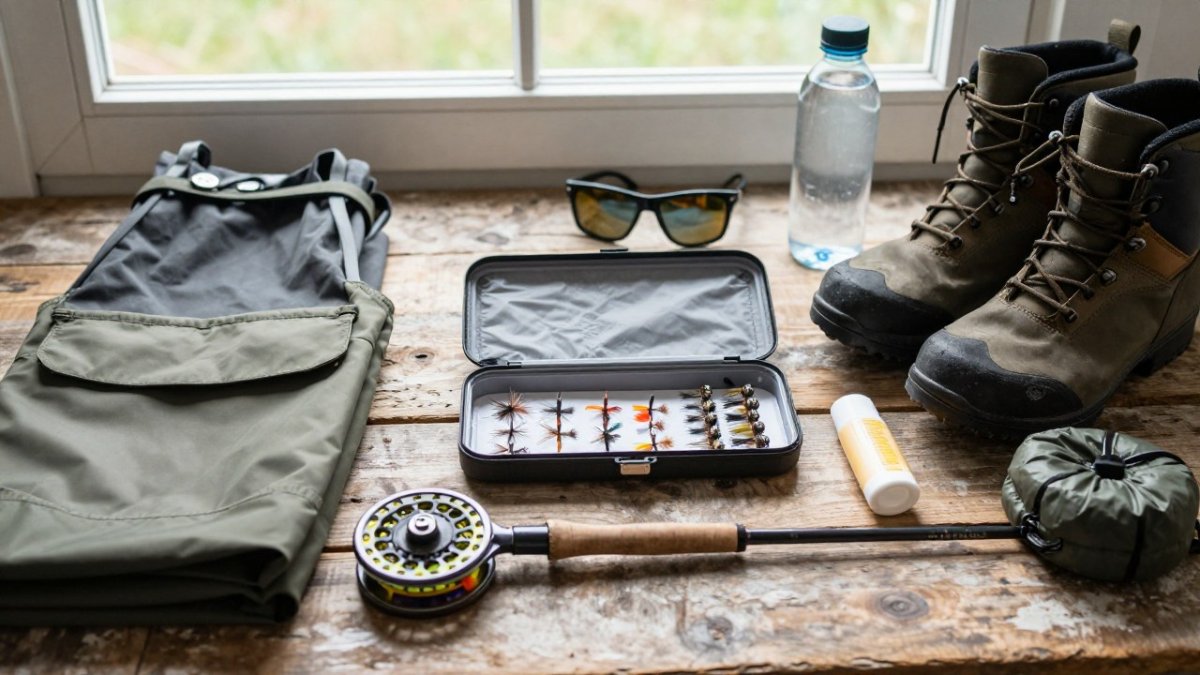
Pack for cold water, changing weather, and a full day away from the truck. A mountain fishing trip rewards preparation, and the gear list below covers the essentials.
Rods, Reels, and Terminal Tackle
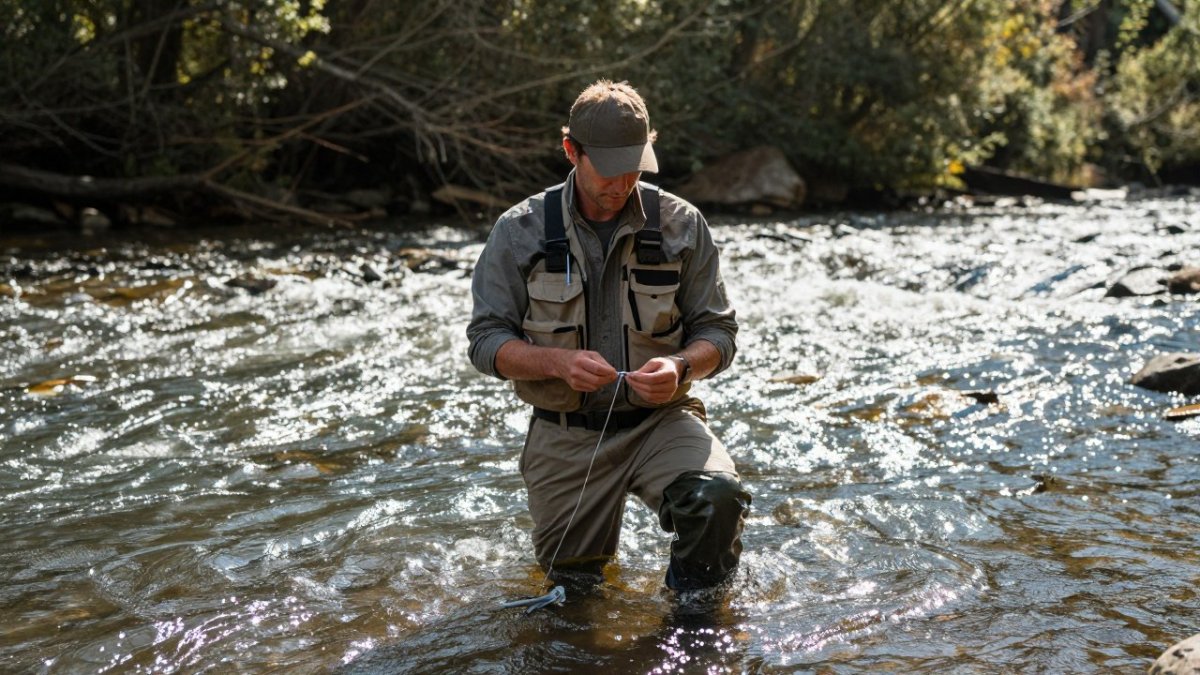
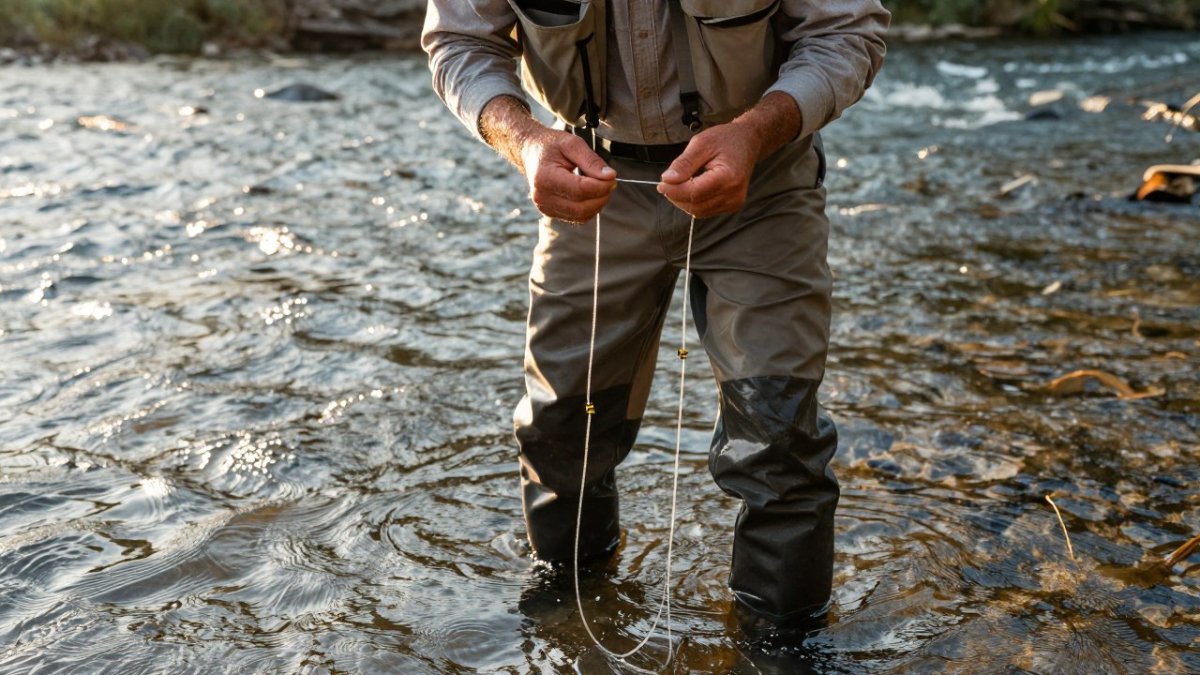
A 4-weight or 5-weight fly rod between 8 and 9 feet handles most mountain streams. Shorter rods cast better in tight cover. Bring a floating line, spare leaders, tippet in 4X to 6X, and a good selection of nymphs, dry flies, and streamers.
If you're still deciding on a rod for tight water, our breakdown of the best fly rod for small streams covers length, weight, and action in plain terms.
Waders, Boots, and Layering
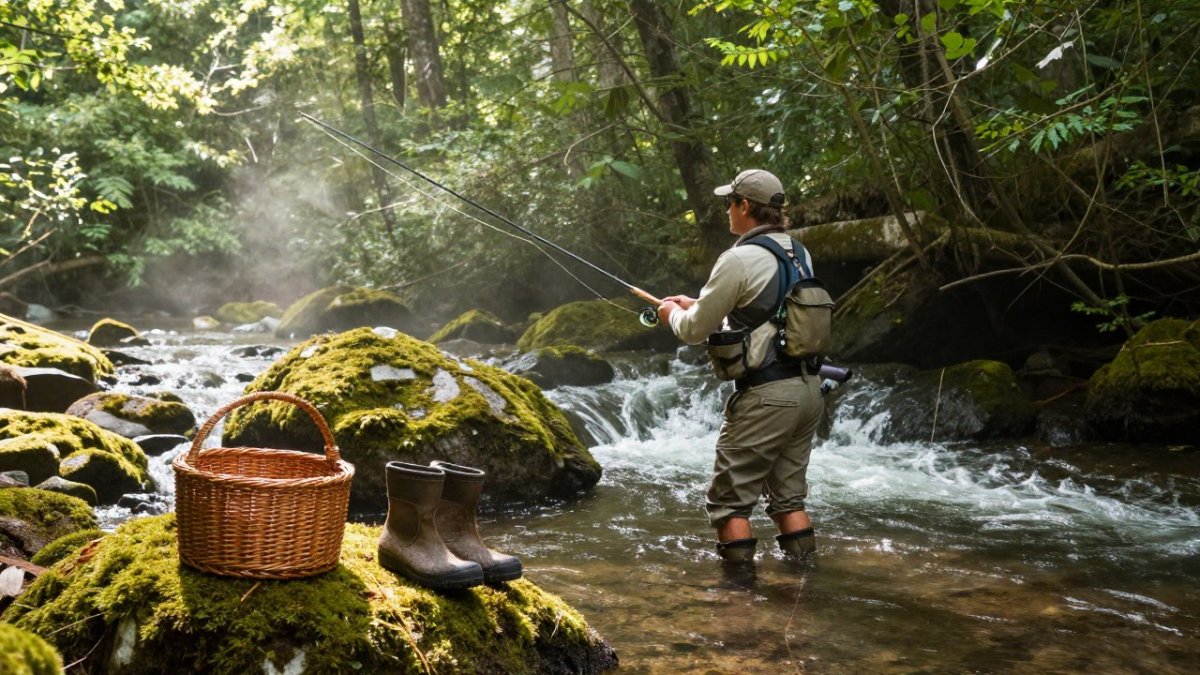
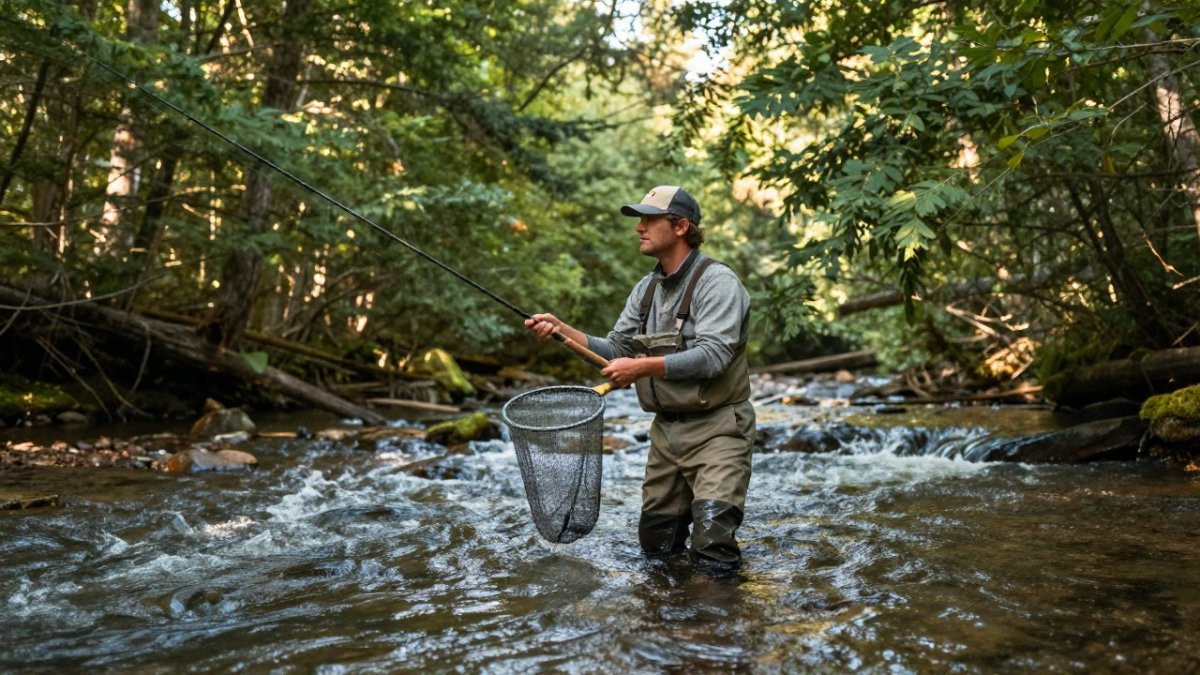
Waders keep you warm and let you reach water bank anglers can't. Rubber-soled wading boots with studs grip wet rock far better than felt on most southern streams. Layer wool or synthetic underneath, never cotton.
Choosing the right pair matters more than most beginners expect. Our guide to fly fishing waders for NC waters explains thickness, fit, and breathability for cold mountain streams.
A Packing Checklist by Season and Trip Type
Most gear lists stop at "bring waders and a rod." The better approach is to build your kit around two variables: water temperature and whether you are wading or staying on the bank. Use the checklist below as a starting point, then adjust for the forecast.
Core kit (every trip, every season):
- Valid NC fishing license with trout privilege, printed or saved offline on your phone
- Rod, reel, floating line, spare leaders, tippet (4X-6X)
- Fly box with nymphs, dries, and streamers in sizes that match the season
- Polarized sunglasses (for spotting fish and eye protection)
- Water bottle and a high-calorie snack
- Small first-aid kit with blister treatment and tweezers
- Headlamp or flashlight, even on a day trip
Wading trips (spring and fall):
- Chest or waist waders, breathable if you plan to hike
- Wading boots with studs and a wading staff for slick rock
- Wool or synthetic base layer, fleece midlayer, and a waterproof shell
- Dry bag with a full change of clothes sealed inside
Bank-fishing trips (summer and low water):
- Quick-dry pants and a long-sleeve sun shirt
- Sturdy hiking shoes with grip; you will walk more than you expect
- Wide-brim hat and sunblock; mountain sun burns fast at elevation
- A lightweight rain shell, because afternoon storms build quickly
Cold-weather add-ons (late fall through early spring):
- Insulated fingerless gloves or a hand-warmer pack
- Extra fleece layer and a warm hat
- Thermos; cold hands slow you down more than cold water
Watch out: cotton kills in cold, wet conditions. Leave the jeans and cotton T-shirts at home, because once cotton soaks through it stops insulating and pulls heat from your body.
Safety and Comfort Extras
These small items make or break a long day:
- Polarized sunglasses for spotting fish and cutting glare
- Sunblock and lip balm, because mountain sun burns fast
- Extra dry clothes sealed in a dry bag
- A camera or phone in a waterproof case
- Water and a snack, since access points are often miles apart
- A printed map or downloaded offline map; cell service is unreliable in many drainages
Check Stream Flow, Water Temperature, and Weather
Stream flow and water temperature decide whether fish are feeding before you ever tie on a fly. Check both the night before and again the morning of your trip.
USGS gauges report real-time flow on many mountain rivers. Look for steady or falling water. A spike after heavy rain means muddy, dangerous conditions.
Water temperature tells you when to fish. Below 50 degrees, trout move slow and eat deep. Between 50 and 65, they feed actively.
Weather matters for safety too. Summer thunderstorms build fast in the Smoky Mountains, and a creek that's ankle-deep at noon can be dangerous by three. Watch the sky and know your exit route.
Book a Guided Trip or Plan Your Own Access
A fishing guide removes the guesswork from a mountain fishing trip.
Do-it-yourself access is entirely possible. Western North Carolina has plenty of public water, state forest access, and roadside pull-offs. Hiking a mile from the lot usually means fewer anglers and calmer fish.
Guided Versus Self-Guided: A Decision Framework
Choose a guided trip when any of these are true:
- You have never fly fished, or you have fished fewer than a handful of times
- Your trip is short (one or two days) and you want to maximize time on productive water
- You are visiting from out of state and do not know the local regulations or access points
- You want to learn a specific skill, such as reading pocket water or fishing nymphs deep
Choose self-guided when:
- You already cast competently and can read basic water
- You have more time than money and enjoy exploring
- You are comfortable navigating public land and checking regulations yourself
A middle path works well for many anglers: book one guided day early in the trip to learn the water and the flies, then fish on your own for the rest of the visit.
Access Logistics: Parking, Trails, and What to Expect
Public access in the mountains varies more than most visitors expect. Some streams have paved pull-offs and a short walk; others require a hike of a mile or more on uneven terrain. Before you commit to a spot, check the following:
- Parking: Many trailheads and access points have room for only a handful of vehicles. Arrive early, especially on summer weekends, and never block a gate or private drive.
- Trail difficulty: A stream that looks close on a map may sit at the end of a steep, root-covered trail. Budget more time and energy than the distance suggests.
- Restrooms: Most remote access points have none. Plan stops in town before you head up the drainage.
- Cell service: Coverage is spotty to nonexistent in many valleys. Download maps and share your plan with someone before you lose signal.
- Private land: Stream banks are often private even where the water is public. Respect posted signs and use established access points.
Watch out: a short hike on the map can turn into a serious scramble in wet conditions. Check recent trail reports and turn around if the route is beyond your comfort level.
Accessibility and Mobility Considerations
Not every angler can hike a mile of steep trail. Several mountain access points offer paved or gravel paths and roadside fishing. If accessibility is a priority, call ahead to the outfitter or land manager and ask specifically about path surface, distance from parking, and bank stability. Do not assume a spot is accessible based on photos alone.
If you're booking for the first time, our guide to what to expect on a guided fly fishing trip covers the format, what guides provide, and how to prepare.
Book Your Guided Mountain Fishing Trip
Here's the challenge most visiting anglers face: you can read every stocking chart and flow gauge, and still drive home skunked because you fished the wrong mile of water.
That's where we come in.
Ready to skip the guesswork? Our step-by-step booking guide shows exactly how to reserve your date.
Get started with Smith River Outfitter Raleigh Fly FIshing and spend your mountain day fishing water that's actually producing, with a guide who teaches as you go.
Frequently Asked Questions
Do I need a fishing license to fish for trout in North Carolina?
Yes. Anyone 16 or older needs a valid NC fishing license to fish for trout, and public mountain trout waters also require a trout privilege license or a comprehensive license that includes it. Buy yours through the NC Wildlife Resources Commission before your mountain fishing trip, and check whether the water you plan to fish is designated Public Mountain Trout Waters, since those have extra rules on bait and gear.
What month is best for trout fishing in North Carolina?
Spring and fall give you the most consistent conditions. From roughly March through May and again in October and November, water temperatures sit in the range where rainbow trout and brown trout feed actively. Summer can still fish well if you start early and target higher-elevation mountain streams, while winter slows the bite and calls for slower presentations and warmer layers.
What should I bring on a mountain fishing trip?
Pack a rod matched to the water, a fly box with nymphs and dry flies, waders and wading boots, polarized sunglasses, sunblock, Chapstick, a water bottle, and a dry bag with extra dry clothes. Add a rain shell, a small first-aid kit, and a camera. A printed copy of your NC fishing license and a look at the NC trout stocking schedule round out the essentials.
How should I check stream conditions before a fishing trip?
Check USGS stream gauges for flow and water temperature the morning you leave, then compare the reading to the typical range for that river. High, muddy flows after rain make wading unsafe and push trout into cover. Look at the local forecast too: a stable, falling barometer and clear water usually mean better fishing than a rising, stained stream.