 Listicle
12 Best Fly Fishing Flies for Raleigh Rivers
Last Updated: November 14, 2026
Quick Summary
The best fly fishing flies for Raleigh rivers are a short list of dry flies, nymphs, and streamers that cover nearly every local situation. Start with a Parachute Adams, Elk Hair Caddis, Pheasant Tail Nymph, and Woolly Bugger, then add patterns as the seasons turn. Twelve patterns in the right sizes and a tapered leader will cover nearly every day on local water.
- The Parachute Adams works here in sizes 12 to 18 and is the most versatile dry fly.
- Fish a size 16 Pheasant Tail with a size 18 to 20 midge pupa along the generation seam.
- Recently stocked trout respond to movement, so attractor patterns and streamers get their attention.
- In low, clear water, size down to 16 to 20 in tan, olive, and gray on 5X or 6X tippet.
- Fall brings streamer season for brown trout, with Woolly Buggers and Muddler Minnows in sizes 6 to 12.
Table of Contents
- Top 12 Fly Patterns for Raleigh Rivers
- Best Flies for River Trout in Local Tailwaters
- North Carolina Trout Flies for Stocked and Wild Fish
- Fly Selection by Season on Raleigh Rivers
- Dry Flies vs. Nymphs: Reading the Water
- Sizes, Colors, and Rigging for Local Conditions
- Stocking Your Box at Local Raleigh Fly Shops
- Book a Guided Trip to Test These Patterns
- Frequently Asked Questions
Top 12 Fly Patterns for Raleigh Rivers
The best fly fishing flies for Raleigh rivers come down to a short, honest list: a handful of dry fly fishing flies, a few nymphs, and two or three streamers that cover nearly every situation our local water throws at you.
Below is a list of patterns organized by how you fish them. If you're building a box from scratch, start with the first four and add the rest as the seasons turn.
Dry Flies That Produce on Local Water
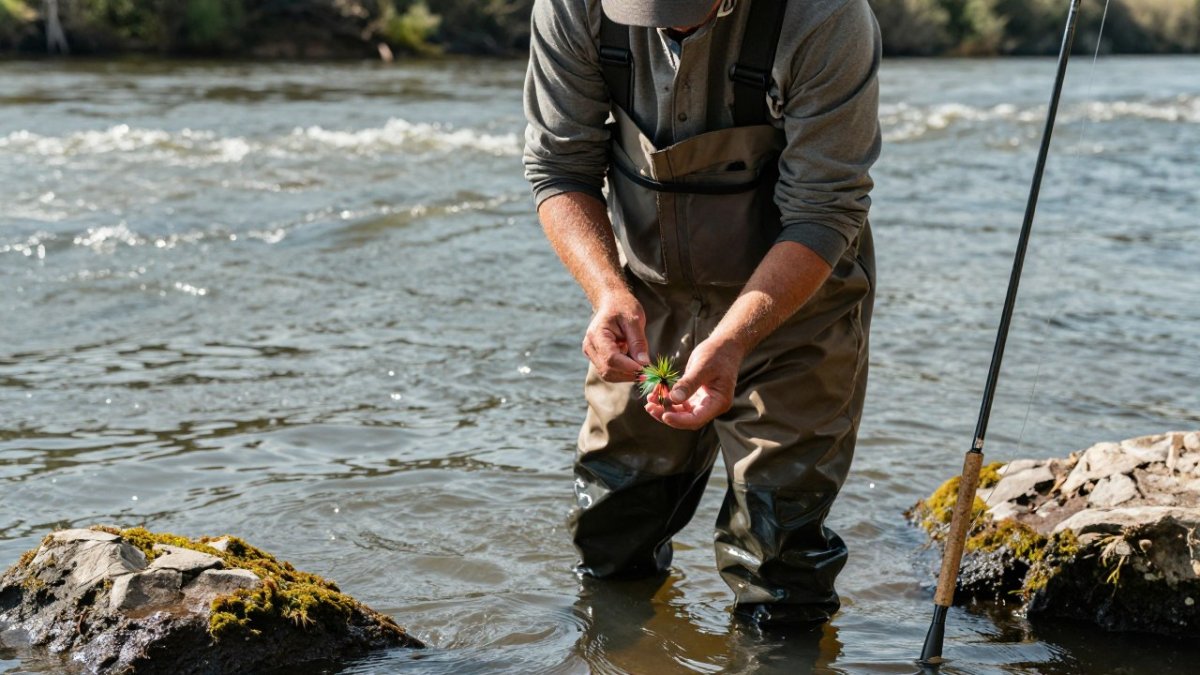
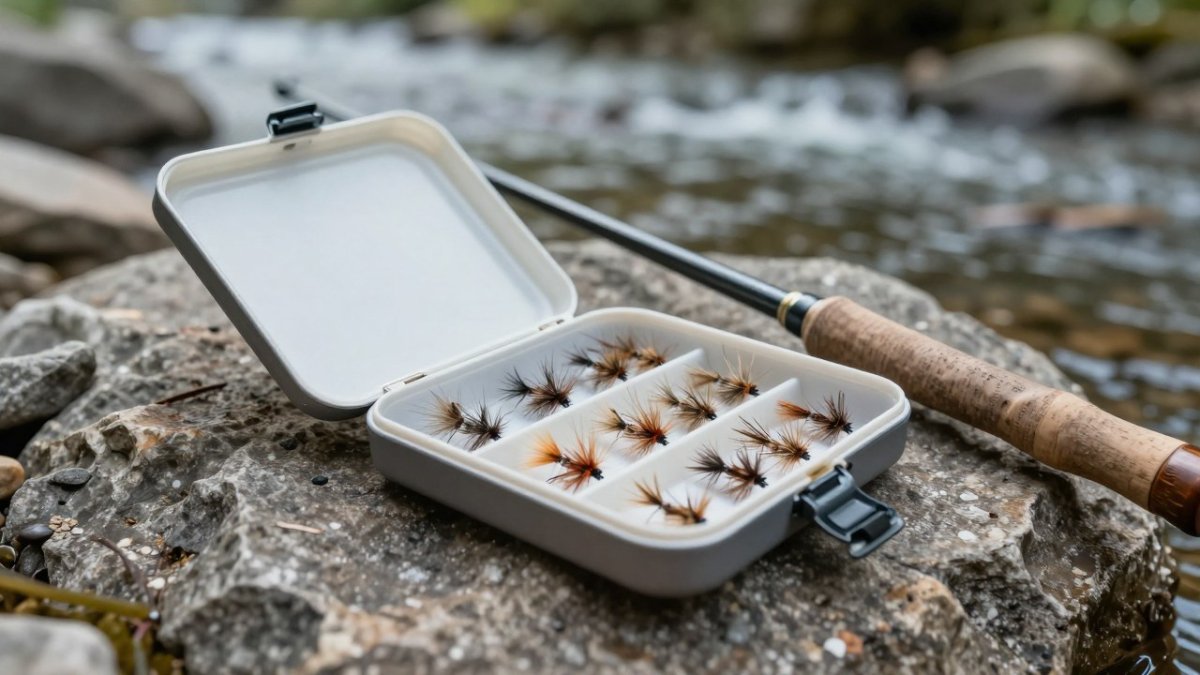
Dry fly fishing is the visual payoff, and these patterns float well and match what hatches locally. The Parachute Adams is the most versatile dry fly on any American trout stream, and it works here in sizes 12 to 18. The Elk Hair Caddis covers caddis activity through spring and early summer. Yellow Sally patterns match the small stoneflies that show up on warm evenings. Griffith's Gnat handles midge clusters on slow, clear water. For warmwater species, small poppers and foam ants pull bluegill and redbreast off the banks.
Nymphs and Streamers for Subsurface Feeding
Most feeding happens below the surface, so nymphs do the heavy lifting. The Pheasant Tail Nymph imitates mayfly nymphs and works in sizes 14 to 18. A soft hackle swung through current mimics emerging insects and triggers strikes on pressured fish. Woolly Bugger streamers in black and olive move bass, stocked trout, and big browns. A Muddler Minnow covers sculpin and baitfish patterns when you need to fish deep and slow.
Best Flies for River Trout in Local Tailwaters
Tailwater trout live on steady releases, and that stability is the whole story: flows and temperatures stay within a narrow band most of the year, so the fish see the same small insects week after week and get selective fast. Small, natural patterns fished on light tippet are the usual approach in these conditions, but the pattern matters less than matching the drift to the release.
Treat the tailwater as three zones and rig for each one:
- The generation seam. When turbines are running, the current line where fast release water meets slower edge water is where trout stack to eat dislodged nymphs. Fish a two-fly rig, a size 16 Pheasant Tail on the point with a size 18 to 20 midge pupa above it, under a small indicator set roughly one and a half times the depth of the seam. Drift it along the seam edge, not through the middle of the fast chute.
- The flat tailout. Low, glassy water below the riffle is where fish get educated. Size down to 18 to 22, drop to 6X tippet, and fish a single midge or a small soft hackle on a long, drag-free drift. A common pattern is to grease the leader with floatant and fish the fly just under the film so the tippet doesn't cut a visible wake.
- The pocket water above the seam. Brook trout and smaller rainbows hold in the cooler, broken pockets and will take a slightly larger meal, a size 14 Adams or a small Stimulator, when they're looking up. Fish these close rather than with long casts.
Brown trout and rainbow trout in tailwaters get educated fast, so lighter tippet and a drag-free drift matter more than fly choice.
Flow is the other variable. On low-release days the fish spread into the shallow seams and a dry-dropper with a size 16 Adams and a 18 Pheasant Tail covers water fast. On high-release days they pull tight to the banks and structure, so a heavier nymph or a small streamer fished tight to cover beats a delicate dry every time. Check the release schedule before you rig, and build the rig around the water you'll actually have.
North Carolina Trout Flies for Stocked and Wild Fish
Stocked fish and wild fish behave differently, and your box should reflect that. Recently stocked trout are less selective and respond to movement, so attractor patterns and streamers get attention. Wild fish are spookier and keyed to natural drift. Good North Carolina trout flies for stocked water include Woolly Buggers, Muddler Minnows, and bright Stimulators. For wild fish, size down: Pheasant Tails, soft hackles, and small Adams patterns in 16 to 20. Tiger trout, where they turn up, tend to hit streamers aggressively.
Fly Selection by Season on Raleigh Rivers
Fly selection by season drives most of your decisions on local water. Spring brings mayfly and caddis hatches, so Parachute Adams, Elk Hair Caddis, and Pheasant Tails cover the water column. Late spring warms things up and Yellow Sallies and small Stimulators start producing. Summer means low, clear water and spooky fish, so smaller flies and lighter leaders win; terrestrials like ants and beetles work along the banks. Fall brings streamer season for brown trout, and winter slows everything down to midges and small nymphs fished deep and slow. For a deeper look at how feeding habits shift month to month, read how seasonal trout feeding habits work in Raleigh rivers.
Dry Flies vs. Nymphs: Reading the Water
Dry flies vs. nymphs is really a question about where the fish are feeding, and the water tells you. Riffles and broken surface water oxygenate well and fish hold there looking up, so a dry fly drifted through the seams produces. Slow, deep pools and tailouts hold fish feeding below, so nymphs fished deep with a strike indicator make more sense. Watch for rises: if you see surface feeding, go dry. If the water is flat and quiet, go subsurface. Understanding currents helps you pick presentation, and our guide to reading river currents for fly fishing breaks down where fish sit in moving water.
Sizes, Colors, and Rigging for Local Conditions
Fly size and color should match local conditions, not a generic chart. The practical way to decide is to read three things before you open the box: water clarity, flow level, and what the fish are keyed to that day. Here's how those three inputs drive the choice on local water.
Water clarity. In low, clear water, size down and go natural: 16 to 20 in tan, olive, and gray, on 5X or 6X tippet. In stained or high water, go bigger and darker with more flash, a size 10 to 12 Woolly Bugger or a dark nymph, so fish can find the fly in low visibility. Match the hatch when you see insects on the water; otherwise, default to natural tones.
Flow level. Low flow pushes fish into the shallow seams and tailouts and makes them spooky, so fish small dries and light nymphs on long leaders. High flow pulls fish tight to banks and structure, so fish heavier nymphs and streamers tight to cover and don't be afraid to add weight. The same fly in the same size fishes completely differently at two flow levels.
Species and target zone. Trout in the tailwaters want small naturals on light tippet. Warmwater fish, largemouth and smallmouth bass, bluegill, and redbreast, want movement and profile, so a size 6 to 10 Woolly Bugger, a small popper, or a foam ant fished along the bank beats a size 20 midge every time. Match the rig to the fish you're actually targeting, not to the trout box by default.
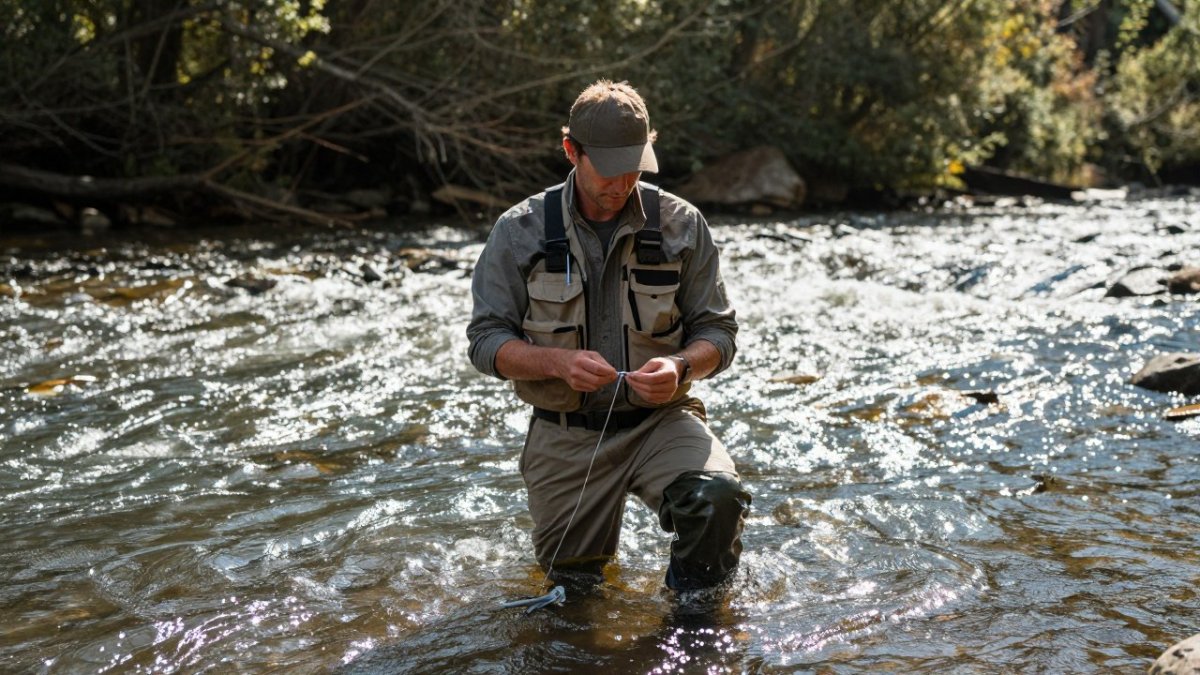
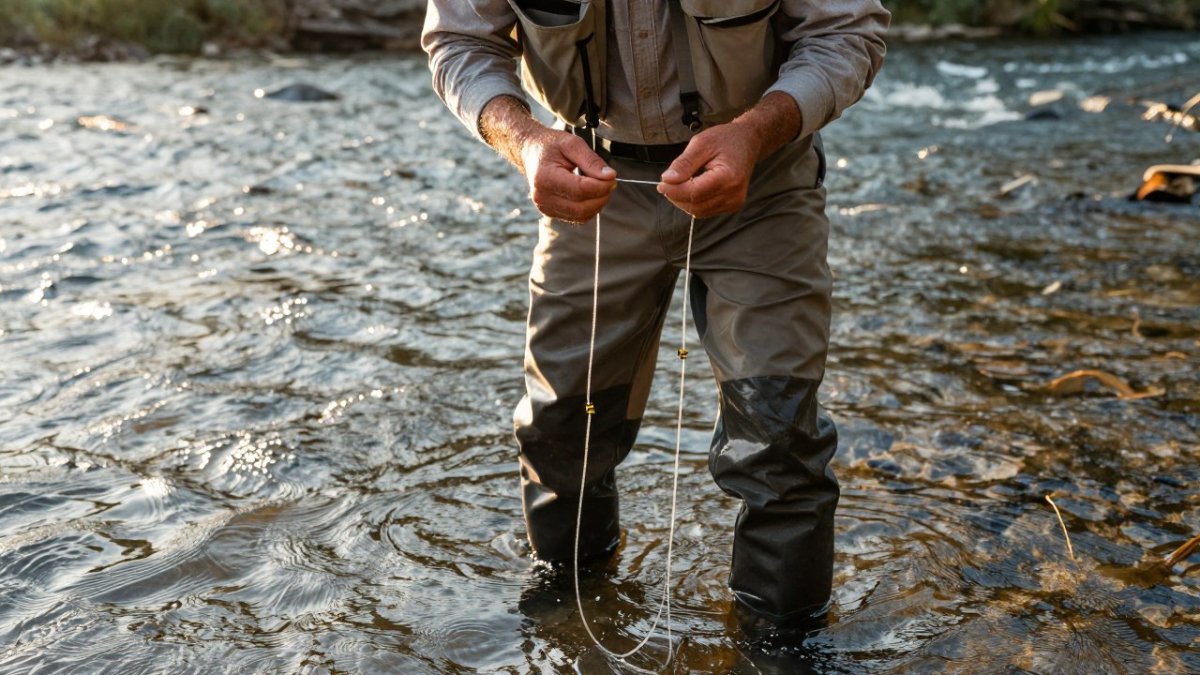
Rigging matters as much as the fly. Use a tapered leader sized to your fly, add tippet in the 4X to 6X range for small dries and nymphs, and set up a two-fly rig with a heavier nymph trailing a lighter one to cover depth. For warmwater, shorten the leader and fish a heavier tippet, 2X to 3X, because you're casting bigger flies and pulling fish out of cover. A common mistake is fishing too heavy a tippet in clear water, which kills the drift. Watch out: the second most common mistake is fishing too long a leader in tight, brushy bank water, you can't cast it and you can't control the drift.
Use this table as a starting point, then adjust for the day's clarity and flow:
| Season | Go-To Flies | Size Range | Presentation |
|---|---|---|---|
| Spring | Parachute Adams, Elk Hair Caddis, Pheasant Tail | 12-18 | Dry-dropper in riffles |
| Late spring | Yellow Sally, Stimulator, soft hackle | 12-16 | Swung soft hackles |
| Summer | Ants, beetles, small Adams, Griffith's Gnat | 16-20 | Light tippet, drag-free drift |
| Fall | Woolly Bugger, Muddler Minnow | 6-12 | Streamer retrieve |
| Winter | Midges, small Pheasant Tail | 18-22 | Deep nymph, slow drift |
Size Range
For a full breakdown of size errors, see these fly size mistakes that keep trout from biting.
Stocking Your Box at Local Raleigh Fly Shops
Local fly shops are a practical place to buy patterns for the water you plan to fish. Bring your box in and ask what's working that week. Buying in multiples helps you keep fishing when flies are lost to snags.
Book a Guided Trip to Test These Patterns
Reading about flies only gets you so far. The fastest way to learn which patterns work on Raleigh rivers is to fish them with someone who knows the water. If you're planning ahead, our guide to the best fly fishing spots near Raleigh helps you pick where to go, and our step-by-step walkthrough on how to book a fly fishing guide covers what to expect.
The gap between a full box and a fishable box is smaller than most anglers think. Twelve patterns, the right sizes, and a tapered leader will cover nearly every day on local water. Book a trip with Smith River Outfitter Raleigh Fly FIshing to fish with expert guidance. Contact the business through its website for current details.
Frequently Asked Questions
What are the best fly fishing flies for river trout near Raleigh?
The most reliable patterns for river trout near Raleigh include Pheasant Tail nymphs, Parachute Adams, Elk Hair Caddis, and Woolly Buggers. Sizes 12 to 16 cover most situations. Stocked trout respond well to attractor patterns and egg flies shortly after stocking, while wild fish in smaller streams favor natural imitations matched to local mayfly and caddis hatches. Carry a mix of dry flies and nymphs so you can adapt when fish stop rising.
When should I fish dry flies instead of nymphs on Raleigh rivers?
Fish dry flies when you see rising trout or insects on the surface, which typically happens during spring and early summer hatches. The rest of the time, nymphs fished under an indicator catch more fish because trout feed below the surface most of the day. A good rule is to start with a nymph rig, watch for surface activity, and switch to a dry fly when you spot consistent rises.
How does fly selection by season change on local rivers?
Spring brings mayfly and caddis hatches, so Parachute Adams and Elk Hair Caddis in sizes 12 to 16 work well. Summer favors smaller terrestrials like ants and beetles plus early morning dry fly action. Fall triggers aggressive feeding before winter, making streamers and larger nymphs effective. Winter slows trout metabolism, so small Pheasant Tails and midge patterns fished deep and slow produce the most strikes.
What size flies should I use for North Carolina trout flies?
Most North Carolina trout flies fall between sizes 12 and 18. Use size 12 to 14 for larger mayflies and caddis, and drop to size 16 to 18 for midges, small mayflies, and pressured fish. Clear, low water calls for smaller flies and lighter tippet, while stained water after rain lets you fish larger, darker patterns.